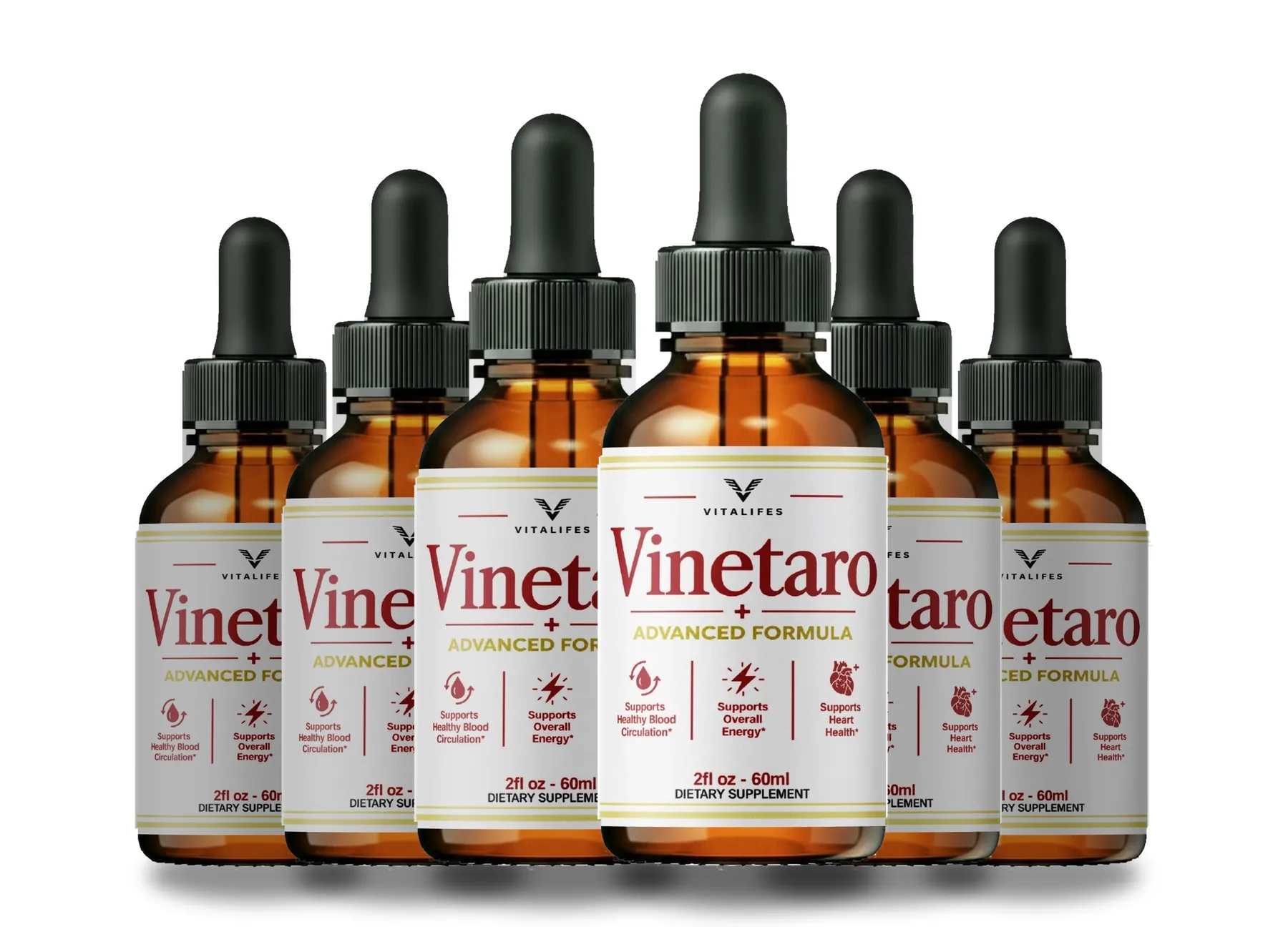
Vinetaro Drops Official Website › Circulation supplement guide
Circulation supplement guideCirculation Supplement Guide: What The Evidence Actually Cost
The plants in this category have real published work behind them, and that work ran at amounts most bottles never approach. This guide prints both figures together.
Twelve botanicals, each read against its best evidence, with the dose the trial used where the record stated one. No result here belongs to any product.
Ginkgo, hawthorn, horse chestnut, Centella, Ruscus, blueberry, grape seed, cinnamon, Gymnema, chromium, ginseng and green tea catechins, in the order the evidence on them gets weaker.
What counts as evidence in this category
Three separate literatures, folded together by almost every product in this category.
Circulation is not one thing and the research does not treat it as one. Three separate literatures get folded together on supplement labels, and a reader who keeps them apart will read almost every bottle in the category more accurately.
The first is arterial: blood reaching muscle, most often studied in intermittent claudication, where a measurable outcome exists in the distance somebody can walk before pain stops them. The second is venous: blood returning from the legs, studied in chronic venous insufficiency, where the outcomes are swelling, heaviness and leg volume. The third is cardiac: the heart as a pump, studied in heart failure, where the outcomes are exercise tolerance and symptom scores.
Those three have different plants, different trial designs and different evidence quality. A label that says supports healthy circulation is standing on all three at once without committing to any, which is legally permitted and informationally empty. The sections below take them one at a time.
| The literature | What it measures | The plants most often studied |
|---|---|---|
| Arterial | Walking distance before pain, in claudication | Ginkgo biloba, standardised as EGb 761 |
| Venous | Leg volume, swelling, heaviness and pain | Horse chestnut seed, Centella asiatica, Ruscus aculeatus, the phlebotonic class |
| Cardiac | Exercise tolerance and symptom scores in heart failure | Hawthorn, standardised as WS 1442 |
| Vascular function | Flow-mediated dilation and related markers | Blueberry anthocyanins, grape seed extract |
| Metabolic | Fasting glucose, HbA1c, insulin | Cinnamon, Gymnema, chromium, ginseng |
| Energy expenditure | Calorimetry and fat oxidation | Green tea catechins |
Six literatures, routinely compressed into one sentence on a label.
Ginkgo biloba, and the arterial evidence
The most studied plant here, and the one whose evidence has weakened most.
Ginkgo is the most studied plant in this category and its evidence has moved in one direction over twenty-five years, which is downwards. An early meta-analysis found a benefit in claudication and was widely quoted. The Cochrane review that followed pooled fourteen trials in 739 participants and reached a more cautious conclusion.
The EGb 761 literature is worth separating from the rest, because it is one specific standardised extract rather than ginkgo in general. A standardised extract has a code, a defined marker content and a manufacturer, and a trial that used it is testing a specific product rather than a plant. That distinction is why a bottle saying ginkgo leaf tells you materially less than a bottle saying EGb 761.
The interaction record is the part of the ginkgo story most worth carrying away. A 2025 analysis of ginkgo interactions sets out the bleeding signal, and a systematic review of warfarin interactions places it alongside the other supplements that have been implicated. Anyone on an anticoagulant has a specific reason to raise ginkgo before taking it.
| Paper | What it covers | The dose the record stated |
|---|---|---|
| The Cochrane review | 14 trials, 739 participants, claudication | dose range not stated in the retrieved record; 14 trials, 739 participants |
| The earlier meta-analysis | The positive reading that preceded it | dose range not stated in the retrieved record |
| The EGb 761 review | One standardised extract rather than the plant | a single standardised extract; dose not stated in the retrieved record |
| The 2025 interaction analysis | The bleeding signal | observational; the interaction, not a dose |
Three of the four records did not state a dose range in the portion retrieved, and this guide does not supply one.
Hawthorn, and the only trials in this guide with a named milligram figure for everything
SPICE and HERB CHF named the extract, the amount and the months.
Hawthorn is the clearest case in the category, and it is clear precisely because the trials used one standardised extract and published what they used. SPICE ran WS 1442 at 900 mg/day of WS 1442, in patients with LVEF 35% or below. HERB CHF ran 450 mg twice daily for six months, 120 ambulatory patients.
The Cochrane review pooled the earlier work and found benefit on symptom and exercise measures in chronic heart failure. A benefit-risk assessment of the same extract followed.
Two things follow for a reader holding a bottle. The first is arithmetic: 900 mg a day of a standardised extract is a substantial quantity of plant material, and a product that does not state an amount cannot be assumed to be anywhere near it. The second is context: those trials ran in people with diagnosed heart failure under supervision, which is not the population buying a wellness supplement, and a result does not automatically travel between populations either.
Horse chestnut, Centella, Ruscus and the phlebotonic class
The most coherent literature in the category, and the least used on labels.
The venous literature is the most coherent part of this category and the least represented on supplement labels, which is an odd combination. The Cochrane review of horse chestnut seed extract restricted itself to mono-preparations, which is the right decision for a review and tells you something about how many products are not mono-preparations.
The Cochrane review of phlebotonics covers the class as a whole, and a 2026 appraisal of venoactive drugs compares named preparations against guideline positions. A systematic review of Centella asiatica found eight studies with unclear risk of bias, and a review of Ruscus in venous edema is narrative rather than systematic.
The practical reading is that this is the corner of the category where a specific named preparation at a specific dose has the best chance of doing something, and where unnamed blends have the least excuse for being unnamed. Horse chestnut in particular has been studied as a mono-preparation because it works or does not work on its own.
| Preparation | The best evidence on it | Dose in the retrieved record |
|---|---|---|
| Horse chestnut seed extract | Cochrane review, mono-preparations only | mono-preparations only; dose range not stated in the retrieved record |
| The phlebotonic class | Cochrane class review | a class review; doses vary by preparation |
| Centella asiatica | Systematic review, eight studies | eight studies; dose not stated in the retrieved record; risk of bias unclear |
| Ruscus aculeatus | Narrative review | narrative review |
| Named venoactive preparations | 2026 guideline appraisal | compares named preparations against guideline positions |
Four of these five records gave no dose range in the portion retrieved. That is a property of review abstracts rather than of the trials underneath them.
Blueberry and grape seed: the vascular function work
Two trials with explicit food-scale doses, and one that says the dose matters.
This is where the numbers get concrete, and it is worth reading slowly because the amounts are the part that surprises people. The six-month blueberry trial ran 75 g and 150 g freeze-dried equivalent per day — half a cup and one cup — for six months, n=115 in 115 people with metabolic syndrome. A wild blueberry trial in older adults ran 26 g freeze-dried wild blueberry powder supplying 302 mg anthocyanins per day.
Read those two doses again. One cup of freeze-dried blueberry equivalent a day, for six months. Twenty-six grams of wild blueberry powder a day, supplying 302 mg of anthocyanins. These are food quantities, not capsule quantities, and no dropper bottle in the world delivers them.
A grape seed extract meta-analysis reports on flow-mediated dilation, and the record notes that the effect varied with dose and duration without the figures appearing in the portion retrieved. Variation with dose is itself the finding worth carrying: it means the amount matters, which means a product that does not state one cannot be evaluated.
Cinnamon, Gymnema, chromium and ginseng: the metabolic corner
Four plants, one explicit trial dose and one explicit safety ceiling.
Products in this category frequently carry a metabolic framing alongside the circulation one, so the evidence belongs here even though it answers a different question. A dose-response meta-analysis of cinnamon pooled 24 trials and reported fasting glucose and HbA1c falling while insulin did not. A GRADE-assessed meta-analysis and a 2025 review cover the same ground more recently.
Cinnamon also carries the clearest ceiling in this guide, and it is a ceiling rather than a dose. The coumarin risk assessment sets a tolerable daily intake of tolerable daily intake 0.1 mg per kg body weight. Cassia cinnamon carries coumarin and Ceylon carries very little, so which species is in a product decides whether that ceiling is anywhere near relevant. Labels rarely say. A case report of a cinnamon supplement exists in the literature and is worth knowing about.
A Gymnema trial in impaired glucose tolerance ran 300 mg twice daily, fifteen patients per arm. A meta-analysis of chromium and an earlier review cover chromium, and a ginseng meta-analysis covers ginseng. None of those three records stated a dose range in the portion retrieved.
| Plant | Best evidence | Dose in the retrieved record |
|---|---|---|
| Cinnamon | 24-trial dose-response meta-analysis | 24 trials; fasting glucose and HbA1c fell, insulin did not; dose range not stated in the retrieved record |
| Coumarin ceiling | Formal risk assessment | tolerable daily intake 0.1 mg per kg body weight |
| Gymnema sylvestre | Trial in impaired glucose tolerance | 300 mg twice daily, fifteen patients per arm |
| Chromium | Meta-analysis in type 2 diabetes | dose range not stated in the retrieved record |
| Ginseng | Glycemic meta-analysis | dose range not stated in the retrieved record |
One clear dose, one clear ceiling, three records that did not state one.
Green tea catechins, and the thinnest claim in the category
One specific measurement, and a word that means something else in shops.
Energy is the vaguest word on any supplement label, and the research behind it is correspondingly specific about something quite narrow. A meta-analysis of EGCG and energy expenditure reports effects on energy expenditure and fat oxidation at effects on fat oxidation reported at a 300 mg dose.
Energy expenditure is a measurement in a calorimeter. It is not the feeling of having more energy, which is what a buyer reads the word to mean, and the two are only loosely related. A product claiming to support overall energy is standing on a word whose research meaning and everyday meaning have drifted a long way apart.
A review of African mango trials is included here as the clearest example of the opposite problem: three trials, all poorly reported, and authors who call the effect unproven. A plant can have trials and still have no evidence, and telling the difference is most of what reading this literature consists of.
What the whole picture looks like
Three general papers, and what twelve botanicals look like from a distance.
Two pieces of context belong at the end rather than the beginning. The USPSTF recommendation statement on supplements for cardiovascular disease and cancer prevention, with the evidence report behind it, is the most authoritative general position available and it is not enthusiastic. A 2026 analysis of American supplement use shows how many people take them anyway.
An analysis of FDA supplement warnings covers what has been found in products whose labels described their contents loosely or not at all, and a 2026 review of drug-induced liver injury includes herbal and dietary products as a recognised category. A critical appraisal of herbal remedy evidence is the best single piece on how to read a claim in this field at all.
Put together, the picture is neither the seller's nor the sceptic's. Several plants here have genuine published effects. Those effects were measured at amounts that food-scale or pharmaceutical-scale dosing achieves and that most retail products do not state. And the category has a documented problem with labels that describe their contents loosely, which is exactly the circumstance in which a printed amount becomes the most valuable thing on a package.
- Hawthorn WS 1442 at 900 mg a day is what the clearest positive result here cost
- Blueberry results came at food scale: 26 g of powder, or a cup of freeze-dried equivalent, daily for months
- Ginkgo's evidence has weakened over twenty-five years and carries a bleeding signal
- Cinnamon has both a positive meta-analysis and a coumarin ceiling, and the species decides which matters
- A trial names the plant, the part, the amount and the weeks. A label that names none of them is asking for trust instead
Every source cited in this guide
Thirty-four papers, each retrieved live and each carrying the dose its record stated.
- Nicolaï SP, Kruidenier LM, Bendermacher BL, et al. Ginkgo biloba for intermittent claudication. Cochrane Database Syst Rev. 2013;2013(6):CD006888. PMID 23744597. https://pubmed.ncbi.nlm.nih.gov/23744597/
- Pittler MH, Ernst E. Ginkgo biloba extract for the treatment of intermittent claudication: a meta-analysis of randomized trials. Am J Med. 2000;108(4):276-81. PMID 11014719. https://pubmed.ncbi.nlm.nih.gov/11014719/
- Hort J, Duning T, Hoerr R. Ginkgo biloba Extract EGb 761 in the Treatment of Patients with Mild Neurocognitive Impairment: A Systematic Review. Neuropsychiatr Dis Treat. 2023;19:647-660. PMID 36994422. https://pubmed.ncbi.nlm.nih.gov/36994422/
- Mai NTQ, Hieu NV, Ngan TT, et al. Impact of Ginkgo biloba drug interactions on bleeding risk and coagulation profiles: A comprehensive analysis. PLoS One. 2025;20(4):e0321804. PMID 40198642. https://pubmed.ncbi.nlm.nih.gov/40198642/
- Tan CSS, Lee SWH. Warfarin and food, herbal or dietary supplement interactions: A systematic review. Br J Clin Pharmacol. 2021;87(2):352-374. PMID 32478963. https://pubmed.ncbi.nlm.nih.gov/32478963/
- Pittler MH, Guo R, Ernst E. Hawthorn extract for treating chronic heart failure. Cochrane Database Syst Rev. 2008;2008(1):CD005312. PMID 18254076. https://pubmed.ncbi.nlm.nih.gov/18254076/
- Holubarsch CJ, Colucci WS, Meinertz T, et al. The efficacy and safety of Crataegus extract WS 1442 in patients with heart failure: the SPICE trial. Eur J Heart Fail. 2008;10(12):1255-63. PMID 19019730. https://pubmed.ncbi.nlm.nih.gov/19019730/
- Zick SM, Vautaw BM, Gillespie B, et al. Hawthorn Extract Randomized Blinded Chronic Heart Failure (HERB CHF) trial. Eur J Heart Fail. 2009;11(10):990-9. PMID 19789403. https://pubmed.ncbi.nlm.nih.gov/19789403/
- Holubarsch CJF, Colucci WS, Eha J. Benefit-Risk Assessment of Crataegus Extract WS 1442: An Evidence-Based Review. Am J Cardiovasc Drugs. 2018;18(1):25-36. PMID 29080984. https://pubmed.ncbi.nlm.nih.gov/29080984/
- Pittler MH, Ernst E. Horse chestnut seed extract for chronic venous insufficiency. Cochrane Database Syst Rev. 2012;11(11):CD003230. PMID 23152216. https://pubmed.ncbi.nlm.nih.gov/23152216/
- Martinez-Zapata MJ, Vernooij RW, Simancas-Racines D, et al. Phlebotonics for venous insufficiency. Cochrane Database Syst Rev. 2020;11(11):CD003229. PMID 33141449. https://pubmed.ncbi.nlm.nih.gov/33141449/
- Chong NJ, Aziz Z. A Systematic Review of the Efficacy of Centella asiatica for Improvement of the Signs and Symptoms of Chronic Venous Insufficiency. Evid Based Complement Alternat Med. 2013;2013:627182. PMID 23533507. https://pubmed.ncbi.nlm.nih.gov/23533507/
- Bihari I, Guex JJ, Jawien A, et al. Clinical Perspectives and Management of Edema in Chronic Venous Disease-What about Ruscus? Medicines (Basel). 2022;9(8). PMID 35893088. https://pubmed.ncbi.nlm.nih.gov/35893088/
- Santiago FR, Grillo L, Amore M, et al. Venoactive drugs in the management of chronic venous disease: A critical appraisal of the evidence and comparison with international guidelines. Vascul Pharmacol. 2026;163:107614. PMID 42066876. https://pubmed.ncbi.nlm.nih.gov/42066876/
- Moridpour AH, Kavyani Z, Khosravi S, et al. The effect of cinnamon supplementation on glycemic control in patients with type 2 diabetes mellitus: An updated systematic review and dose-response meta-analysis of randomized controlled trials. Phytother Res. 2024;38(1):117-130. PMID 37818728. https://pubmed.ncbi.nlm.nih.gov/37818728/
- Jafari A, Mardani H, Faghfouri AH, et al. The effect of cinnamon supplementation on cardiovascular risk factors in adults: a GRADE assessed systematic review, dose-response and meta-analysis of randomized controlled trials. J Health Popul Nutr. 2025;44(1):233. PMID 40611215. https://pubmed.ncbi.nlm.nih.gov/40611215/
- de Moura SL, Gomes BGR, Guilarducci MJ, et al. Effects of cinnamon supplementation on metabolic biomarkers in individuals with type 2 diabetes: a systematic review and meta-analysis. Nutr Rev. 2025;83(2):249-279. PMID 38917435. https://pubmed.ncbi.nlm.nih.gov/38917435/
- Abraham K, Wöhrlin F, Lindtner O, et al. Toxicology and risk assessment of coumarin: focus on human data. Mol Nutr Food Res. 2010;54(2):228-39. PMID 20024932. https://pubmed.ncbi.nlm.nih.gov/20024932/
- Brancheau D, Patel B, Zughaib M. Do cinnamon supplements cause acute hepatitis? Am J Case Rep. 2015;16:250-4. PMID 25923145. https://pubmed.ncbi.nlm.nih.gov/25923145/
- Curtis PJ, van der Velpen V, Berends L, et al. Blueberries improve biomarkers of cardiometabolic function in participants with metabolic syndrome-results from a 6-month, double-blind, randomized controlled trial. Am J Clin Nutr. 2019;109(6):1535-1545. PMID 31136659. https://pubmed.ncbi.nlm.nih.gov/31136659/
- Wood E, Hein S, Mesnage R, et al. Wild blueberry (poly)phenols can improve vascular function and cognitive performance in healthy older individuals: a double-blind randomized controlled trial. Am J Clin Nutr. 2023;117(6):1306-1319. PMID 36972800. https://pubmed.ncbi.nlm.nih.gov/36972800/
- Foshati S, Nouripour F, Sadeghi E, et al. The effect of grape (Vitis vinifera) seed extract supplementation on flow-mediated dilation, blood pressure, and heart rate: A systematic review and meta-analysis of controlled trials with duration- and dose-response analysis. Pharmacol Res. 2022;175:105905. PMID 34798267. https://pubmed.ncbi.nlm.nih.gov/34798267/
- Asbaghi O, Fatemeh N, Mahnaz RK, et al. Effects of chromium supplementation on glycemic control in patients with type 2 diabetes: a systematic review and meta-analysis of randomized controlled trials. Pharmacol Res. 2020;161:105098. PMID 32730903. https://pubmed.ncbi.nlm.nih.gov/32730903/
- Suksomboon N, Poolsup N, Yuwanakorn A. Systematic review and meta-analysis of the efficacy and safety of chromium supplementation in diabetes. J Clin Pharm Ther. 2014;39(3):292-306. PMID 24635480. https://pubmed.ncbi.nlm.nih.gov/24635480/
- Gaytán Martínez LA, Sánchez-Ruiz LA, Zuñiga LY, et al. Effect of Gymnema sylvestre Administration on Glycemic Control, Insulin Secretion, and Insulin Sensitivity in Patients with Impaired Glucose Tolerance. J Med Food. 2021;24(1):28-32. PMID 32460589. https://pubmed.ncbi.nlm.nih.gov/32460589/
- Shishtar E, Sievenpiper JL, Djedovic V, et al. The effect of ginseng (the genus panax) on glycemic control: a systematic review and meta-analysis of randomized controlled clinical trials. PLoS One. 2014;9(9):e107391. PMID 25265315. https://pubmed.ncbi.nlm.nih.gov/25265315/
- Kapoor MP, Sugita M, Fukuzawa Y, et al. Physiological effects of epigallocatechin-3-gallate (EGCG) on energy expenditure for prospective fat oxidation in humans: A systematic review and meta-analysis. J Nutr Biochem. 2017;43:1-10. PMID 27883924. https://pubmed.ncbi.nlm.nih.gov/27883924/
- Onakpoya I, Davies L, Posadzki P, et al. The efficacy of Irvingia gabonensis supplementation in the management of overweight and obesity: a systematic review of randomized controlled trials. J Diet Suppl. 2013;10(1):29-38. PMID 23419021. https://pubmed.ncbi.nlm.nih.gov/23419021/
- Mangione CM, Barry MJ, Nicholson WK, et al. Vitamin, Mineral, and Multivitamin Supplementation to Prevent Cardiovascular Disease and Cancer: US Preventive Services Task Force Recommendation Statement. JAMA. 2022;327(23):2326-2333. PMID 35727271. https://pubmed.ncbi.nlm.nih.gov/35727271/
- O'Connor EA, Evans CV, Ivlev I, et al. Vitamin and Mineral Supplements for the Primary Prevention of Cardiovascular Disease and Cancer: Updated Evidence Report and Systematic Review for the US Preventive Services Task Force. JAMA. 2022;327(23):2334-2347. PMID 35727272. https://pubmed.ncbi.nlm.nih.gov/35727272/
- Tucker J, Fischer T, Upjohn L, et al. Unapproved Pharmaceutical Ingredients Included in Dietary Supplements Associated With US Food and Drug Administration Warnings. JAMA Netw Open. 2018;1(6):e183337. PMID 30646238. https://pubmed.ncbi.nlm.nih.gov/30646238/
- Lam CS, O'Connell K, Monroy-Iglesias MJ, et al. Emerging Patterns in Dietary Supplement Use Among US Adults, 1999-2023. JAMA Netw Open. 2026;9(6):e2619291. PMID 42295756. https://pubmed.ncbi.nlm.nih.gov/42295756/
- Swanson L, Fontana RJ. The contemporary epidemiology, causes, and management of drug-induced liver injury. Hepatol Commun. 2026;10(8). PMID 42475234. https://pubmed.ncbi.nlm.nih.gov/42475234/
- Izzo AA, Hoon-Kim S, Radhakrishnan R, et al. A Critical Approach to Evaluating Clinical Efficacy, Adverse Events and Drug Interactions of Herbal Remedies. Phytother Res. 2016;30(5):691-700. PMID 26887532. https://pubmed.ncbi.nlm.nih.gov/26887532/
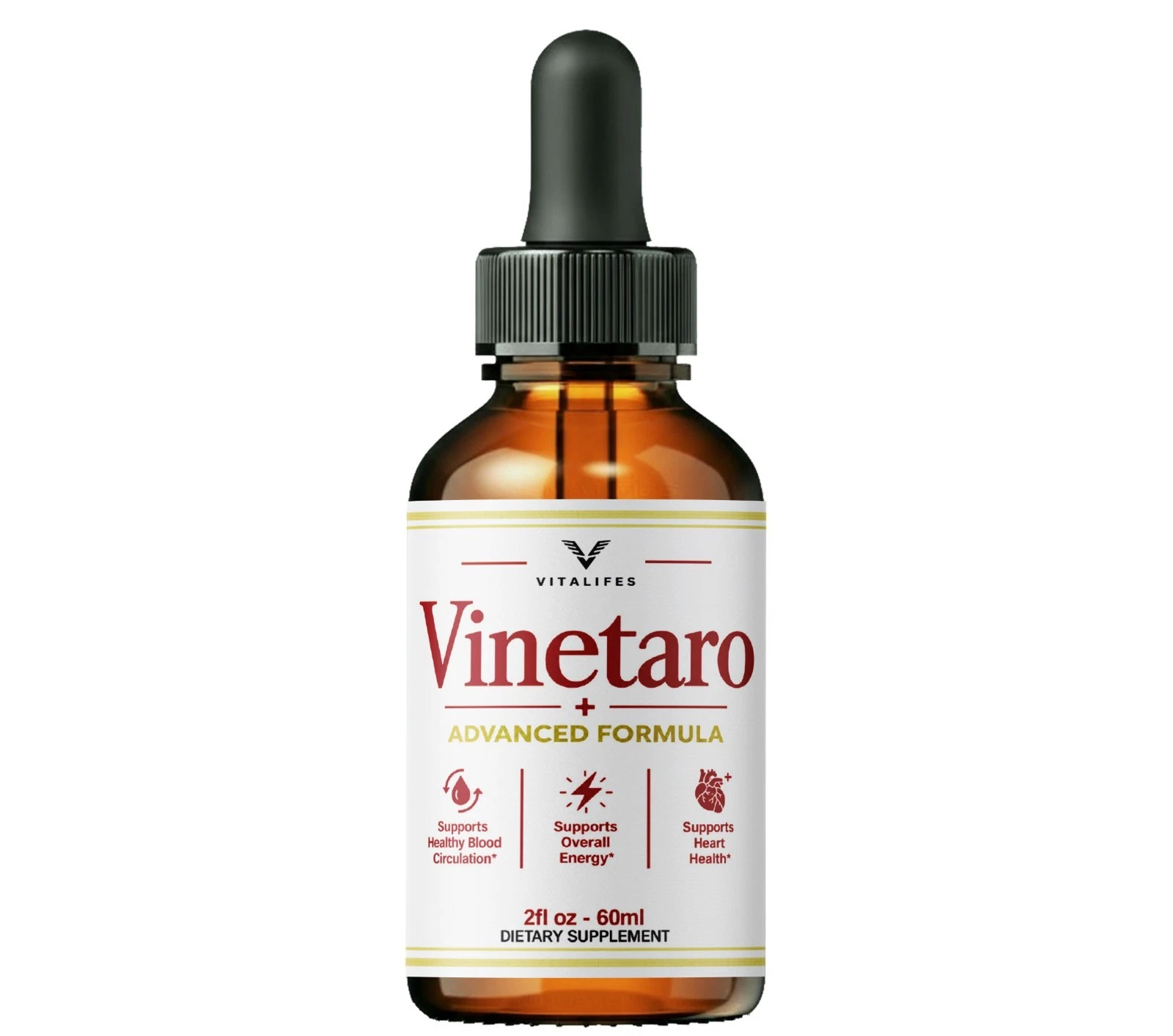
Read the seven checks before buying Vinetaro Drops
The companion guide turns all of the above into seven questions you can answer standing in front of a listing, and scores this bottle against them.
Price shown at the seller’s checkout · money-back satisfaction seal on the pack
Order Vinetaro Drops On The Official WebsiteTwo drops daily after a meal · 2 fl oz / 60 ml · lot VIN-26/TH-7868