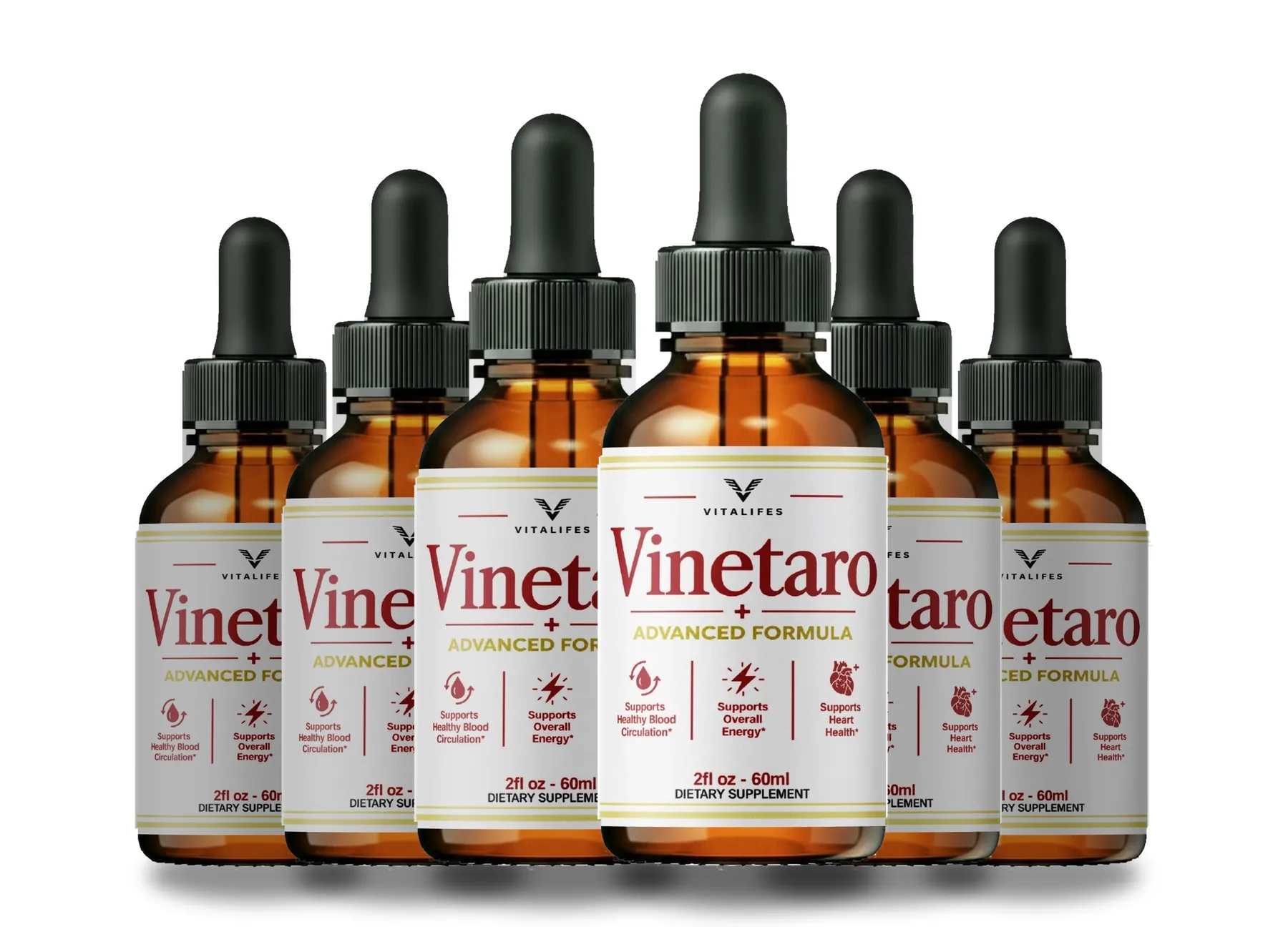
Vinetaro Drops Official Website › Guides
GuidesCirculation Supplement Guides: Two Independent Reads
Two guides sit here, and neither is a sales page. The first reads the botanicals this category is built from against their own trials, with the dose each one took.
The second is seven checks for any label in the category, applied at the end to the bottle this website sells, which passes two of them.
Written for someone standing in front of a shelf, or a marketplace listing, deciding what a claim is worth.
The two guides, and which one you want
One long, one practical. Neither is about a single product.
What the circulation supplement evidence actually cost
The long one. Ginkgo, hawthorn, horse chestnut, Centella, Ruscus, blueberry, grape seed, cinnamon, Gymnema, chromium, ginseng and green tea catechins, each read against the best published work on it, with the amount that work used printed beside it.
Seven checks to run on any label
The practical one. Seven questions you can answer standing in a shop or reading a listing, in the order they are worth asking, with a scored table at the end applying all seven to the product this site sells.
They are written to be read in either order. If you already know the category and want to judge a specific bottle, start with the seven checks. If you are trying to work out whether this category is worth any money at all, start with the evidence guide, because its answer is more complicated than either a seller or a sceptic would like.
Why a retailer publishes guides that criticise its own category
Three reasons, of which only the last one matters.
The commercial answer is that a reader who understands the category makes a better decision and returns fewer bottles, and a retail desk that only publishes flattery gets read as flattery. Both of those are true and neither is the main reason.
The main reason is that this category is genuinely difficult to read from the outside. The plants in it have real published work behind them, that work ran at amounts most products do not come near, and the gap between the two is invisible unless somebody prints both numbers next to each other. Almost nobody does, because the comparison is rarely flattering.
So the first guide prints both numbers. Where a trial ran 900 mg a day for six months, it says so. Where the retrieved record did not state a dose, it says that too rather than inventing a range. A reader who finishes it knows what a real result in this area costs, which is the one piece of knowledge that makes every label in the category legible.
- The plant, named to the species
- The plant part, or the standardised extract and its code
- The amount taken per day
- The number of weeks it was taken for
- The population it was taken by, and whether they resembled you
Those five are the spine of both guides. A label that supplies all five is rare and worth paying more for. A label that supplies none of them is not necessarily bad, but it is asking for trust in place of information, and a reader should know which of the two they are being asked for.
Reading a supplement claim in ninety seconds
Six phrases, and the distance between what they say and what they are read to say.
Both guides assume one skill, and it is quicker to teach than to look up. Supplement claims are written in a constrained vocabulary, and once the vocabulary is visible the labels in this category stop being persuasive and start being informative.
Supports, promotes, helps maintain and aids describe an effect on the body’s normal working. A seller may use them without pre-approval, provided the product is a supplement and the required statement accompanies the claim. Treats, cures, prevents and reverses describe a disease, and they are not available.
The consequence is the part most readers have not been told. A product saying it supports healthy circulation is saying the strongest thing it is permitted to say. The restraint is legal rather than modest, and a bottle making no stronger claim is not thereby a weaker product.
| What you read | What it means | What it does not mean |
|---|---|---|
| Supports healthy circulation | A structure and function claim, the strongest form available | That anything was measured in anyone |
| Clinically studied ingredients | Somebody studied the ingredient, somewhere, at some dose | That this product was studied, or matches the dose |
| Advanced formula | A marketing phrase with no regulatory meaning at all | Anything about composition |
| Made in an FDA-registered facility | The plant filed its existence with the agency | That the agency approved, inspected or endorsed the product |
| Natural | No defined meaning in this context | Safe, gentle or well studied |
| Proprietary blend | Names under one combined weight, satisfying the letter of a naming rule | That you can tell how much of anything is present |
Six phrases that appear on most packages in this category, and what each one actually commits the seller to.
Who these guides are written for
Four readers, and the section each one should open first.
Somebody about to buy their first bottle
Start with the seven checks. They are ordered so the ones that settle the matter come first, and the first two will already have told you most of what a given package is worth. Twenty minutes there saves the price of several bottles.
Somebody who has been taking one for a while
Start with the evidence guide, and specifically with the dose column. The most common discovery is that the amount behind a published result is several times the amount in the bottle, which explains a great deal about the last few months.
Somebody comparing two products
Run the seven checks on both and put the two tables side by side. Products that look identical in marketing frequently diverge sharply on checks one, two and six, and those three are where the money goes.
Somebody who has been told a plant works
Go to that plant’s section in the evidence guide. Every one of them carries the amount its best trial used, which is the single fact that turns a reputation into something you can act on.
What none of these four descriptions assumes is any prior knowledge of the literature. The guides define what they use as they go, and the one skill they depend on is set out in the section above, which takes about ninety seconds to acquire.
How these guides were put together
Four rules, applied to every figure in both guides.
Every citation was fetched, not recalled
Each of the thirty-six references on this site was retrieved from the National Library of Medicine’s own interface in the session that wrote the page carrying it. Author list, journal, year, volume and pages were read off the returned record.
The dose was captured where the record stated it
Wherever the retrieved record gave the amount a trial used, that amount is printed. Where it did not, the guide says the record did not state one. Filling that gap from memory is how a plausible number becomes a wrong number.
Cochrane reviews were preferred over single trials
Where a systematic review exists for a plant, the guide leads with it. A single encouraging trial is a reason to look further; a review of fourteen is a reason to form a view.
Nothing is attached to a product
No result in either guide is claimed for any particular bottle. That rule is absolute on this site, and it matters most for the product this desk sells, whose label declares no ingredient at all.
What these guides deliberately leave out
Five things neither guide will do, and the one that costs most to keep to.
- No ranking of brands. A retailer ranking its competitors is an advertisement with a table in it, and readers are right to discount one.
- No dosage recommendations. The guides print what trials used. What you should take is a different question, and it depends on things a web page cannot know.
- No claim that any plant here is in any particular bottle. That rule is absolute, and it matters most for the product this desk sells, whose label declares no ingredient.
- No results from trials this desk could not retrieve. Every figure in both guides came back from a live query in the session that wrote the page carrying it.
- No invented dose ranges. Where a retrieved record did not state what a trial used, the guide says so and leaves the column as it found it.
The fifth of those is the one that costs the most on the page and matters the most off it. Review abstracts frequently summarise dozens of trials without restating a dose range, and the temptation to supply a plausible figure from general knowledge is constant. A plausible figure that turns out to be wrong is worse than a blank, because a reader cannot tell which they are looking at.
The same discipline governs what these guides say about the product this website sells. It appears in the last section of the second guide, scored against the seven checks, and nowhere before that.
Sources behind both guides
Six of the thirty-six references on this site, chosen because each one sets the frame for a section of the guides.
- Nicolaï SP, Kruidenier LM, Bendermacher BL, et al. Ginkgo biloba for intermittent claudication. Cochrane Database Syst Rev. 2013;2013(6):CD006888. PMID 23744597. https://pubmed.ncbi.nlm.nih.gov/23744597/
- Pittler MH, Guo R, Ernst E. Hawthorn extract for treating chronic heart failure. Cochrane Database Syst Rev. 2008;2008(1):CD005312. PMID 18254076. https://pubmed.ncbi.nlm.nih.gov/18254076/
- Martinez-Zapata MJ, Vernooij RW, Simancas-Racines D, et al. Phlebotonics for venous insufficiency. Cochrane Database Syst Rev. 2020;11(11):CD003229. PMID 33141449. https://pubmed.ncbi.nlm.nih.gov/33141449/
- Moridpour AH, Kavyani Z, Khosravi S, et al. The effect of cinnamon supplementation on glycemic control in patients with type 2 diabetes mellitus: An updated systematic review and dose-response meta-analysis of randomized controlled trials. Phytother Res. 2024;38(1):117-130. PMID 37818728. https://pubmed.ncbi.nlm.nih.gov/37818728/
- Izzo AA, Hoon-Kim S, Radhakrishnan R, et al. A Critical Approach to Evaluating Clinical Efficacy, Adverse Events and Drug Interactions of Herbal Remedies. Phytother Res. 2016;30(5):691-700. PMID 26887532. https://pubmed.ncbi.nlm.nih.gov/26887532/
- Mangione CM, Barry MJ, Nicholson WK, et al. Vitamin, Mineral, and Multivitamin Supplementation to Prevent Cardiovascular Disease and Cancer: US Preventive Services Task Force Recommendation Statement. JAMA. 2022;327(23):2326-2333. PMID 35727271. https://pubmed.ncbi.nlm.nih.gov/35727271/
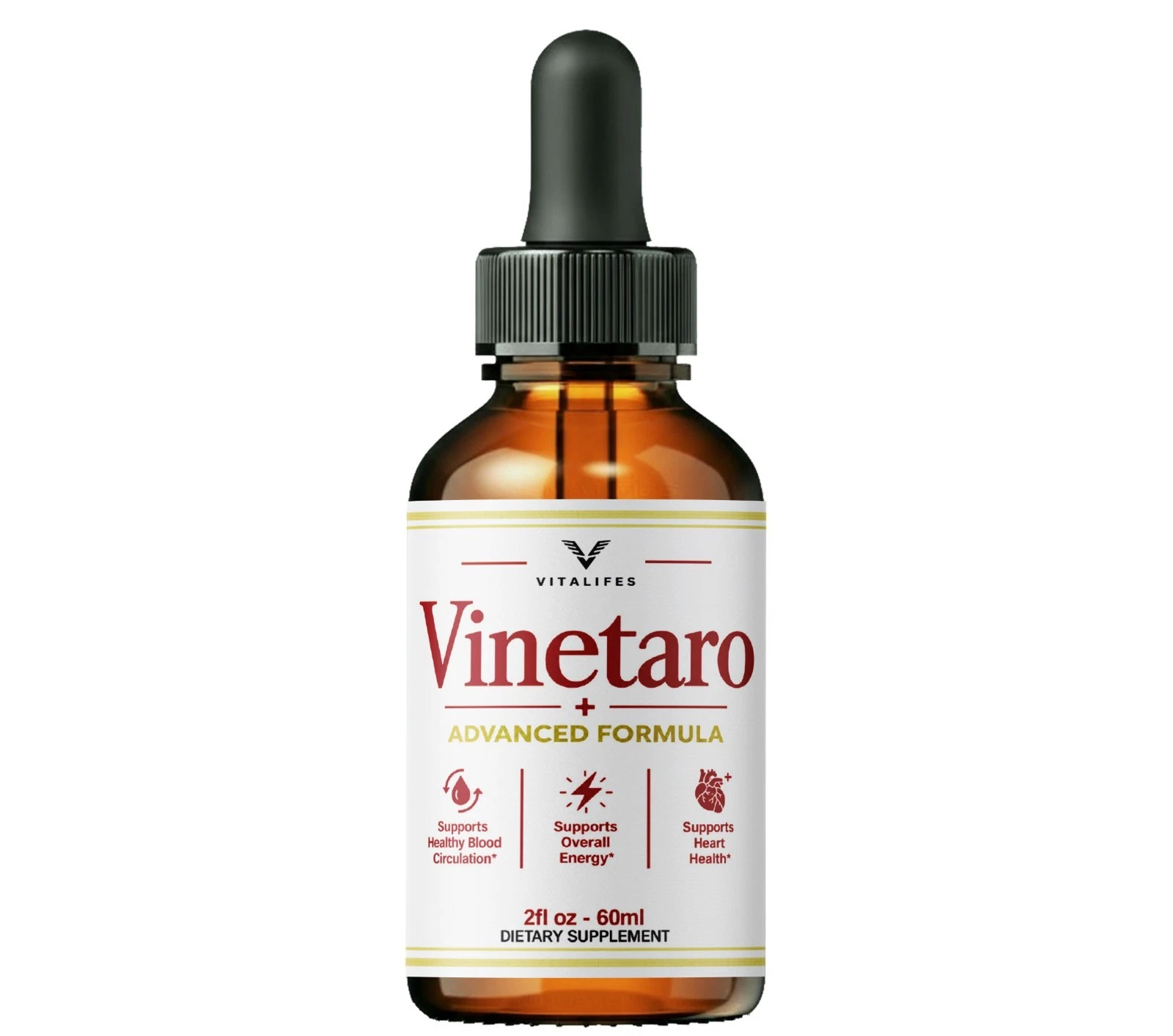
Read the guides, then decide about Vinetaro Drops
Neither guide is about this bottle until its last section. The seven checks end with a scored table, and this product passes two of the seven.
Price shown at the seller’s checkout · money-back satisfaction seal on the pack
Order Vinetaro Drops On The Official WebsiteTwo drops daily after a meal · 2 fl oz / 60 ml · lot VIN-26/TH-7868