Vinetaro Drops Official Website › Blog › A Guarantee With No Number On It
A Guarantee With No Number On It
This site's seals article covers the money-back mark as one row in a six-row table. This article stops there and asks the question that row raises but does not answer: what does it mean, in practice and under general disclosure guidance, for a guarantee to promise money back and print no number of days anywhere?

- The gold roundel on this bottle reads "100% satisfaction · money back guaranteed" and states no number of days.
- This site's own guarantee page and every blog post's closing call to action defer the day count to "the marketplace listing," rather than stating one.
- The sibling site for the same product, getvinetarodrops.com, states a specific figure on its own guarantee page: sixty days from the date of purchase.
- General FTC guidance on advertising disclosures treats a guarantee's conditions and limits, including a time limit, as material terms that should be clearly and conspicuously disclosed in the advertisement itself.
- This article is not a claim that this product's guarantee is unenforceable. It is an explanation of what a buyer loses when a promise of type carries no promise of terms.
What the seal actually says, in full
The gold roundel this seller ships with Vinetaro Drops is short enough to quote in full: "100% satisfaction · money back guaranteed." That is the entire printed text of the mark. It states a type of promise — dissatisfaction leads to a refund — and it states nothing about how long a buyer has to invoke it, what counts as dissatisfaction, whether an opened bottle qualifies, or who pays to send it back.
This site's article on reading a seal that proves nothing already covers the money-back mark as one row inside a six-row table comparing it with five other marks on this product's packaging, and that table format is the right length for that article's purpose: a fast comparison across several different kinds of claim. This article exists because the guarantee mark, on its own, raises a question worth a full treatment rather than one row: what does an unstated number actually mean for the person relying on it?
Where this site's own pages send the question instead
This is not a question this website dodges. Its own guarantee page states plainly that the roundel names no number of days, and that the distributor's own pack describes the window as "as printed on the marketplace listing" — meaning whatever the specific checkout page a buyer orders through states on the day they order, rather than a figure fixed in advance by the bottle or by this website. Every blog post's closing call to action on this site carries a short line pointing at the same fact: "read the guarantee first."
That consistency matters for what this article is and is not arguing. This is not a case of a hidden or contradicted policy. It is a case of a policy that is, by the seller's own design, variable and set at the point of sale rather than fixed on the product itself — which is a structurally different situation from either a stated, fixed guarantee or a guarantee that quietly contradicts itself across pages.
What the sibling site states for the same product
The comparison that makes this worth a dedicated article is a sibling site selling the identical product. getvinetarodrops.com, a separate retail site for the same Vinetaro Drops bottle, states a specific figure on its own guarantee page: sixty days from the date of purchase, with opened bottles included. That page frames the number plainly, as a stated policy rather than a variable one.
Two retail sites selling the same product can set different guarantee terms for orders placed through their own respective checkouts, and nothing about that arrangement is unusual in affiliate and multi-site retail generally — different desks, different order flows, different policies on the specific transaction each one handles. What the comparison establishes is narrower and more useful than an accusation: it shows that a fixed, statable number is not a technical impossibility for this product. It is a choice one sibling site made and this one, as currently written, has not.
It does not mean this site's guarantee is shorter, longer, weaker or less real than the sibling site's. It means only that one site states a number and this one defers to the marketplace listing at the point of purchase. A reader ordering through this website should read the figure on their own checkout page rather than assume either site's number applies to their order.
It is also worth being precise about why the two sites can differ at all, since the same manufacturer's product sits behind both. A guarantee printed on a retail site's own page is a policy that site sets for orders placed through its own checkout, layered on top of whatever the underlying marketplace listing itself states. One sibling site has chosen to state a specific number as its own added policy. This site, as currently written, has not added one of its own and instead points a reader to the listing directly. Both are legitimate structures. They are simply not the same structure, and a reader moving between the two sites, or seeing both in search results for the same product, has a reasonable basis for confusion unless each page is explicit about which figure applies to which checkout.
A promise of type is not a promise of terms
The distinction worth naming precisely is between a promise of type and a promise of terms. A promise of type says: if you are dissatisfied, there is a route to your money. A promise of terms says: here is exactly how long that route stays open, what condition the product must be in, and what the process costs you. The gold roundel on this bottle supplies the first and not the second.
That is not a distinction unique to this product or this category. Any guarantee claim can be split the same way, and the split is exactly why regulators and consumers alike treat the terms, not the headline promise, as the part that determines whether a guarantee is actually usable. A promise of type with no terms is not false. It is incomplete in a specific, identifiable way, and the next section covers what general advertising guidance says about that kind of incompleteness.
What general FTC disclosure guidance says about a guarantee claim
The Federal Trade Commission's general guidance for small-business advertisers addresses guarantee and warranty claims directly, and the relevant principle is stated plainly: where an advertisement makes a guarantee or warranty claim, the ad should clearly disclose how consumers can get the details, and any conditions or limits on the guarantee — the guidance names a time limit specifically as an example — must also be clearly disclosed in the advertisement itself, not left for a buyer to discover afterward.
That guidance is general advertising law, not a rule written for dietary supplements specifically, and it is not a finding about this product. It is the framework regulators and advertisers use across categories to think about what a guarantee claim owes a consumer, and it is the right framework to apply here because a money-back roundel on a supplement bottle is, functionally, exactly the kind of guarantee claim that guidance is describing: a promise made in advertising, with terms that matter to whether a consumer can actually use it.
Reading "clear and conspicuous" against this bottle's guarantee
The FTC's broader guidance on digital disclosures generally describes what "clear and conspicuous" means in practice: a disclosure should sit close to the claim it qualifies, in text a reader is likely to actually notice and understand, rather than buried where it is easy to miss. The guidance specifically warns against exactly the pattern that turns a disclosure into a formality: fine print at the bottom of an ad, a disclaimer sitting in unrelated text, or a disclosure a reader can scroll past without seeing.
Applied to this bottle's guarantee, the question this article is built around becomes concrete: is a policy that only exists on a separate marketplace listing, read at the moment of checkout rather than stated on the product or its own guarantee page, close enough to the claim it qualifies to count as clear and conspicuous under that standard? This article does not answer that question with a verdict, because that is a legal judgment this page is not positioned to make. What it can do, and does, is show a reader exactly what the standard asks for, so they can make that judgment for themselves rather than relying on the roundel's headline promise alone.
- The claim: "100% satisfaction, money back guaranteed," printed on the product itself.
- The qualifying term: a day count, which exists but is not printed on the product, in this website's guarantee page, or in the roundel — only on the marketplace listing at checkout.
- The general standard: a guarantee's conditions and limits should be clearly disclosed in the advertisement making the claim.
- The gap this article documents: a reader who sees the bottle, the marketing photography or this website's pages before reaching the checkout encounters the promise well before they encounter its terms.
What the gap actually costs a buyer
Concretely, the cost is a planning problem rather than a legal one. A buyer deciding whether to try a supplement for long enough to judge it needs to know, before ordering, roughly how long they have to make that call and still get a refund if it does not work out. When that number is not fixed and not visible until checkout, the decision about how long to trial the product and the decision about whether a refund is still available become two separate reads of two separate pages, at two separate points in time, rather than one.
Work through the timeline concretely. A buyer reads this site's pages, decides to order, and reaches the checkout, where a specific window is stated on the day of purchase. If that buyer does not screenshot or otherwise record the figure at that moment, the only record of the terms they agreed to is their own memory of a page they saw once, weeks earlier, on a device they may not still have access to. Compare that with a guarantee that states its number permanently, in the same place every time: the terms do not depend on a screenshot taken at a single moment, because they do not change from one visit to the next. The variable structure is not automatically worse for the buyer, but it does shift the burden of recordkeeping from the seller's printed policy onto the buyer's own vigilance at a single, easy-to-miss moment in the purchase flow.
This site's own guarantee page already gives the practical fix for an individual order: read the return window at the checkout, screenshot it with the date visible, and set a reminder before it closes. That advice is sound and this article is not repeating it to improve on it. This article's job is the one step earlier: explaining why that extra step is necessary in the first place, for a product whose guarantee is a promise of type printed permanently and a promise of terms printed nowhere permanent at all.
A reading checklist for any guarantee claim, not only this one
The gap this article documents is not unique to this product, and the same four questions apply to any money-back claim a reader encounters anywhere, on any category of product.
- Is the day count stated on the product itself, on the seller's own guarantee page, or only on a listing that can change between visits?
- Does the guarantee say whether the clock starts at the date of purchase or the date of delivery, since the difference can be a meaningful fraction of the window on a slow shipment?
- Does the guarantee say whether an opened or partly used product still qualifies, or only a sealed one?
- Is the claim to be found in the same place, and at the same time, as the guarantee's headline promise, or does a reader have to go looking for it separately?
A guarantee that answers all four questions in the same place it makes its promise is, by the general standard this article has been working through, easier for a buyer to rely on than one that answers them only at checkout, or only on a separate page, or not at all. This site's own guarantee page answers the first three questions honestly, even though the first answer is "read the listing" rather than a fixed figure. The fourth question, proximity between promise and terms, is the one this article has argued is worth a reader's attention before they pay rather than after.
The practical response, stated plainly
None of this is a reason to treat the guarantee as false or the seal as meaningless. A variable, checkout-set return window is a real policy structure, used across plenty of retail relationships, and this site's own pages are consistent and honest about the fact that this bottle's version of it defers to the listing rather than fixing a number. What this article adds is the naming of the regulatory lens a reader can use to judge that structure for themselves: a guarantee's terms, not only its headline, are the part general disclosure guidance treats as material, and a buyer who wants the protection this seal describes has exactly one reliable way to get its terms — reading the specific listing they are about to pay through, before they pay, rather than after.
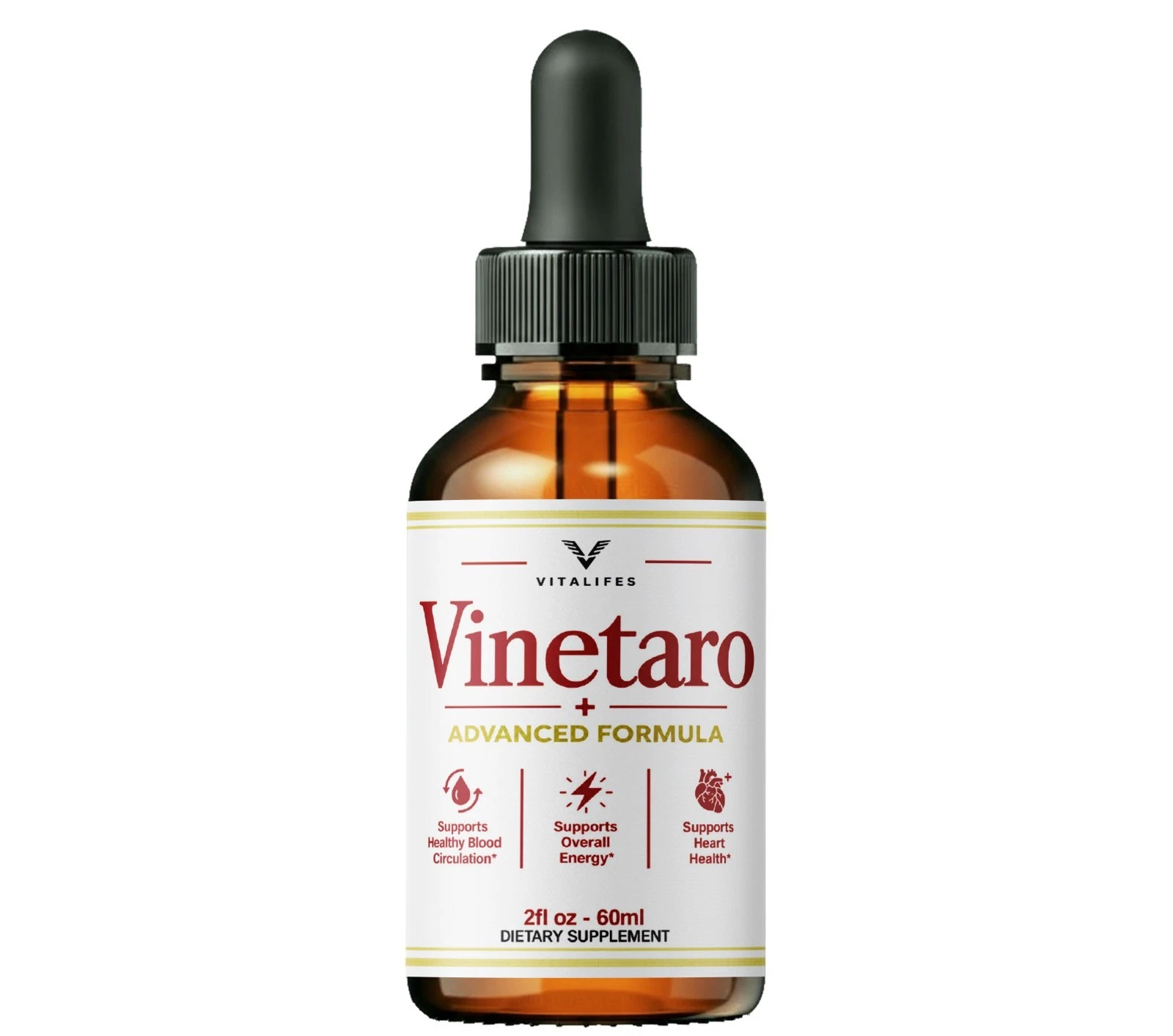
Order Vinetaro Drops and read the guarantee window before you pay
2 fl oz / 60 ml in an amber dropper bottle, a money-back seal with no day count printed on it, and the actual window stated at the seller's checkout.
Price shown at the seller’s checkout · money-back satisfaction seal on the pack
Order Vinetaro Drops On The Official WebsiteTwo drops daily after a meal · 2 fl oz / 60 ml · lot VIN-26/TH-7868
References
- Federal Trade Commission. .com Disclosures: How to Make Effective Disclosures in Digital Advertising. https://www.ftc.gov/business-guidance/resources/com-disclosures-how-make-effective-disclosures-digital-advertising
- Federal Trade Commission. Advertising FAQ's: A Guide for Small Business. https://www.ftc.gov/business-guidance/resources/advertising-faqs-guide-small-business