Vinetaro Drops Official Website › Blog › Seals That Prove Nothing
How To Read A Seal That Proves Nothing
Roundels are the cheapest thing on any package and the hardest part of it to check. One test sorts the marks that mean something from the marks that are graphic design, and it takes about two seconds per seal.
- The question is never whether a seal is present. It is whether anything printed on it leads somewhere.
- A GMP mark without a facility name or an auditing body asserts a framework without saying who applied it.
- Facility registration is an administrative filing, not an inspection and not an approval.
- A third-party testing claim is worth something only when a certificate with a laboratory name, a date and a method sits behind it.
- A lot number is the one mark on most packages that genuinely does a job, and it is usually the least decorated thing on the box.
The one test that sorts them
Here is the test, and it is the only thing in this article that needs memorising. Look at the seal and ask: could I take something printed on this to a third party and get an answer?
A registration number leads somewhere. A certificate identifier leads somewhere. A laboratory name leads somewhere. Three letters in a ribbon, a roundel with a wreath around it, or the phrase premium quality lead nowhere at all.
That is not an accusation. A manufacturer can work to a high standard without printing numbers on the marketing artwork, and plenty do. The test does not tell you whether a product is good. It tells you whether the seal is information or decoration, and a buyer is entitled to know which one they are being handed.
If you cannot look it up, it is a design element. Weigh it accordingly and move on to the panel.
The marks you will actually meet
Six marks cover most of what appears on supplement packaging in this category. Each one asserts something specific, and each has a specific thing it would need in order to be checkable.
| The mark | What it asserts | What it would need to be checkable |
|---|---|---|
| Good Manufacturing Practice | That the product was made under a recognised quality framework | The facility name and the body that audited it |
| FDA-registered facility | That the plant filed its existence with the agency | The registration number, and an understanding that filing is not approval |
| Third-party tested | That an outside laboratory examined the product | A certificate with a laboratory name, a date, a method and a lot |
| Foreign and domestic ingredients | That the contents were sourced from more than one country | A country list, or an ingredient list to attach countries to |
| Money-back guarantee | A commercial return policy | A number of days, stated on the package or the listing |
| Doctor formulated | That somebody with a qualification was involved | A name, a qualification and a way to confirm both |
Six marks that appear across this whole category. Only the third and fifth can ever be made genuinely checkable, and both require a document rather than artwork.
What GMP does and does not assert
Good Manufacturing Practice is a real regulatory framework with real requirements. It covers how a facility is run: written procedures, trained staff, identity testing of incoming materials, cleaning between production runs, record keeping and the handling of complaints. A product genuinely made under it is a better bet than one that is not.
What a GMP roundel on a package asserts is that this framework was applied. What it usually omits is who applied it and who checked. Without a facility name and an auditing body, the mark is a statement of intent, and intent is not what the framework is for.
What a better version looks like
- A named facility, which can be searched.
- A named certifying body, which can be asked whether the certification is current.
- A certificate number, which ties the claim to a document.
- A date, because certifications expire.
- Any of those four, printed anywhere on the package or the listing, changes the mark from decoration into a claim somebody has staked their name on.
Registration is a filing, not an approval
This is the most widely misread mark in the whole category, and the misreading is understandable because the wording invites it.
A facility registration means a plant told the agency that it exists, where it is and what kind of product it makes. It is a notification. It is not an inspection, it is not an endorsement of anything made there, and it is emphatically not approval of the product in the package.
Supplements are not approved before sale at all. They are regulated as food rather than as medicine, and the responsibility for safety and for the accuracy of a label sits with the company selling it. A roundel implying otherwise is borrowing authority it was never granted.
It means the facility is on a list, which means it can be inspected and can be found if something goes wrong. That is a real thing. It is just a much smaller thing than the word on the roundel suggests.
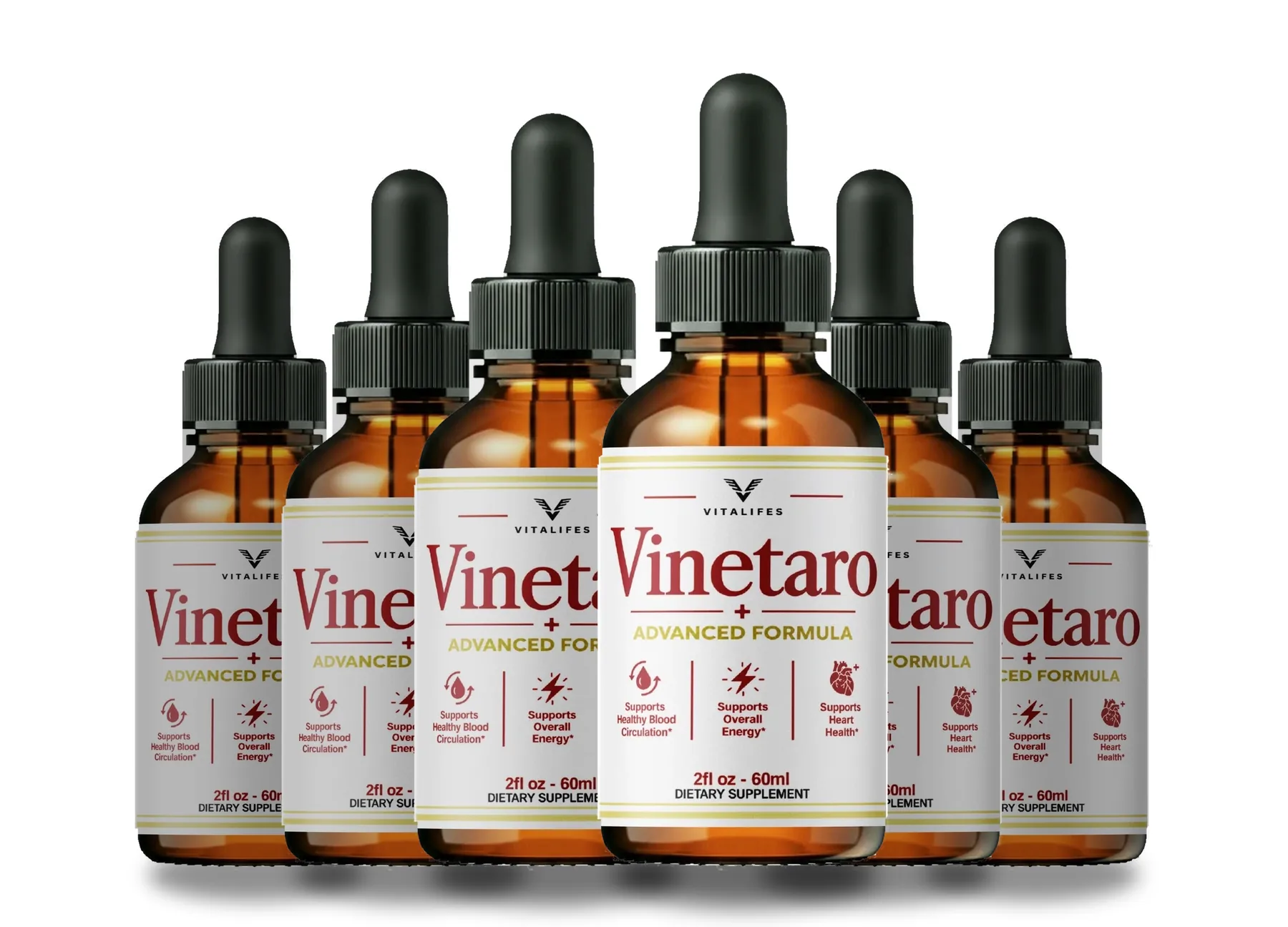
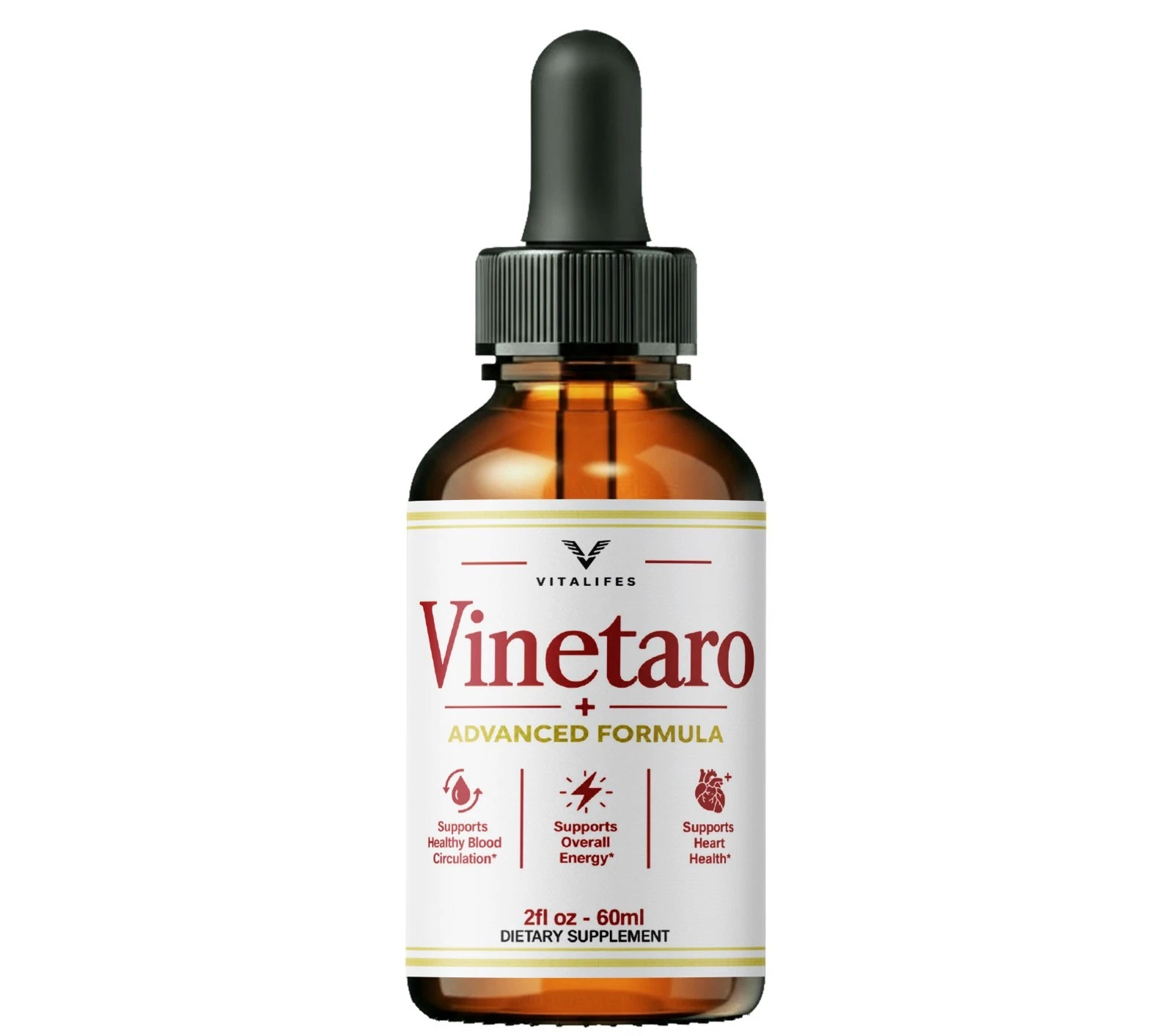
Order Vinetaro Drops and read the seals against the pack
Four marks, one lot number and a money-back roundel. Everything in this article can be held up against the parcel when it arrives.
Price shown at the seller’s checkout · money-back satisfaction seal on the pack
Order Vinetaro Drops On The Official WebsiteTwo drops daily after a meal · 2 fl oz / 60 ml · lot VIN-26/TH-7868
A certificate of analysis, field by field
Third-party testing is the claim most worth having and the one most often asserted without a document. Here is what the document looks like when it exists.
| Field on a real certificate | Why it is there |
|---|---|
| The laboratory's name and address | Somebody has to be accountable for the result, and independence is the point |
| A date | A certificate that predates the batch it describes is describing something else |
| The lot it applies to | Results attach to a production run, not to a brand |
| The method used for each assay | A result without a method cannot be repeated or compared |
| Identity of each declared ingredient | That what the label names is what is present |
| Quantity of each declared ingredient | That the amount printed is the amount present |
| Contaminant screens | Heavy metals, microbial counts and solvent residues, which matter most on botanicals |
| A release signature | A person, not a department, taking responsibility |
Eight fields. A document carrying all eight is worth more than any number of roundels, and the fifth and sixth require a label that declares something to test against.
Two of those eight fields deserve extra attention on a botanical product. Identity testing answers whether the plant in the bottle is the plant on the label, which is not a trivial question when plant material passes through several hands before anyone sees it in powder form. Contaminant screening answers questions nobody can answer by looking.
The fifth and sixth fields also carry a trap worth naming. An identity or quantity assay needs a declared ingredient to test against. On a product whose label declares nothing, there is nothing for those two rows to confirm, and a certificate covering only contaminants is a narrower document than the phrase third-party tested suggests.
What a lot number is genuinely good for
The most useful mark on most packages is the least decorative one, usually stamped rather than printed and often in a different ink.
A lot number ties your bottle to a production run. That is what makes a complaint traceable, a recall possible and a pattern detectable. If three people report the same problem and all three quote the same lot, that is a signal. Without lot numbers it is three anecdotes.
- Photograph the lot number when the parcel arrives, before it rubs off.
- Quote it in any conversation about the product rather than the parcel.
- Check it against whatever the accompanying paperwork says, and treat a mismatch as a same-day call.
- Keep it with the confirmation email, which is the document that ties the lot to your purchase.
- Ask for the certificate against that lot specifically. A certificate for a different run describes a different batch of liquid.
Why this matters more in this category than most
An analysis of FDA supplement warnings covers what has been found in products whose labels described their contents loosely or not at all. That is the strongest single reason to prefer marks that lead somewhere: not because a checkable seal proves a good product, but because an uncheckable one leaves nothing for anybody to work with.
A 2026 review of drug-induced liver injury includes herbal and dietary products as a recognised category within that literature, and every investigation in it begins with identifying what was taken. A lot number and a panel answer that question. A wreath does not.
A 2026 analysis of American supplement use shows how many people this applies to, and the critical appraisal of herbal evidence is the best general guide to reading claims in this field. Between them they make the case that seal literacy is an ordinary consumer skill rather than a specialist one.
- Ask of every seal whether anything on it leads somewhere. If not, it is decoration.
- GMP is a real framework, and a roundel without a facility or an auditor is a statement of intent.
- Facility registration is a filing. Supplements are not approved before sale at all.
- A third-party testing claim means a certificate, with a laboratory, a date, a method and a lot.
- The lot number is the most useful mark on most packages, and it is usually the plainest.
References
- Tucker J, Fischer T, Upjohn L, et al. Unapproved Pharmaceutical Ingredients Included in Dietary Supplements Associated With US Food and Drug Administration Warnings. JAMA Netw Open. 2018;1(6):e183337. PMID 30646238. https://pubmed.ncbi.nlm.nih.gov/30646238/
- Swanson L, Fontana RJ. The contemporary epidemiology, causes, and management of drug-induced liver injury. Hepatol Commun. 2026;10(8). PMID 42475234. https://pubmed.ncbi.nlm.nih.gov/42475234/
- Izzo AA, Hoon-Kim S, Radhakrishnan R, et al. A Critical Approach to Evaluating Clinical Efficacy, Adverse Events and Drug Interactions of Herbal Remedies. Phytother Res. 2016;30(5):691-700. PMID 26887532. https://pubmed.ncbi.nlm.nih.gov/26887532/
- Lam CS, O'Connell K, Monroy-Iglesias MJ, et al. Emerging Patterns in Dietary Supplement Use Among US Adults, 1999-2023. JAMA Netw Open. 2026;9(6):e2619291. PMID 42295756. https://pubmed.ncbi.nlm.nih.gov/42295756/