Vinetaro Drops Official Website › Blog › Ginkgo's Other Number
Ginkgo's Other Number: What The Bleeding-Risk Evidence Says
One blog post on this site cites a Cochrane review to say ginkgo's walking-distance benefit is weak, inside a general symptom-triage article, and moves on. This one stops there and reads the number that matters more: what the published interaction literature says about ginkgo, bleeding, and the medicines it can complicate.

- Ginkgo's benefit record for walking distance in claudication is weak, per a large Cochrane review of fourteen trials.
- Ginkgo's safety record is a separate, better-established body of work, and it is about bleeding risk rather than walking distance.
- A 2025 analysis of ginkgo drug interactions specifically examined bleeding risk and coagulation profiles.
- A systematic review of warfarin interactions lists ginkgo among the herbal products with documented interaction reports.
- A classic JAMA review of herbal medicines in perioperative care flags ginkgo by name for its antiplatelet mechanism, ahead of surgery.
- The calculus this article sets out is risk against uncertain benefit for one plant, not a triage decision about symptoms and not a dose comparison for a different plant.
Ginkgo has two numbers, and this site has only covered one
The circulation-symptoms article on this site cites a Cochrane review of ginkgo for intermittent claudication, the calf pain that comes on with walking, and does it in a single sentence inside a piece about when a symptom needs a diagnosis rather than a supplement. That is the right length for that article, because its job is triage, not a plant-by-plant literature review.
This site's ingredients page goes a step further and names a second body of evidence in a single sentence of its own: ginkgo "carries the one interaction on this page that is worth naming out loud." No post on this site has ever unpacked what that sentence is standing on. This article does that, and only that — not the benefit question, which the Cochrane review already answers plainly, but the risk question, which deserves the same full treatment.
The weak number: walking distance in claudication
For context, and only for context, here is what the benefit side of the ledger says. A Cochrane review pooling fourteen trials in 739 people with intermittent claudication found no reliable, clinically meaningful benefit on walking distance from ginkgo biloba extract compared with placebo. An earlier meta-analysis had reported a more favourable result, and the shift between the two is the familiar pattern in this literature: results get less impressive as trial quality and size improve, not more.
That finding is settled enough that this article will not relitigate it. What it means for the rest of this piece is that ginkgo's case, where one exists, does not rest on a strong walking-distance benefit. Whatever risk this article goes on to describe has to be weighed against a benefit that a major systematic review already calls unreliable, not against a strong, well-established one.
Why a benefit-neutral plant can still carry a real risk
Ginkgo's active compounds include ginkgolides, a family of terpene lactones unique to the plant, and one of their known pharmacological actions is antagonism of platelet-activating factor, a signalling molecule involved in the clotting cascade. That mechanism is precisely the kind of thing that can matter for bleeding risk independent of whether it does anything measurable for circulation symptoms — a plant does not need to work for its side effects to be real.
This is the structural point this article is built around: benefit evidence and risk evidence are separate literatures, generated by separate kinds of studies, and a weak result in one says nothing about the other. Claudication trials look for improved walking distance. Interaction studies look for altered bleeding time, platelet function or drug clearance. A plant can fail the first kind of study and still warrant caution in the second, and ginkgo is close to the textbook example of exactly that pattern.
It is worth being precise about what the mechanism does and does not establish on its own. A demonstrated pharmacological action — platelet-activating factor antagonism, in a test tube or in isolated platelets — is a plausible pathway, not proof that a given dose in a given person produces a clinically meaningful bleeding tendency. That distinction is exactly why the interaction papers below matter more than the mechanism alone: they are the studies that moved from plausible pathway to observed association, in coagulation profiles and in reported cases, which is a higher bar than a laboratory mechanism clears by itself.
| Evidence type | What it can establish | What it cannot establish alone |
|---|---|---|
| Laboratory mechanism (platelet-activating factor antagonism) | A plausible biological pathway to altered clotting | Whether that pathway matters at a real-world dose in a real person |
| Case reports | That an adverse event occurred alongside ginkgo use | Causation on their own, though a repeated pattern across reports strengthens the signal |
| Systematic reviews and dedicated interaction analyses | Whether a pattern recurs across the published literature as a whole | An individual person's own risk, which depends on their own medicines and health |
Three different kinds of evidence, each answering a different part of the question. The next three sections work through the second and third rows for ginkgo specifically.
What the 2025 interaction analysis actually looked at
A 2025 analysis published in PLoS One, titled plainly as an examination of the impact of ginkgo biloba drug interactions on bleeding risk and coagulation profiles, is the most direct, most recent piece of the picture. It is described on this site's own ingredients page as "a comprehensive analysis," which is the paper's own framing rather than marketing language: the study set out specifically to characterise how ginkgo intersects with coagulation.
| Field | What the 2025 analysis covers |
|---|---|
| Subject | Ginkgo biloba drug interactions, specifically bleeding risk and coagulation profiles |
| Journal | PLoS One |
| Year | 2025 |
| Relevance to this site | Cited on the ingredients page as the source behind "the one interaction on this page worth naming out loud" |
Full citation details are in the references section below. This table summarises what the paper is about, not its full statistical findings, which a reader should verify against the published paper directly.
The existence of a 2025 paper with this scope is itself informative: it means the bleeding-risk question is not settled folklore carried over from older case reports. It is an active area researchers were still formally characterising as recently as this year, which argues for treating the caution as current rather than outdated.
It is also worth reading what a paper like this is doing methodologically, since the word "comprehensive" in a title can be read two ways. A comprehensive analysis of a drug interaction typically means pulling together pharmacokinetic data, reported adverse events and mechanistic studies into a single assessment, rather than running one new clinical trial. That is a different and, for a safety question, often more useful kind of evidence than a single trial would be, because bleeding events are uncommon enough that no single study is likely to be adequately powered to detect them reliably on its own. Aggregation across sources is how a signal like this one gets established with any confidence at all.
Ginkgo inside the warfarin interaction literature
The second source this site's ingredients page points to is broader: a systematic review of warfarin interactions with food, herbal and dietary supplement products, published in the British Journal of Clinical Pharmacology. Warfarin is a vitamin K antagonist anticoagulant with a famously narrow therapeutic window, which is exactly why it is the drug pharmacologists use as the stress test for herb-drug interaction claims: if a botanical shows up reliably in the warfarin literature, that is a stronger signal than an isolated case report.
Ginkgo appears in that review among the herbal products with a documented interaction history. What a systematic review like this one does that a single study cannot is aggregate: it pulls together the case reports, the pharmacokinetic studies and the smaller trials into one place and asks which botanicals keep recurring. Ginkgo recurring in a review built specifically around one of medicine's most interaction-prone drugs is the strongest kind of corroboration available short of a dedicated trial in anticoagulated patients, which would itself raise obvious ethical questions to run.
- Warfarin reviews exist because the drug's interaction list is long and clinically consequential, which makes inclusion in one meaningful rather than routine.
- A botanical appearing in both a dedicated ginkgo-interaction analysis and a warfarin-specific review is corroboration from two different research angles.
- Neither source claims to quantify exactly how much the risk rises for any individual person, and this article does not either.
It is worth noting what this kind of review does not do, as much as what it does. A systematic review of warfarin interactions is organised around one drug, so it says nothing directly about ginkgo's interaction with antiplatelet medicines, with other anticoagulants, or with over-the-counter aspirin taken regularly rather than on prescription. Those pathways are addressed separately, in the 2025 analysis above and in the perioperative literature that follows, and treating a warfarin-specific finding as though it covers every blood-thinning medicine would overstate what one review, built around one drug, can tell a reader.
The perioperative review, and why surgery is the sharpest case
The clearest practical illustration of why this matters comes from outside the two sources this site's ingredients page already names. A widely cited JAMA review of herbal medicines and perioperative care singled out ginkgo, alongside garlic and ginger, as botanicals with a plausible mechanism for increased bleeding that matters specifically around surgery, and recommended discontinuation in advance of a procedure.
Surgery is the sharpest case for a reason that has nothing to do with dose or duration: it is a setting where bleeding risk is actively being managed by a clinical team, where an unlisted botanical cannot be accounted for because nobody knows it is there, and where the consequence of an unexpected bleeding tendency is immediate rather than theoretical. A patient who cannot tell their anaesthetist what is in a liquid supplement because the label does not say is in exactly the situation this review is describing.
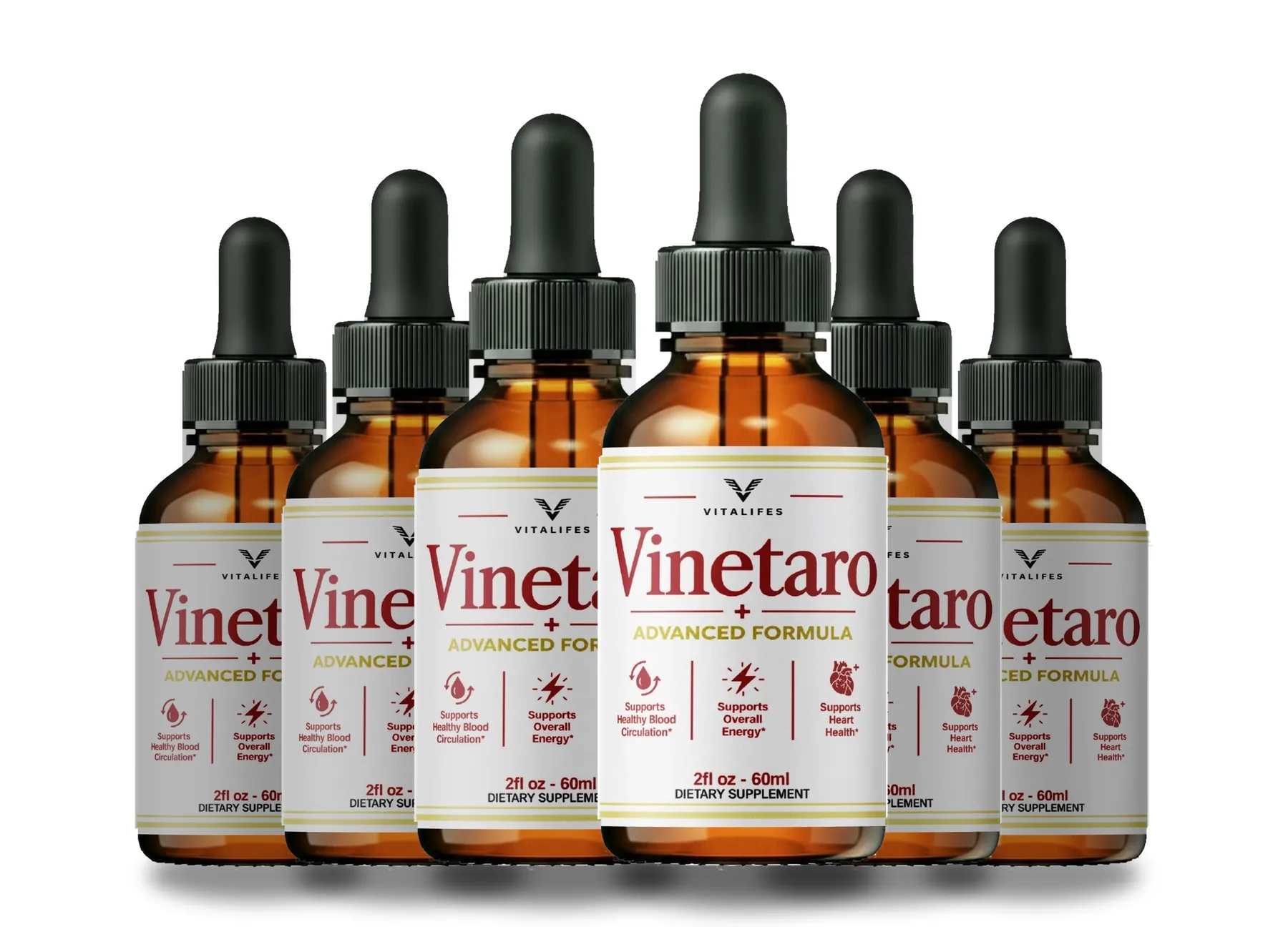
The review's practical recommendation, discontinuing ginkgo and the other botanicals it names in advance of a scheduled procedure, is standard advice a pre-operative team is likely to ask about directly, usually through a medication reconciliation form. The trouble specific to this bottle is that the usual version of that conversation, "here is my supplement, here is what it contains," is not available. A patient can hand over the bottle itself, and the honest answer their prescriber will get from reading it is that ginkgo leaves are pictured on the marketing panel and no amount is stated anywhere on the printed surface — a starting point for the conversation, not a substitute for having it early, well before a surgery date rather than in a pre-operative waiting room.
Who this actually changes anything for
This article is not a blanket warning against ginkgo for everyone who might encounter it. The interaction literature is specific about who the finding is most relevant to, and being precise about that is more useful than treating every reader the same way.
- Anyone taking warfarin or a direct oral anticoagulant, where the interaction literature is most developed.
- Anyone taking an antiplatelet medicine such as clopidogrel, or daily aspirin on medical advice, where the mechanism overlaps directly with ginkgo's own platelet-activating-factor antagonism.
- Anyone with surgery scheduled, per the perioperative review above.
- Anyone with a bleeding disorder or a low platelet count, where any additional antiplatelet effect carries more weight than it would in someone without one.
Outside those groups, the interaction literature is a reason for awareness rather than alarm. The point of naming the groups specifically is the same point this site's side effects page makes about the product generally: a bottle that declares no ingredient removes a prescriber's ordinary ability to check it, which makes disclosure — telling a prescriber what you are taking, even when the label cannot — the only working substitute.
There is also a group worth naming for the opposite reason: people with no bleeding-relevant medicine, no bleeding disorder and no procedure scheduled, for whom the interaction literature reviewed above is background knowledge rather than an active caution. The evidence behind this article does not support treating ginkgo as hazardous in general. It supports treating it as a plant whose main documented risk is narrow, specific and well characterised, which is a more useful thing to know than either "ginkgo is dangerous" or "ginkgo is safe" stated without qualification.
A risk-versus-uncertain-benefit calculus, stated plainly
Put the two halves of this article together and the calculus is straightforward to state, even though it will land differently for different readers. On the benefit side, a major systematic review found ginkgo's best-studied circulation outcome, walking distance in claudication, unreliable. On the risk side, a dedicated 2025 interaction analysis, a systematic review built around one of medicine's most interaction-sensitive drugs, and a classic perioperative-care review all converge on the same caution: ginkgo and bleeding risk deserve to be considered together, particularly around anticoagulants, antiplatelets and surgery.
That is a different shape of conclusion from either the triage framing this site's circulation-symptoms article uses or the dose-and-duration framing its hawthorn article uses for a different plant entirely. It is not a question of whether to see a doctor, and it is not a question of how many milligrams a trial used. It is a question of whether an uncertain, likely-weak benefit is worth raising with a prescriber before combining it with a medicine where the consequence of an interaction is measured in bleeding, not in a missed improvement.
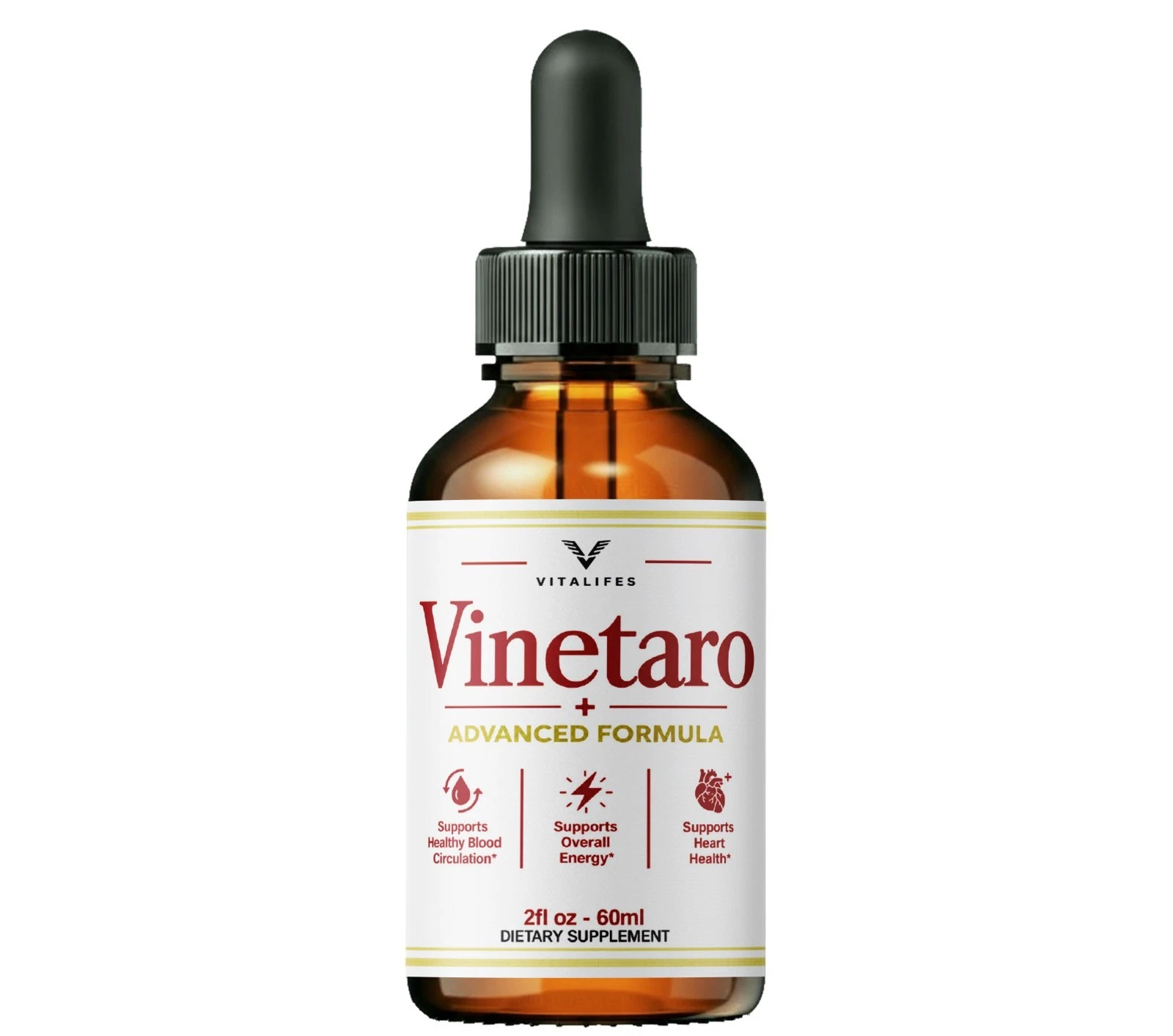
Order Vinetaro Drops after reading what the ginkgo interaction literature says
2 fl oz / 60 ml in an amber dropper bottle, two drops daily after a meal, and a label with no ingredient list to check against a prescription.
Price shown at the seller’s checkout · money-back satisfaction seal on the pack
Order Vinetaro Drops On The Official WebsiteTwo drops daily after a meal · 2 fl oz / 60 ml · lot VIN-26/TH-7868
References
- Nicolaï SP, Kruidenier LM, Bendermacher BL, et al. Ginkgo biloba for intermittent claudication. Cochrane Database Syst Rev. 2013;2013(6):CD006888. PMID 23744597. https://pubmed.ncbi.nlm.nih.gov/23744597/
- Mai NTQ, Hieu NV, Ngan TT, et al. Impact of Ginkgo biloba drug interactions on bleeding risk and coagulation profiles: A comprehensive analysis. PLoS One. 2025;20(4):e0321804. PMID 40198642. https://pubmed.ncbi.nlm.nih.gov/40198642/
- Tan CSS, Lee SWH. Warfarin and food, herbal or dietary supplement interactions: A systematic review. Br J Clin Pharmacol. 2021;87(2):352-374. PMID 32478963. https://pubmed.ncbi.nlm.nih.gov/32478963/
- Ang-Lee MK, Moss J, Yuan CS. Herbal medicines and perioperative care. JAMA. 2001;286(2):208-216. PMID 11448284. https://pubmed.ncbi.nlm.nih.gov/11448284/