Vinetaro Drops Official Website › Blog › Symptoms That Need A Cause
Circulation Symptoms That Need A Cause, Not A Supplement
This is the article on this website most likely to cost it a sale, and it is the reason the other four are worth reading. Some symptoms deserve a name before they deserve a routine, and telling the two apart is not difficult.
- Chest symptoms and sudden neurological symptoms are emergencies. No supplement is part of that conversation.
- One leg suddenly swollen, warm and painful is a same-day question with a specific test behind it.
- Calf pain that arrives on walking and goes on resting has a name, and the office test for it takes minutes.
- Ankle swelling has several causes and telling them apart changes what actually helps.
- Being assessed once gives you a measurement, which is the thing every later decision depends on and the thing no bottle can supply.
Three tiers of urgency
Most of the confusion in this area comes from treating circulation as one topic. It is several, they have different urgencies, and a short table sorts them faster than any amount of prose.
| What you notice | How soon it deserves attention | Why |
|---|---|---|
| Chest pain or pressure, especially on exertion | Immediately, as an emergency | This is not a supplement question and never has been |
| Sudden weakness, numbness or difficulty speaking | Immediately, as an emergency | Time is the whole of the treatment in this one |
| One leg suddenly swollen, warm and painful | The same day | A clot in a leg vein has a specific test and a specific treatment |
| Cramping calf pain that comes on walking and stops on resting | Within weeks | This pattern has a name and a simple office test |
| Both ankles swelling by evening, for weeks | Within weeks | Several causes, and telling them apart changes what helps |
| Cold hands and feet, gradual onset | Worth mentioning at a routine appointment | Common, usually benign, occasionally the first sign of something else |
| Tiredness that has changed pattern | Worth mentioning at a routine appointment | Too many causes to guess at, and several are easily tested |
Three tiers. The top two rows are the reason this article exists on a website that sells a supplement.
Nothing in that table requires any medical knowledge to use. It requires noticing a pattern and acting on the tier it falls in, which is a skill everyone already has and frequently talks themselves out of using.
Leg pain on walking has a name and a test
Cramping pain in the calf that arrives reliably after a certain distance and disappears after a few minutes of standing still is one of the most characteristic patterns in medicine. It is called intermittent claudication and it is caused by arteries that cannot deliver enough blood to working muscle.
It matters for two reasons. The first is that the pattern is treatable and the treatments are well established: supervised exercise, addressing the underlying risk factors, and in some cases a procedure. The second is that the same arterial process is rarely confined to the legs, so finding it there is information about the rest of the system.
Why this pattern is worth naming precisely
The reliability is the diagnostic feature. Pain that comes on after roughly the same distance every time and settles after roughly the same rest is behaving like a supply problem. Pain that varies unpredictably, or that is present at rest, or that is worse going downhill than up, is more likely to be something else, and the something else has its own management.
The office test is a comparison of blood pressure at the ankle with blood pressure at the arm. It takes minutes, needs no needles, and produces a number that can be repeated a year later.
The Cochrane review of Ginkgo biloba for claudication is where the supplement literature on this symptom sits, and it pooled fourteen trials in 739 participants to reach a cautious conclusion. That is the honest position: this is the most studied supplement approach to this symptom, and the evidence for it is weaker than the evidence for walking.
Swelling is a question, not a diagnosis
Swollen ankles are one of the most common reasons anyone looks at a circulation supplement, and they are one of the least specific symptoms in the whole of medicine.
Chronic venous insufficiency causes it, and so do heart failure, kidney problems, liver problems, thyroid problems, several extremely common medications, a long flight, hot weather and standing up all day. Those causes have almost nothing in common and their treatments have nothing in common at all.
- One leg, sudden, warm, painful: a same-day question. This pattern has its own specific test.
- Both legs, gradual, worse by evening, better overnight: the common pattern, and still worth a cause.
- Swelling with breathlessness, especially lying flat: a different tier entirely.
- Swelling that started within weeks of a new medication: bring the medication list.
- Swelling with skin changes, discolouration or an ulcer: venous disease has stages and the later ones are harder to reverse.
The Cochrane review of phlebotonics covers the drug class most often studied for venous symptoms, and the hawthorn review covers the plant with the best evidence on the cardiac side. Both are worth knowing about and neither is a substitute for finding out which of the causes above is producing the swelling in front of you.
Swelling is the body asking a question, and the useful response is to answer it rather than to reduce it.
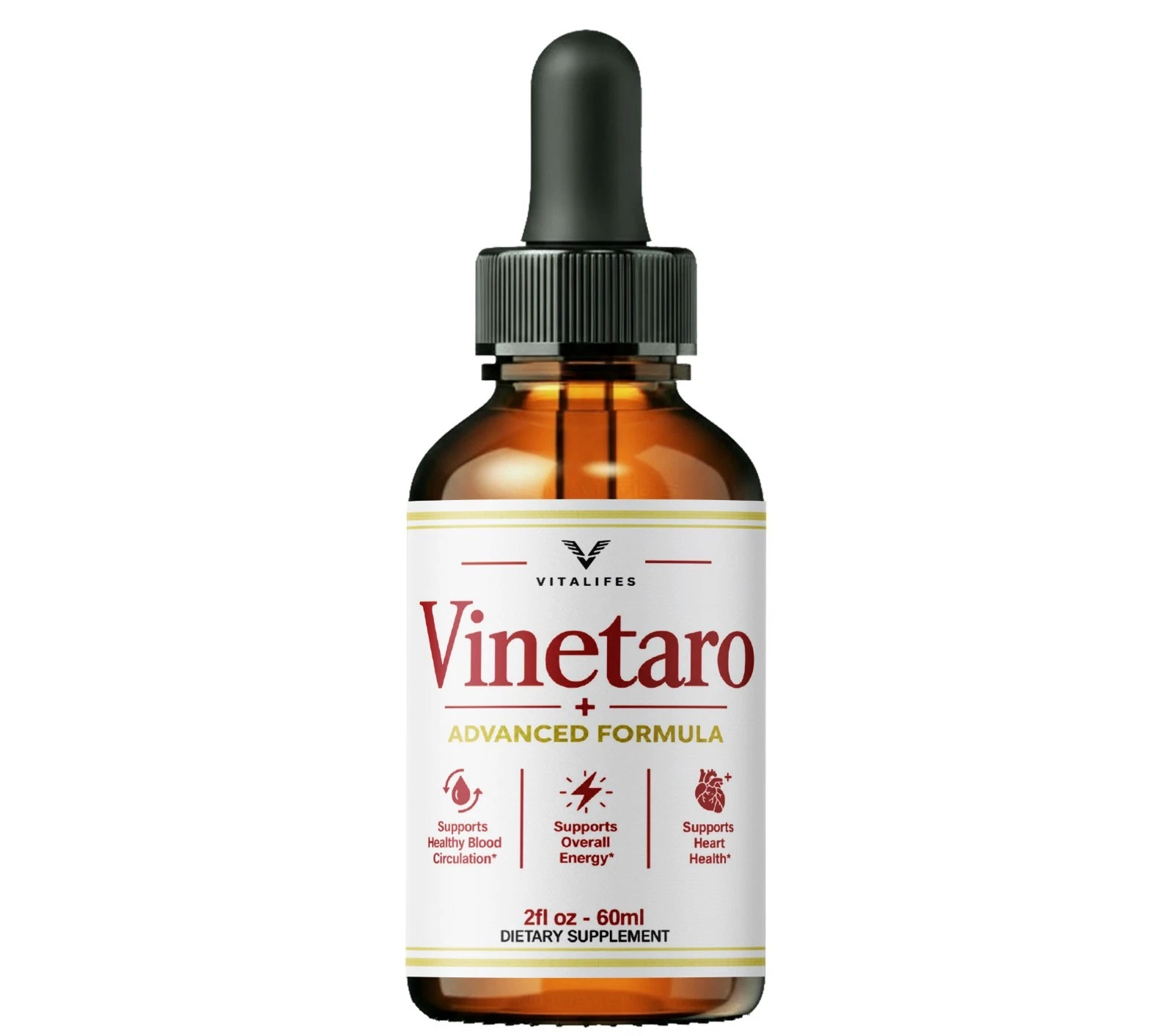
Get the cause first, then decide about Vinetaro Drops
A supplement is a reasonable thing to add to a routine once you know what the routine is for. It is a poor way to find out.
Price shown at the seller’s checkout · money-back satisfaction seal on the pack
Order Vinetaro Drops On The Official WebsiteTwo drops daily after a meal · 2 fl oz / 60 ml · lot VIN-26/TH-7868
Chest symptoms are not a supplement question
This section is short because it only needs to say one thing.
Chest pain, chest pressure, chest tightness, pain radiating into the jaw or arm, breathlessness that is new, or any of the above brought on by exertion and relieved by rest: these are emergency symptoms. Not urgent, not worth mentioning at the next appointment. Emergency.
No supplement on any shelf anywhere is part of that conversation, and a website selling one has no business implying otherwise. The reason this paragraph is here is that products in this category are marketed with the word heart, and somebody reading about heart health while having chest symptoms is exactly the person this paragraph is for.
What an assessment gives you that a bottle cannot
The argument for being looked at once is usually made as a warning, which is why it gets ignored. The better argument is that it is useful.
| What an examination gives you | What a supplement gives you |
|---|---|
| A name for what is happening | A routine |
| A measurement to compare against later | A sense of having done something |
| Treatment for the specific cause, where one exists | Support, in the regulatory sense |
| Exclusion of the causes that matter most | No information about those causes at all |
| A record that the next person can read | A bottle in a cupboard |
The right-hand column is not worthless. It is simply answering a different question from the one a symptom asks.
The second row is the one worth dwelling on. A measurement taken today is what makes every future decision possible: it turns a vague sense of things being worse or better into a comparison. Anyone who has ever tried to decide whether a supplement worked without a starting point knows what its absence costs.
A review of supplement use alongside prescriptions covers the other half of the argument. Supplements and medicines are combined far more often than either side is told about, and the conversation that fixes that is the same conversation that produces the measurement.
What the general prevention evidence says
It would be dishonest to write this article without including the most authoritative general position available, so here it is. The USPSTF recommendation statement on supplements for preventing cardiovascular disease and cancer, with the evidence report behind it, is not enthusiastic about supplementation as a prevention strategy in the general population.
That position is about prevention in people who are well, which is a different question from symptom management and a different question again from whether a specific preparation helps a specific condition. It is included because it is the backdrop against which every wellness claim in this category is made, and a reader deserves to know it exists.
The things with the strongest evidence behind them in this area remain unglamorous and free: walking, not smoking, sleep, and treating the conditions that are already known about.
Doing both, in the right order
None of this says do not take a supplement. It says find out what you are dealing with first, because the order matters more than the choice does.
- Notice the pattern, and place it in one of the three tiers above.
- Act on the tier. The top two are not appointments, they are emergencies.
- Get the measurement, whatever it is, so today becomes a reference point.
- Ask about anything you are taking or thinking of taking, and bring the actual bottle.
- Then decide about a supplement, with a starting point to compare against and a cause you already understand.
- Chest and sudden neurological symptoms are emergencies, and nothing on a supplement shelf belongs in that sentence.
- One leg suddenly swollen, warm and painful is a same-day question.
- Reliable calf pain on walking has a name and a five-minute office test.
- Swelling is a question with many possible answers, and the answer changes what helps.
- A measurement today is what makes every judgement later possible, and no bottle can provide one.
References
- Nicolaï SP, Kruidenier LM, Bendermacher BL, et al. Ginkgo biloba for intermittent claudication. Cochrane Database Syst Rev. 2013;2013(6):CD006888. PMID 23744597. https://pubmed.ncbi.nlm.nih.gov/23744597/
- Martinez-Zapata MJ, Vernooij RW, Simancas-Racines D, et al. Phlebotonics for venous insufficiency. Cochrane Database Syst Rev. 2020;11(11):CD003229. PMID 33141449. https://pubmed.ncbi.nlm.nih.gov/33141449/
- Mangione CM, Barry MJ, Nicholson WK, et al. Vitamin, Mineral, and Multivitamin Supplementation to Prevent Cardiovascular Disease and Cancer: US Preventive Services Task Force Recommendation Statement. JAMA. 2022;327(23):2326-2333. PMID 35727271. https://pubmed.ncbi.nlm.nih.gov/35727271/
- O'Connor EA, Evans CV, Ivlev I, et al. Vitamin and Mineral Supplements for the Primary Prevention of Cardiovascular Disease and Cancer: Updated Evidence Report and Systematic Review for the US Preventive Services Task Force. JAMA. 2022;327(23):2334-2347. PMID 35727272. https://pubmed.ncbi.nlm.nih.gov/35727272/
- Agbabiaka TB, Wider B, Watson LK, et al. Concurrent Use of Prescription Drugs and Herbal Medicinal Products in Older Adults: A Systematic Review. Drugs Aging. 2017;34(12):891-905. PMID 29196903. https://pubmed.ncbi.nlm.nih.gov/29196903/
- Pittler MH, Guo R, Ernst E. Hawthorn extract for treating chronic heart failure. Cochrane Database Syst Rev. 2008;2008(1):CD005312. PMID 18254076. https://pubmed.ncbi.nlm.nih.gov/18254076/