Vinetaro Drops Official Website › Blog › What 21 CFR Actually Requires
What 21 CFR Actually Requires On A Label Like This One
This site's own label-literacy article explains, in plain language, the fields a supplement package carries. This one is the companion to it: the actual Code of Federal Regulations sections behind two of them, read clause by clause and set beside what this bottle's printed surface actually shows.
- 21 CFR 101.36 is the regulation that defines the Supplement Facts panel: its title, its required fields and its format.
- 21 CFR 101.93 is the regulation that governs the FDA disclaimer this bottle's footer prints, including its exact required wording and placement rules.
- 101.36 requires a panel this bottle does not carry. 101.93 requires a disclaimer this bottle's marketing does carry, in the wording the regulation specifies.
- Neither regulation requires a seller to name every plant in a marketing photograph. That is a separate, much lower bar than either section sets.
- This article cites regulation text, not vendor doses, and every citation below was checked against the current Code of Federal Regulations before publication.
Two sections, two different jobs
This site's supplement-label article already walks a reader through the five mandatory and seven optional fields a compliant panel is built from, in plain descriptive language and without a single regulation number. That article is deliberately written for a reader who has never compared two labels side by side. This one is written for the reader who wants the citation behind it: which section of the Code of Federal Regulations actually says so, and in what words.
Two sections do almost all of the relevant work for the two things this bottle's printed surface touches on. 21 CFR 101.36 governs the Supplement Facts panel — its existence, its title and its required content. 21 CFR 101.93 governs the disclaimer statement this bottle's footer prints, the one beginning "these statements have not been evaluated by the Food and Drug Administration." Both are part of Title 21 of the Code of Federal Regulations, the section of federal law that implements the Food, Drug, and Cosmetic Act for FDA-regulated products, and both sit inside Part 101, the part devoted to food labeling, because dietary supplements are regulated primarily as a category of food rather than as a drug.
21 CFR 101.36: what the regulation actually says
Section 101.36 opens with the general requirement that gives the whole section its force: the label of a dietary supplement offered for sale must bear nutrition labeling in accordance with the regulation, unless a specific exemption elsewhere in the section applies. That single sentence is the legal basis for the existence of a Supplement Facts panel at all. It is not an industry convention or a best-practice recommendation; it is the operative requirement a compliant label is built to satisfy.
The regulation then turns to format. It specifies that the title "Supplement Facts" must be set in a type size larger than every other piece of print on the nutrition label, which is why that heading is reliably the most visually dominant text on a compliant panel regardless of how the rest of the label is designed. Format requirements like this one exist so that a panel is recognisable at a glance across every brand and every category, the same reason a nutrition label on a cereal box and a nutrition label on a supplement bottle share a visual grammar even when nothing else about the two products is alike.
The fields 101.36 requires, one by one
Beneath the title requirement, the regulation works through the panel's content field by field. Serving size comes first: a subheading placed directly under the "Supplement Facts" title, aligned left, expressed in a unit appropriate to the product's form — tablets, capsules, or, for a liquid, a volume. Servings per container follows immediately beneath serving size, unless that information is already stated elsewhere on the label as the net quantity of contents, in which case the regulation does not require it twice.
The regulation then requires declaration of specific dietary ingredients with established Reference Daily Intake or Daily Reference Value figures where the product contains them: categories that include total calories, total fat, saturated fat, trans fat, cholesterol, sodium, total carbohydrate, dietary fiber, total sugars, added sugars, protein, vitamin D, calcium, iron and potassium. Alongside each declared ingredient, the regulation requires an amount per serving, stated as a quantitative weight, and a percent Daily Value calculated against the established reference figure for that nutrient. A separate provision addresses dietary ingredients that have no established Daily Value — the herbal and botanical ingredients that make up most of this product category — and requires those to be declared by common name with a quantitative amount per serving, even without a percentage to compare it to.
| What 101.36 requires | Where in the regulation |
|---|---|
| The panel must exist on a supplement label offered for sale | General requirement, subject to stated exemptions |
| The title "Supplement Facts" in the largest type on the panel | Format requirement for the panel title |
| A "Serving Size" subheading, left-aligned, under the title | Serving size declaration |
| A "Servings Per Container" line beneath serving size | Servings-per-container declaration |
| Nutrients with an established reference value, by amount and percent Daily Value | Core nutrient declaration |
| Dietary ingredients with no established reference value, by common name and quantitative amount | Other-dietary-ingredient declaration |
Summarised from the current text of 21 CFR 101.36, subpart A of Part 101. A reader who wants the full regulatory text rather than this summary can read it directly at the Electronic Code of Federal Regulations.
What this bottle shows against what 101.36 requires
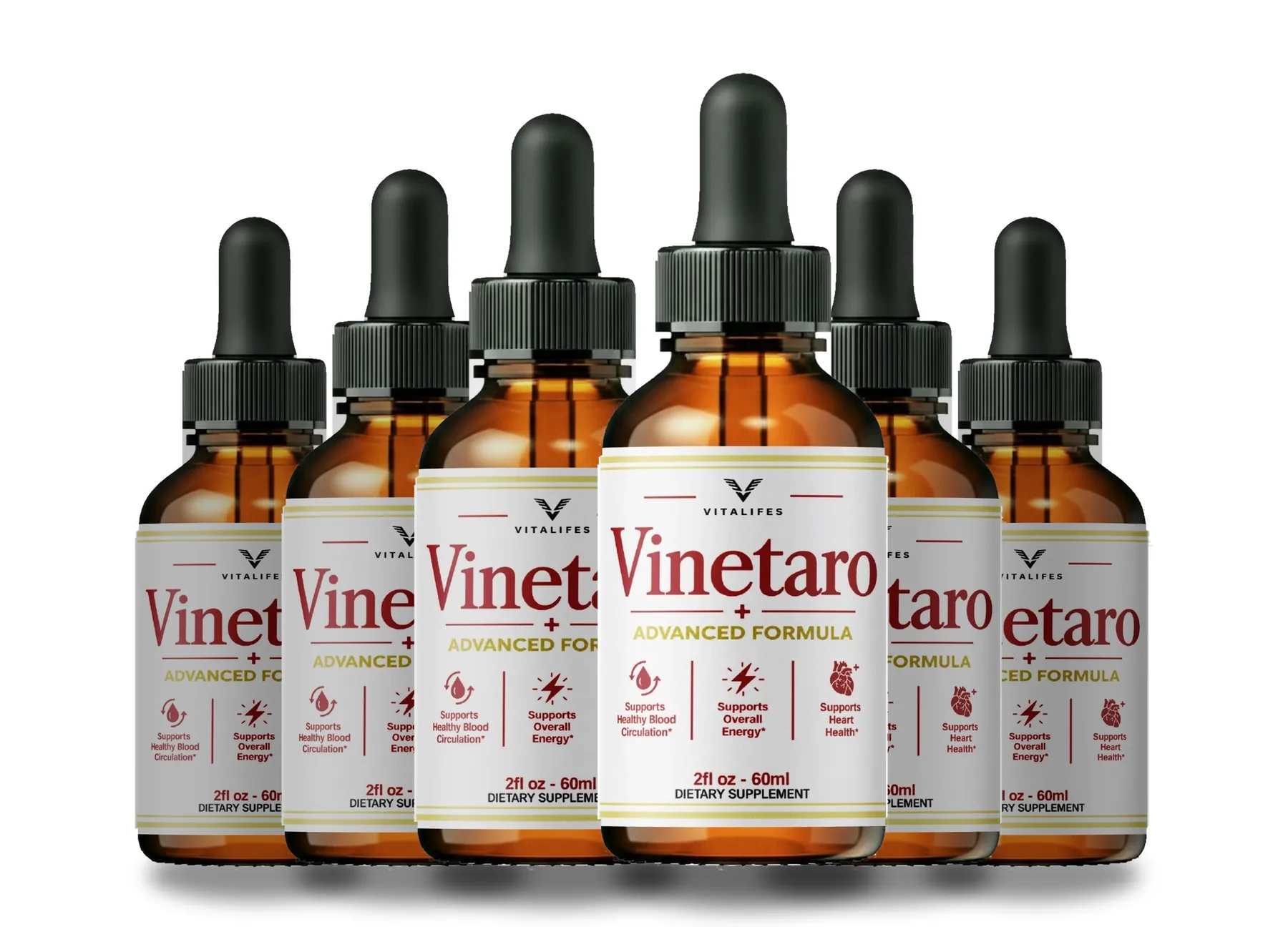
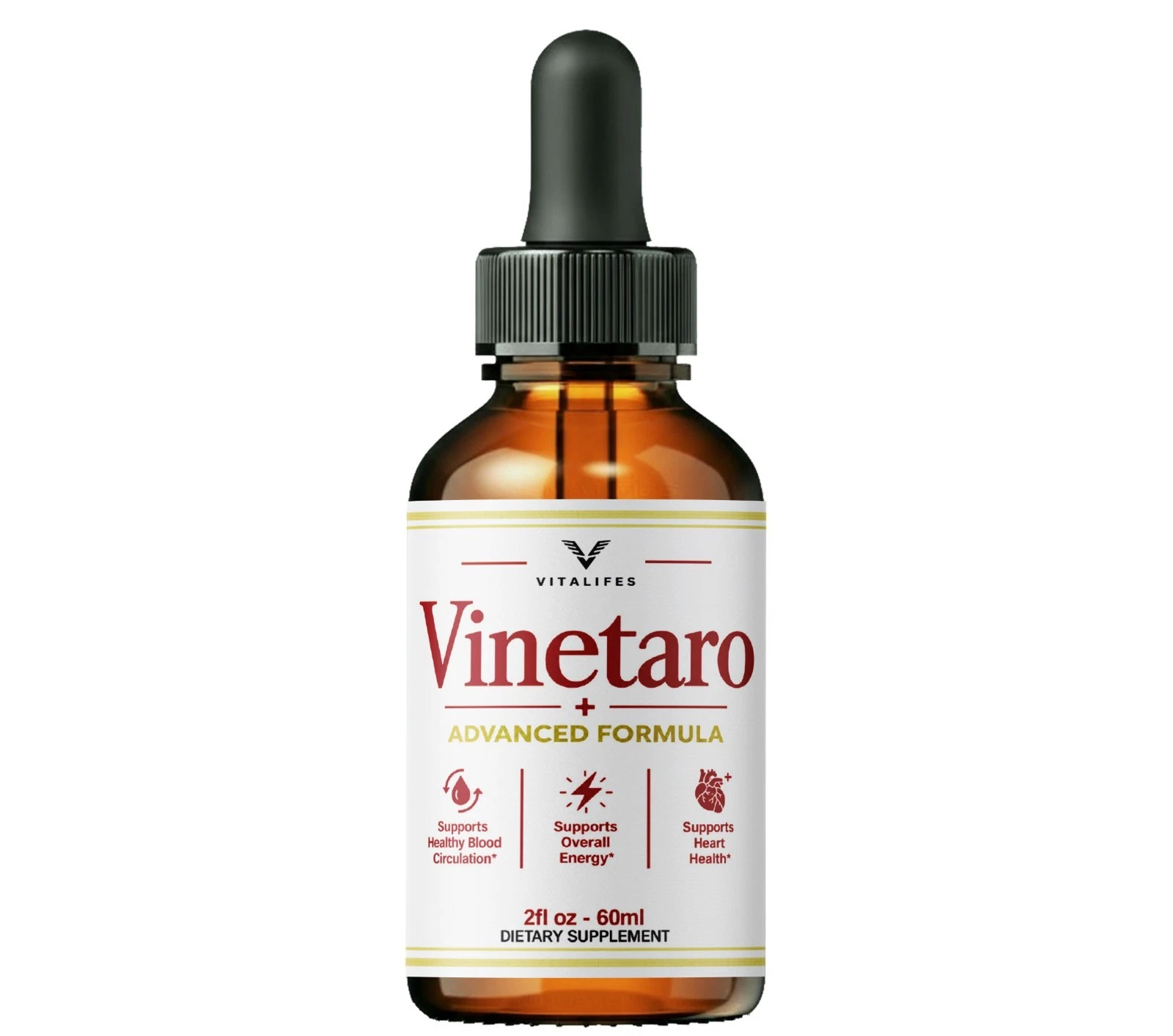
Set that checklist beside what this bottle's printed surface actually carries, and the comparison is short because there is little to compare. No Supplement Facts panel appears in any of the images this seller publishes, all twelve of which are taken from the front of the bottle. The front carries a maker's logo, a product name, a marketing line, three support phrases and a stated volume — none of which is a substitute for the panel 101.36 describes, and none of which the regulation treats as one.
That gap does not, by itself, establish a claim that this specific product is out of compliance. A panel is a property of the physical label that ships with the bottle, and the marketing photography a seller chooses to publish online is a separate thing from what the manufacturer prints on the back of the physical product. This site's ingredients page makes that same point from a different angle: if the physical bottle that arrives carries a back label the online photographs leave out, the label on the bottle is the one that governs, and this website is not in a position to certify either way from a front-facing photograph.
21 CFR 101.93: what the regulation actually says
Section 101.93 governs a different part of the label: the structure/function claims a supplement is permitted to carry, and the disclaimer that has to accompany them. A structure/function claim is a statement that a product supports a normal function of the body — "supports healthy blood circulation" is a textbook example — as opposed to a disease claim, which would say a product treats, cures or prevents a diagnosed condition and would require an entirely different regulatory pathway.
The regulation's first substantive requirement is a notification obligation: a manufacturer or distributor making this kind of claim must notify FDA's Office of Dietary Supplement Programs within thirty days of first marketing a product carrying it, with the statement's exact text, the dietary ingredient involved and the product's name. That notification is a filing requirement, not a pre-approval step — FDA does not evaluate or approve the claim before it appears on shelves, and the regulation does not give the agency that power. What the notification does is put the specific claim on record.
The exact wording the regulation specifies
The part of 101.93 most directly visible on a label is the disclaimer's required text, and the regulation is specific rather than suggestive about it. For a single structure/function statement, the required wording is: "This statement has not been evaluated by the Food and Drug Administration. This product is not intended to diagnose, treat, cure, or prevent any disease." Where a label carries more than one such statement, as this one does with its three support phrases, the regulation adjusts the wording to the plural: "These statements have not been evaluated by the Food and Drug Administration. This product is not intended to diagnose, treat, cure, or prevent any disease."
Placement is specified almost as precisely as the wording. The disclaimer must appear adjacent to the claim it covers, with no intervening material, or be linked to it by a symbol such as an asterisk, and it must appear on every panel or page where a covered statement is made. Where the disclaimer is not placed immediately next to the claim, the regulation requires it to be set off in a box. Type size is specified too: boldface type, no smaller than one-sixteenth of an inch, which is a concrete, measurable minimum rather than a vague instruction to make it "clear."
| What 101.93 requires | Where in the regulation |
|---|---|
| Notify FDA within 30 days of first marketing a structure/function claim | Notification requirement |
| The disclaimer's exact wording, singular or plural depending on the number of claims | Required disclaimer text |
| Adjacency to the claim, or a linking symbol, with no intervening material | Placement requirement |
| A box around the disclaimer when it is not placed adjacent to the claim | Boxing requirement |
| Boldface type no smaller than one-sixteenth of an inch | Type-size requirement |
Summarised from the current text of 21 CFR 101.93, subpart F of Part 101.
What this bottle's disclaimer shows against what 101.93 requires
This is the section of the comparison where this bottle's printed surface and the regulation line up, rather than diverge. The FDA disclaimer printed in this website's footer, and carried on the bottle's own artwork, uses the plural wording the regulation specifies for multiple claims — appropriate, since three support phrases appear on the front of this bottle, each marked with an asterisk pointing at the disclaimer. That asterisk-and-footer structure is exactly the linking-symbol mechanism 101.93 describes as an alternative to strict physical adjacency.
What this article cannot verify from a photograph is the measurable part: whether the physical disclaimer on the bottle itself meets the one-sixteenth-inch boldface minimum the regulation specifies, since type size on a small liquid label is not something a front-facing product photograph can confirm to regulatory precision. That is a limitation of what this article can check from published images, stated plainly rather than assumed either way.
What neither regulation requires
It is worth being precise about the boundary of both sections, because it is easy to read a regulation-literacy article as implying a violation where none may exist. Neither 101.36 nor 101.93 requires a seller's marketing photography to name every plant pictured on a promotional panel. A panel of photographed botanicals is marketing material, not the physical label, and the regulations this article covers govern the physical label's content and the disclaimer accompanying a structure/function claim — not the editorial choices behind a product photograph published on a sales page.
- 101.36 requires the physical label to carry a Supplement Facts panel with specific fields. It does not require online marketing images to reproduce that panel.
- 101.93 requires a disclaimer beside a structure/function claim, in specific wording and placement. It does not require the underlying ingredients behind that claim to be named in the same breath.
- Neither section requires pre-market FDA approval of a supplement's formula, which is a separate point this site's own disclaimer page already makes: no dietary supplement carries FDA approval, because none is evaluated for one before sale.
Why the citation, not just the plain-English summary, matters
This site's supplement-label article already told a reader, correctly, that five fields are mandatory and seven are optional. What that article could not do, by design, is let a reader check the claim against the regulation's own words, because it named no section number. A plain-English summary is only as trustworthy as the source behind it, and the source behind a regulatory claim is a specific, citable piece of federal text that either says what a page claims it says or does not.
That is the standard this article was held to in drafting it: every regulation number above was checked against the current Code of Federal Regulations before publication, the same verification this site applies to a PubMed citation before printing a study's dose or its finding. A regulation number is not harder to get wrong than a PMID, and it is at least as easy to misquote from memory. Citing it correctly, and showing the work, is the point of writing a companion article rather than simply repeating the plain-English one with footnotes bolted on.
There is a practical reading skill underneath all of this, and it transfers to any supplement label, not only this one. A regulation citation on a page like this one is only useful to a reader if it can be checked, which means three things have to be true of it: the section number has to be real and current, the quoted or paraphrased text has to match what that section actually says, and the comparison drawn against the product has to distinguish between the physical label, which the regulation governs, and the marketing material around it, which mostly falls outside the regulation's reach. A citation that fails any one of those three tests is not doing the job a citation is for, whether the underlying claim turns out to be right or wrong.
That same three-part test is worth applying to any other site making a regulatory claim about a supplement, this one included. A reader who wants to verify the two sections cited above does not need to take this page's word for it: the Electronic Code of Federal Regulations is public, searchable by title, part and section number, and the current text of both 101.36 and 101.93 is one search away.
Order Vinetaro Drops knowing exactly what the label regulations require
Two fl oz / 60 ml in an amber dropper bottle, three support phrases with an FDA disclaimer beside them, and no Supplement Facts panel in the seller's published photography.
Price shown at the seller’s checkout · money-back satisfaction seal on the pack
Order Vinetaro Drops On The Official WebsiteTwo drops daily after a meal · 2 fl oz / 60 ml · lot VIN-26/TH-7868
References
- Code of Federal Regulations, Title 21, Part 101, Subpart A, Section 101.36 — Nutrition labeling of dietary supplements. https://www.ecfr.gov/current/title-21/chapter-I/subchapter-B/part-101/subpart-A/section-101.36
- Code of Federal Regulations, Title 21, Part 101, Subpart F, Section 101.93 — Certain types of statements for dietary supplements. https://www.ecfr.gov/current/title-21/chapter-I/subchapter-B/part-101/subpart-F/section-101.93