Vinetaro Drops Official Website › Blog › What A Label Has To Tell You
What A Supplement Label Has To Tell You
Five fields are obligatory and seven of the most useful ones are optional. Knowing which is which turns a package from a piece of marketing into a document, and it takes about five minutes to learn.
- Five things have to be on a supplement package: what it is, how much is in it, a Supplement Facts panel, an other-ingredients list, and who makes or distributes it.
- The panel is the document. Serving size, servings per container, each ingredient and its amount, in one block designed to be compared across products.
- Extract ratios, marker percentages, plant parts, species, carriers and any testing are all optional, and all six change what you are buying.
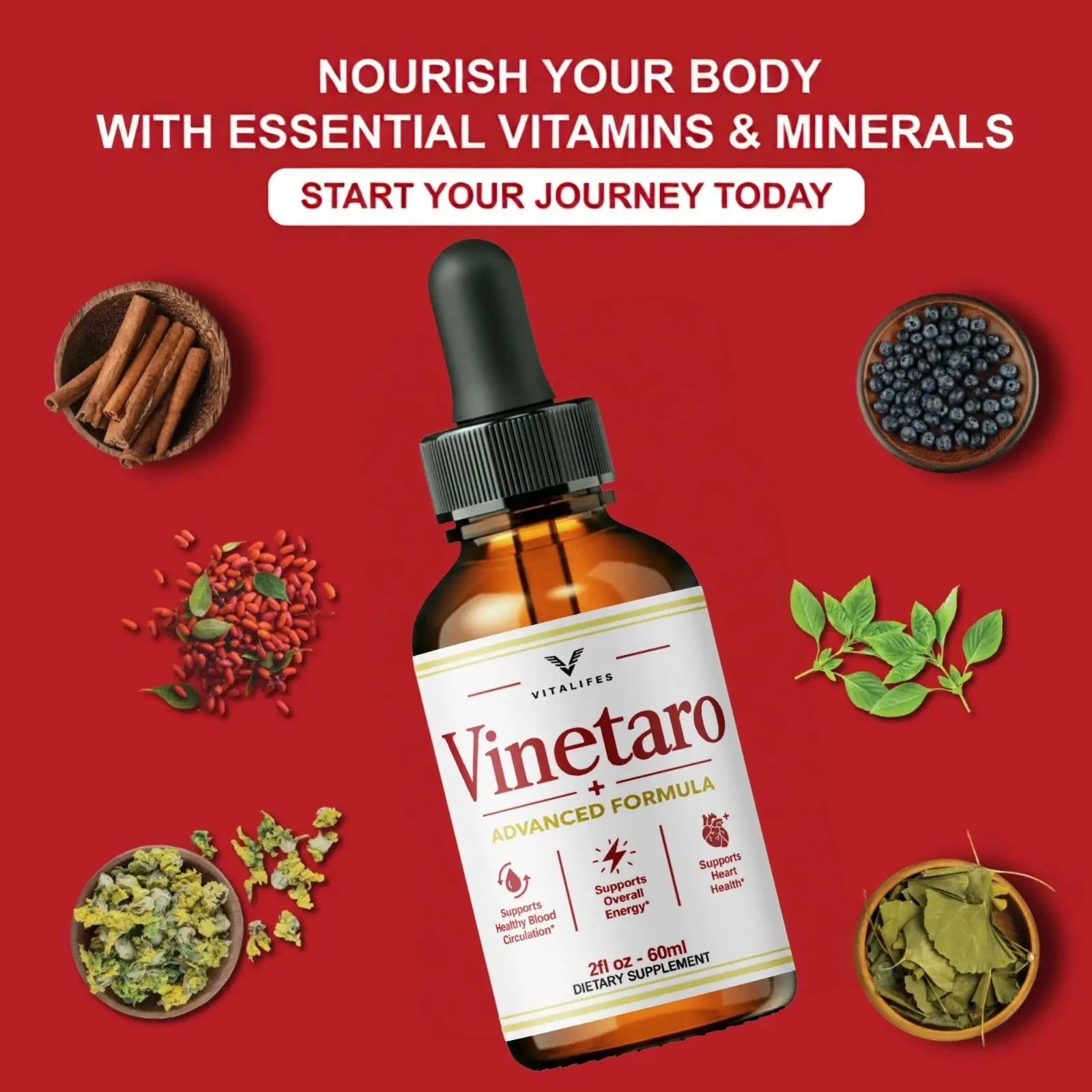
- A front label photograph shows you almost none of this, because the panel is nearly always on the back.
- A product that prints more than the minimum is telling you something about itself before you have read a single claim.
The five fields that must be there
A supplement package in the United States is a regulated document, which is a strange thing to say about something covered in leaf illustrations. Five pieces of information have to appear on it, and each one exists because somebody at some point could not answer an obvious question about a product they had already swallowed.
Reading them in order takes about thirty seconds and tells you more than the entire front panel does.
| What has to be on the package | What it does for a reader |
|---|---|
| A statement of identity | Tells you it is a dietary supplement rather than a food or a medicine, which decides which rules it was made under |
| The net quantity of contents | How much is in the container, which is the first half of working out how long it lasts |
| A Supplement Facts panel | Serving size, servings per container, and each dietary ingredient with its amount |
| A list of other ingredients | Everything present that is not a dietary ingredient: carriers, preservatives, flavourings, the capsule shell |
| The name and place of business | Somebody to write to, and a jurisdiction the product answers in |
Five fields. The third and fourth are where almost all of the usable information lives, and they are the two most often missing from a photograph of a front label.
Why the order of those five matters
The first two tell you what kind of object you are holding and how much of it there is. The third and fourth tell you what is inside. The fifth tells you who to address if any of the first four turns out to be wrong.
Most disputes about supplements are really disputes about the third field, and most disappointments are really discoveries about the fourth.
What the Supplement Facts panel is for
The panel is the closest thing this category has to a specification. Its layout is prescribed, which is the point: a prescribed layout means two products can be compared at a glance by somebody who has never seen either of them before.
It carries the serving size, which is how much of the product counts as one dose. It carries the number of servings per container, which is the other half of the how-long-does-it-last arithmetic. And it carries each dietary ingredient with the amount present per serving, which is the single most useful number on any supplement package.
The amount is the part that does the work
A name tells you what a product contains. Only an amount tells you whether it contains enough of it to matter. The published work in almost every supplement category ran at specific doses, and those doses are frequently several times what a retail product carries.
That comparison is impossible without a number, and it is the reason the amount column exists. A reader holding a panel can look up what the trials used and see the gap for themselves, which is exactly what a seller relying on a plant's reputation would prefer they could not do.
Percent daily value, and why most rows are blank
Vitamins and minerals have reference intakes, so their rows carry a percentage. Botanicals mostly do not, so their rows carry a dagger pointing at a footnote saying no daily value has been established. A page of daggers is normal on a herbal product and is not a defect.
The useful things a label may leave out
Here is where label reading becomes genuinely interesting, because the gap between what must be printed and what is worth knowing is wide.
| What a label may leave out | Why it matters anyway |
|---|---|
| The extract ratio | Ten to one and four to one are different products at the same milligram figure |
| The marker compound and its percentage | Trials are usually run on the marker. A percentage in front of a weight changes what the weight means |
| The solvent or carrier a liquid uses | Alcohol, glycerine and water suit different people and keep for different lengths of time |
| The plant part | Root and leaf of the same species are separate materials with separate literatures |
| The species, where a common name covers several | Cinnamon is two plants with very different coumarin loads |
| Any testing that was done | Identity, potency, heavy metals and microbial counts are all invisible from outside |
| Country of origin for each ingredient | Relevant to contamination risk and to nothing on the front of the package |
None of these seven is required. All seven change what a buyer is actually getting, which is why the better products in this category print several of them voluntarily.
Liquids raise the carrier question more sharply than capsules do. A botanical tincture is plant material extracted into something, and that something is usually alcohol, glycerine, water or a mixture. Which one it is decides how the preparation keeps, what dissolved into it, and whether a particular buyer can take it at all.
None of that is required on the front of a package. Most of it appears in the other-ingredients line on the back, which is a good reason to turn a bottle over before buying it.
The proprietary blend, and the arithmetic it hides
A proprietary blend lists several ingredient names under a single combined weight. It satisfies the requirement to name what is present while withholding how much of each is present, and it is legal, common and almost always worse for the buyer than the alternative.
The arithmetic is the reason. A 200 mg blend naming five ingredients averages 40 mg each, and the real distribution is almost certainly uneven. The same 200 mg blend naming twenty-two ingredients averages nine milligrams each, which is below any dose in any trial of any of them.
- A blend weight is a ceiling: no single ingredient in it can exceed the total.
- Ingredients are usually listed in descending order of weight, so the last names in a long blend are present in trace quantities.
- A blend containing one well-studied plant and eleven decorative ones looks impressive and costs very little to make.
- Splitting a blend is voluntary. A manufacturer who prints per-ingredient amounts has chosen to be comparable.
- The phrase proprietary is doing no protective work that a patent or a trade secret on the process would not do better.
Divide the blend weight by the number of names in it. If the average is below the smallest dose used in any published trial of any ingredient on the list, the blend is decorative.
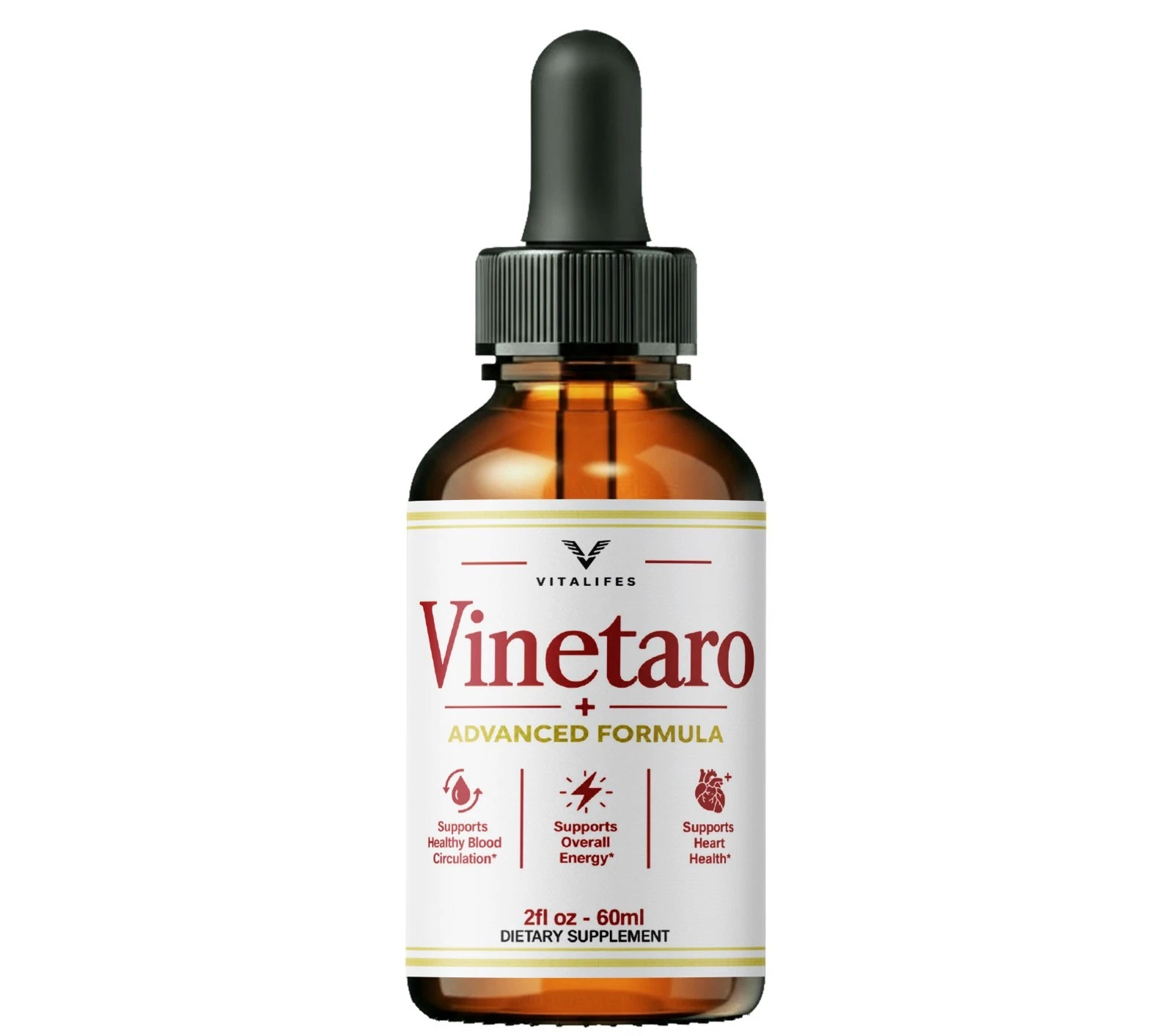
Read the Vinetaro Drops label before you read this site
This desk publishes what the front of the bottle carries and what it leaves to the checkout. The bottle that arrives outranks every page here, including this one.
Price shown at the seller’s checkout · money-back satisfaction seal on the pack
Order Vinetaro Drops On The Official WebsiteTwo drops daily after a meal · 2 fl oz / 60 ml · lot VIN-26/TH-7868
What a front-only photograph can tell you
Most products are bought from a photograph, and most photographs show the front. That is a structural problem for a buyer, because the front is the marketing face and the back is the document.
A front label reliably carries the brand, the statement of identity and the net quantity. It usually carries the headline claims. It very rarely carries the panel, the other-ingredients line or the manufacturer's address, which are three of the five required fields.
- Ask the seller for a photograph of the back before buying, and treat a refusal as an answer.
- Check whether the listing images include any view other than the front. Several angles of the same face is a choice somebody made.
- Read the claims for their verbs. Supports and promotes are structure and function claims; treats and prevents are not available to a supplement.
- Note whether the marketing around the product claims more than the product itself does. That distance is always deliberate.
- Look for an amount anywhere. A package that names no quantity of anything is asking for trust in place of information.
Five things worth photographing when a bottle arrives
Whatever the listing showed, the package in your hand is the authoritative document. Five photographs take a minute and are worth having if anything later goes wrong.
- The front, for the brand, the identity statement and the net quantity.
- The back, for the panel and the other-ingredients line.
- The lot number and any expiry date, usually stamped rather than printed.
- Any caution or directions text, in full and in focus.
- The outer packaging, if the product arrived in a box carrying claims the bottle does not.
If a reaction is ever reported, the first question asked is what exactly was taken. A brand name answers it poorly and a photograph of a panel answers it completely. The 2026 review of drug-induced liver injury includes herbal and dietary products as a recognised category, and identification is the first step in every one of those investigations.
Why any of this is worth five minutes
A 2026 analysis of American supplement use puts the proportion of adults taking at least one high enough that label reading is a mainstream skill rather than a specialist one. A review of supplement use alongside prescriptions covers how often the two are combined without anyone being told, which is a problem a panel at least makes solvable.
An analysis of FDA supplement warnings covers what has turned up in products whose labels described their contents loosely. That is the strongest single argument for preferring a package that prints more than the minimum: not that a detailed label proves a good product, but that it makes a bad one checkable.
A critical appraisal of herbal remedy evidence is the best single piece on how to read a claim in this field at all. Its lesson and this article's are the same one. The question is never whether a plant has a reputation. It is whether you can establish how much of it you are holding.
- The panel is the document. Everything else on the package is presentation.
- An amount is what makes a name useful, because only an amount can be compared with a trial.
- A proprietary blend is a ceiling, and the arithmetic on a long one is unflattering.
- Six of the most informative fields on a label are optional, and printing them is a choice.
- Photograph what arrives. A brand name is a poor answer to the only question that matters after the fact.
References
- Tucker J, Fischer T, Upjohn L, et al. Unapproved Pharmaceutical Ingredients Included in Dietary Supplements Associated With US Food and Drug Administration Warnings. JAMA Netw Open. 2018;1(6):e183337. PMID 30646238. https://pubmed.ncbi.nlm.nih.gov/30646238/
- Swanson L, Fontana RJ. The contemporary epidemiology, causes, and management of drug-induced liver injury. Hepatol Commun. 2026;10(8). PMID 42475234. https://pubmed.ncbi.nlm.nih.gov/42475234/
- Izzo AA, Hoon-Kim S, Radhakrishnan R, et al. A Critical Approach to Evaluating Clinical Efficacy, Adverse Events and Drug Interactions of Herbal Remedies. Phytother Res. 2016;30(5):691-700. PMID 26887532. https://pubmed.ncbi.nlm.nih.gov/26887532/
- Lam CS, O'Connell K, Monroy-Iglesias MJ, et al. Emerging Patterns in Dietary Supplement Use Among US Adults, 1999-2023. JAMA Netw Open. 2026;9(6):e2619291. PMID 42295756. https://pubmed.ncbi.nlm.nih.gov/42295756/
- Agbabiaka TB, Wider B, Watson LK, et al. Concurrent Use of Prescription Drugs and Herbal Medicinal Products in Older Adults: A Systematic Review. Drugs Aging. 2017;34(12):891-905. PMID 29196903. https://pubmed.ncbi.nlm.nih.gov/29196903/