Vinetaro Drops Official Website › Blog › Why Not For Pregnant Or Nursing Appears Here
Why "Not For Pregnant Or Nursing" Appears On A Bottle With No Ingredient List
This site's article on circulation symptoms is about when a symptom needs a diagnosis rather than a supplement. No post on this site has covered a different kind of exclusion entirely: why pregnancy, nursing and under-18 are ruled out on a bottle that names no ingredient for any of them to be ruled out because of.
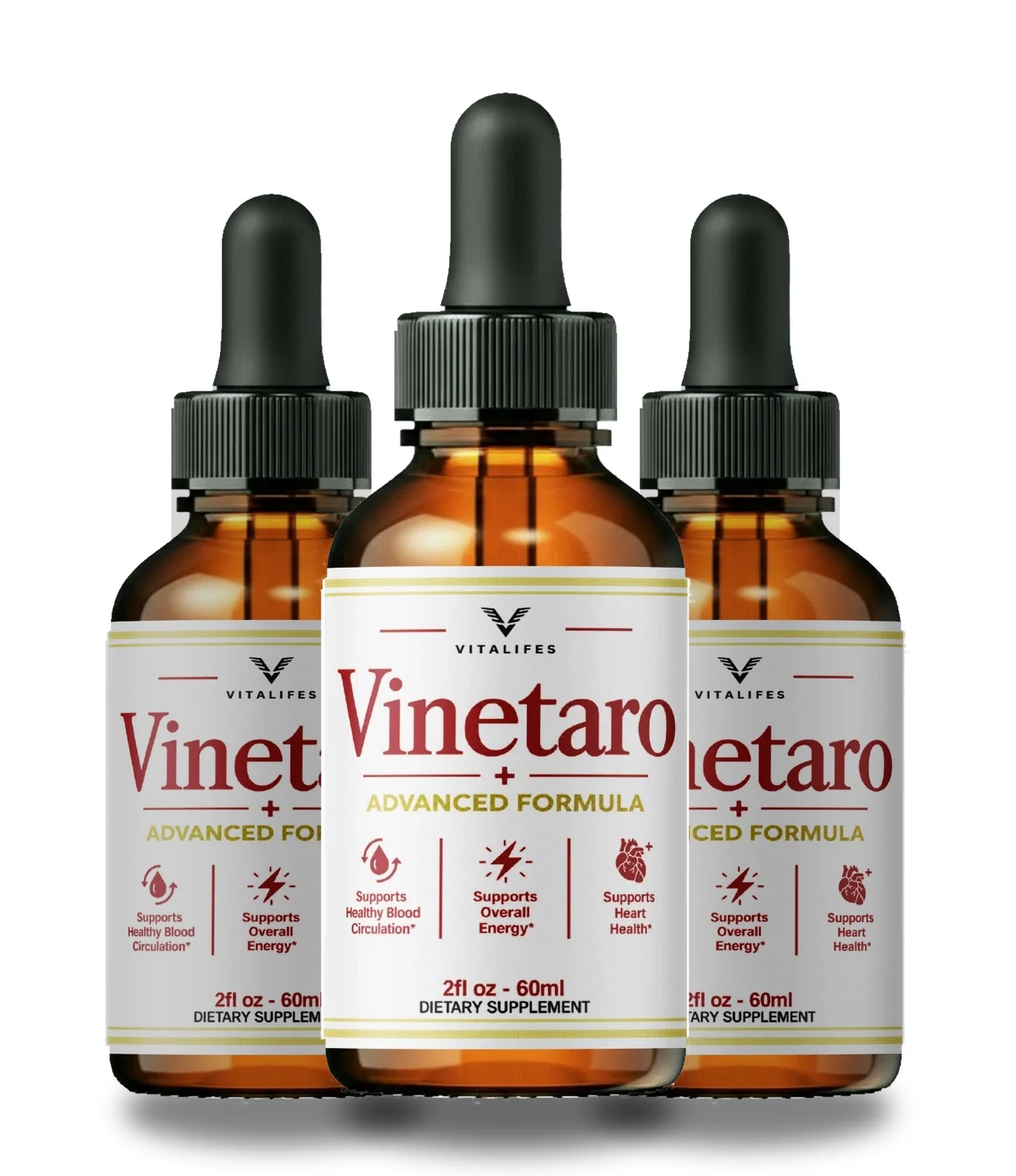
- This bottle's printed surface and this website's disclaimer both exclude pregnancy, nursing and under-18, without naming an ingredient the exclusion is protecting against.
- That is not unusual. It is the standard pattern for an unlisted or unstandardised botanical formula, not a signal specific to this product.
- Dietary supplements in the United States are regulated under DSHEA as a category of food, not pre-approved as a drug would be before it reaches a pregnant patient.
- Because no pre-market safety review happens, the manufacturer carries the burden of deciding a product is safe under ordinary conditions of use, and FDA's authority is mainly to act after a product is already on the market.
- A blanket exclusion for untested populations is how a responsible manufacturer manages that burden when specific safety data for those populations does not exist, rather than a coded admission that a specific risk is known and withheld.
The exclusion line, and where it appears
Every page on this website carries the same disclaimer line in its footer: "For healthy adults aged 18 and over. Not for anyone under 18, and not for anyone pregnant or nursing." This site's who it's for page states the same exclusion in its own words, adding that this is an adult dietary supplement and that nothing about it has been studied in children, and that an unlisted botanical formula cannot be assessed for pregnancy or breastfeeding specifically.
What makes this worth a dedicated article is the same fact this site's own ingredients page states about every other claim on this bottle: the printed surface names no ingredient anywhere. A reader who has seen a normal supplement label before will be used to seeing a pregnancy exclusion sit beside a specific reason — a named herb with a known uterotonic effect, a stimulant with a stated milligram dose, a vitamin at a level that exceeds a pregnancy-specific upper limit. None of that is available here. The exclusion exists without anything named for it to be excluding on the basis of.
Why most exclusions point at something, and this one cannot
On a fully labelled supplement, a pregnancy caution usually traces back to a specific, citable concern: a botanical with documented emmenagogue or abortifacient folklore, a stimulant that crosses into breast milk at a meaningful concentration, a fat-soluble vitamin where the supplement's dose plus dietary intake could exceed a pregnancy-specific tolerable upper limit. A reader who wants to check the reasoning behind the caution on a labelled product has a name and an amount to start from.
This bottle removes that starting point. Ginkgo leaves and blueberries are photographed on the marketing panel, cinnamon bark is identifiable, and three further items cannot be identified from the photograph at all, per this site's own ingredients page. None of the six is stated to be in the bottle at any amount, so there is no specific compound and no specific dose this article, or any reader, can point the pregnancy exclusion at. That is the gap this article exists to explain: how a caution this specific in its wording can exist with nothing this specific behind it.
DSHEA in one paragraph: food regulation, not drug regulation
The answer starts with how dietary supplements are regulated in the United States at all. Under the Dietary Supplement Health and Education Act of 1994, commonly abbreviated DSHEA, supplements are regulated as a category of food rather than as drugs. The FDA's own current guidance states the practical consequence of that choice plainly: the agency does not require pre-market approval for dietary supplements, and manufacturers bear the responsibility for evaluating safety before a product is marketed.
That single regulatory choice, made in 1994 and still the operating framework today, is why this article is possible to write at all without inventing anything about this specific bottle. The exclusion line this article is examining did not originate with this manufacturer's judgment about this formula in isolation. It originates with a category-wide regulatory structure that every dietary supplement sold in the United States operates inside, whatever its actual contents turn out to be.
That is the single fact this whole article turns on. A prescription medicine intended for use in pregnancy, or studied for safety in pregnant patients specifically, goes through a formal regulatory pathway with clinical trial data reviewed by FDA before it reaches a pharmacy shelf. A dietary supplement does not. The manufacturer decides what populations to test, if any, and decides what populations to exclude on the label, without a regulator checking that reasoning beforehand.
No pre-market review means no pre-market safety file
Follow that fact to its consequence for a specific population like pregnancy, and the logic behind a blanket exclusion becomes visible. Running a clinical safety study in pregnant participants is expensive, ethically fraught, and not required by the regulatory pathway a dietary supplement actually travels through. The overwhelming majority of botanical dietary supplements on the market, this one very possibly included, have never been the subject of a dedicated pregnancy safety study of any kind.
Faced with that absence of population-specific data, a manufacturer has two broad options: claim safety in pregnancy despite having no data to support the claim, or exclude the population from the label until data exists. FDA's guidance on manufacturer responsibility under DSHEA points toward the second option as the responsible one: firms must evaluate safety and labeling compliance themselves, and marketing an adulterated or misbranded product is prohibited regardless of whether FDA has reviewed it first. A blanket exclusion is the conservative, liability-aware version of "we have not tested this population and therefore will not claim it is safe for them," applied uniformly rather than ingredient by ingredient.
What "post-market" enforcement actually means in practice
The other half of DSHEA's structure is what happens after a product reaches the market, and it is worth spelling out because it explains why the exclusion line matters rather than being a formality. FDA's own summary of its authority states it directly: the agency has the power to take action against an adulterated or misbranded dietary supplement only after it reaches the market, not before. In practice, that means FDA's tools are adverse-event monitoring, inspections, warning letters and enforcement action triggered by evidence of harm or non-compliance discovered once a product is already in commerce, rather than a review gate a product has to pass before it ships.
A label's caution statements sit inside that post-market framework as one of a manufacturer's few available tools for managing risk in a population it has no data on. A pregnancy exclusion, an under-18 exclusion and a "consult your doctor before use" line are not decorative. They are closer to a manufacturer's own risk-management filing, made publicly on the label itself rather than to a regulator in advance, precisely because no regulator reviews the formula before it reaches a shelf.
How this differs from a drug label's pregnancy information
The contrast sharpens if the comparison is made directly against a product that is regulated as a drug rather than as a supplement. An over-the-counter drug sold under an FDA monograph, or a prescription medicine, typically carries pregnancy information that says something more specific than a flat exclusion: a pregnancy category or equivalent narrative summary, drawn from animal reproduction studies, from human pregnancy exposure registries, or from a documented absence of either, with the label stating which kind of evidence backs the statement. A reader of a drug label can usually tell whether "not recommended in pregnancy" rests on an observed signal of harm or simply on a lack of data.
A dietary supplement label under DSHEA carries no equivalent requirement to disclose which of those two situations applies. "Not for anyone pregnant or nursing" on a supplement bottle can mean either "a specific ingredient here is associated with a known risk" or "nothing here has been studied in pregnancy and we are not going to guess," and the label format gives a reader no way to tell which is true from the wording alone. That ambiguity is itself a consequence of food-based regulation rather than drug-based regulation: a drug label's pregnancy section is shaped by decades of FDA guidance on how to present that specific kind of evidence, and a supplement label has no equivalent regulatory template to follow.
Why pregnancy, nursing and under-18 specifically
The same logic explains why these three populations, out of every possible group a label could exclude, recur across the dietary supplement category almost universally. Each is a population in which normal drug and supplement research is either restricted for ethical reasons, structurally different in its physiology, or both.
- Pregnancy involves a second physiology — the fetus — for which almost no botanical ingredient has dedicated safety data, and where research is appropriately difficult to conduct for ethical reasons.
- Nursing carries a related but distinct question: whether a compound transfers into breast milk and at what concentration, which is rarely studied for an unstandardised botanical blend.
- Under-18 covers a period of ongoing physical development in which dosing, metabolism and long-term effects can differ meaningfully from an adult's, and where paediatric supplement research is comparatively sparse across the entire category, not only for this product.
None of the three exclusions on this label requires knowing what is inside the bottle. They follow from the population alone, which is exactly why they can be stated honestly on a label that otherwise declares nothing about its contents. This is the structural answer to the question this article opened with: the exclusion is general because dietary supplement regulation under DSHEA is general about pre-market testing, not because something product-specific is being withheld.
What this exclusion does not tell a reader
It is worth being equally clear about what this article is not claiming, because a regulatory-logic explanation can be read, wrongly, as either reassurance or alarm. This article is not saying the exclusion proves the product is safe outside those populations — the same absence of pre-market testing that explains the exclusion also means adult, non-pregnant safety has not been formally established by a regulator either. It is also not saying the exclusion is evidence of a specific, hidden ingredient risk. Nothing in DSHEA's framework, and nothing on this label, supports inventing a specific mechanism this article has no basis to name.
What the exclusion does reliably indicate is narrower and more useful than either of those readings: this is an unlisted botanical formula being handled the way the category's own regulatory structure predicts it will be handled, by a manufacturer excluding the populations it has the least data on and the least legal room to guess about.
It is worth adding one further distinction, since the two misreadings above tend to collapse into each other in practice. A blanket exclusion is not evidence of unusual caution on this manufacturer's part, and it is not evidence of unusual risk either — it is close to the median practice across the unstandardised botanical supplement category as a whole, which is precisely why this article treats it as a structural feature of how DSHEA shapes the category rather than as a fact specific to this bottle. A reader comparing several competing products in this category and finding the same three-population exclusion on all of them is not finding a coincidence. They are finding the same regulatory logic applied independently by several manufacturers facing the identical absence of population-specific data.
What the exclusion means in practice
For a reader who is pregnant, nursing, or considering the product for someone under 18, the practical takeaway is the one this site's own pages already give, restated here with the regulatory reasoning behind it made explicit: the exclusion is not negotiable by reading the label more carefully, because there is no additional label information available to read. An unlisted formula cannot be individually assessed against a specific pregnancy risk, a specific breastfeeding transfer question, or a specific paediatric dosing concern, because none of the inputs a clinician would need — a named ingredient, a stated amount, an extract ratio — is printed anywhere on this bottle's surface. The label's own instruction, to ask a midwife, obstetrician or paediatrician and bring the bottle itself rather than a description of it, is the direct consequence of that gap, not a routine disclaimer added out of caution for its own sake.
That same advice, bring the bottle rather than a description of it, is worth underlining because it is the one action available that actually narrows the uncertainty this article has described. A clinician looking at the physical bottle can at least see the same printed surface a reader sees here: the maker's name, the product name, the three support phrases, the volume and the statement of identity. That is not an ingredient list, but it is more than a verbal description would carry, and it puts the clinician in a position to ask the same questions this site's own pages raise — about the carrier, about what the pictured plants might or might not represent, about whether a back label exists on the physical product that the online photography does not show. None of that substitutes for a disclosed formula. It is, within the limits DSHEA's framework sets for this entire product category, the closest a pregnant, nursing or underage reader can get to an informed decision about a bottle that discloses this little.
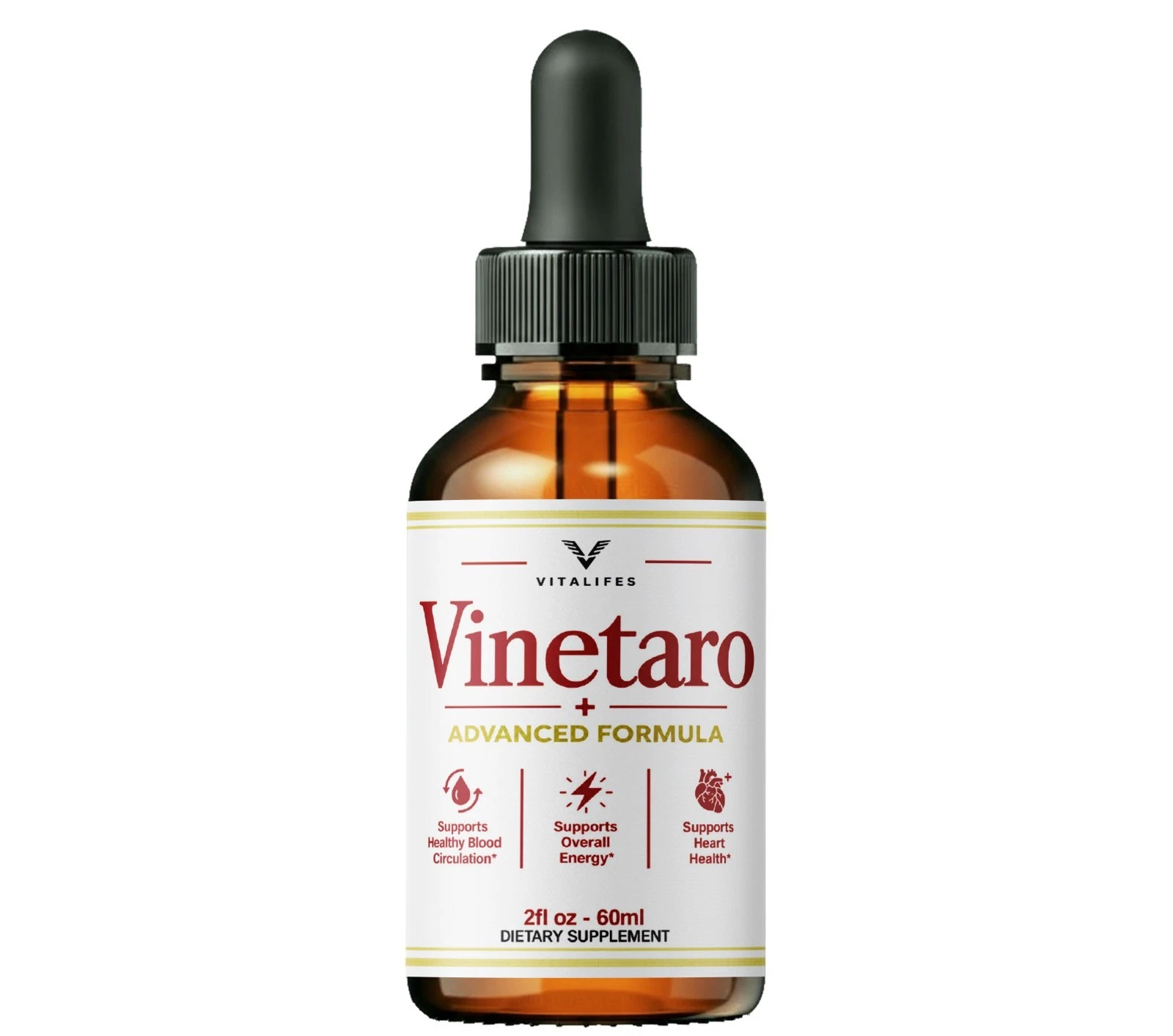
Order Vinetaro Drops knowing who this label excludes, and why
2 fl oz / 60 ml in an amber dropper bottle, for healthy adults aged 18 and over. Not for anyone under 18, and not for anyone pregnant or nursing.
Price shown at the seller’s checkout · money-back satisfaction seal on the pack
Order Vinetaro Drops On The Official WebsiteTwo drops daily after a meal · 2 fl oz / 60 ml · lot VIN-26/TH-7868
References
- U.S. Food and Drug Administration. Dietary Supplements. https://www.fda.gov/food/dietary-supplements