Vinetaro Drops Official Website › Blog › What A Hawthorn Trial Actually Used
What A Hawthorn Trial Actually Used
Hawthorn has the clearest evidence of any plant in the circulation category, and it is clear for one reason: the trials named the extract, stated the milligrams and published the duration. This is what those numbers are, and what they do and do not transfer to.

- SPICE used 900 mg a day of WS 1442, a specific standardised hawthorn extract with a code, in patients with reduced ejection fraction.
- HERB CHF used 450 mg twice daily for six months in 120 ambulatory patients.
- WS 1442 is a manufactured preparation, not hawthorn in general, so those results belong to it rather than to the plant.
- The Cochrane review pooled the earlier work and found benefit on symptom and exercise measures in chronic heart failure.
- Every one of those trials ran in people with a diagnosis, under supervision, which is part of the dose and is almost never mentioned on a label.
SPICE and the 900 mg figure
SPICE gave 900 mg/day of WS 1442, in patients with LVEF 35% or below. That sentence contains three pieces of information and it is worth separating them, because most reporting on supplements collapses all three into the word hawthorn.
The first is the preparation: WS 1442 rather than hawthorn generally. The second is the amount: 900 mg a day, every day, for the length of the trial. The third is the population: patients whose hearts were already pumping below a defined threshold, which is a clinical group rather than a wellness one.
Nine hundred milligrams a day is a substantial quantity. It is more than most multi-ingredient formulas allocate to their entire active content, and it was given alone rather than as one component among ten.
HERB CHF, and what six months means
HERB CHF ran 450 mg twice daily for six months, 120 ambulatory patients. The split dose is worth noticing: the same daily total, divided across the day, which is a pharmacological decision rather than a convenience one.
The duration is the part most worth carrying away. Six months is a long trial by supplement standards and a short one by cardiology standards, and it tells you something about the timescale on which anyone expected to see a change. A product promising a difference in seven days is making a claim no trial in this literature was designed to test.
- Split dosing keeps blood levels steadier than one large dose does.
- Six months of daily compliance is itself an achievement, and trials measure it.
- A hundred and twenty patients is a reasonable size for a mechanistic question and a small one for an outcome question.
- Ambulatory means the participants were living normally, which makes the result more relevant to ordinary life than an inpatient study would be.
- Nothing about six months of supervised dosing transfers to two drops of an unnamed liquid.
Why the code on the extract matters
WS 1442 is not a description, it is an identifier. It names a specific extract made by a specific process, with a defined marker content, by a specific manufacturer. A formal benefit-risk assessment of the same extract treats it that way.
The reason this matters is that a botanical extract is a manufactured product, not a natural constant. The same plant extracted with different solvents, at different temperatures, from different plant parts, produces different chemistry. Two products both honestly labelled hawthorn extract can have very little in common.
What that means for a label that says hawthorn
It means the label has told you the genus and nothing about the preparation. A trial result obtained with a standardised extract at a stated dose does not automatically apply to a different extract at an unstated dose, and treating the two as interchangeable is the single most common error in supplement marketing.
A plant name is a starting point. An extract code with a milligram figure is a specification, and only the second one was tested.
What a pooled review adds
The Cochrane review of hawthorn in chronic heart failure pooled the trials available to it and reported benefit on symptom and exercise measures. A systematic review does two things a single trial cannot.
It corrects for the fact that encouraging results get published more readily than discouraging ones, by looking for everything rather than for what is easiest to find. And it puts a spread around an effect rather than a single figure, which is a more honest description of what is known.
The trade-off is that review abstracts frequently summarise many trials without restating the dose range, which is exactly what dose range not stated in the retrieved record means in the table above. That is a property of the summary rather than of the underlying work.
| Trial | What it gave | To whom | For how long |
|---|---|---|---|
| SPICE | 900 mg/day of WS 1442, in patients with LVEF 35% or below | Patients with reduced ejection fraction | A multi-year outcome trial |
| HERB CHF | 450 mg twice daily for six months, 120 ambulatory patients | 120 ambulatory patients with heart failure | Six months |
| The Cochrane review | dose range not stated in the retrieved record | Pooled across the trials available to it | Varied by trial |
| The benefit-risk assessment | the same standardised extract as SPICE | A formal appraisal rather than a trial | Not applicable |
Two of the four state an explicit daily amount of a named standardised extract. That is unusually good reporting for this field and it is the reason this plant is worth writing about.
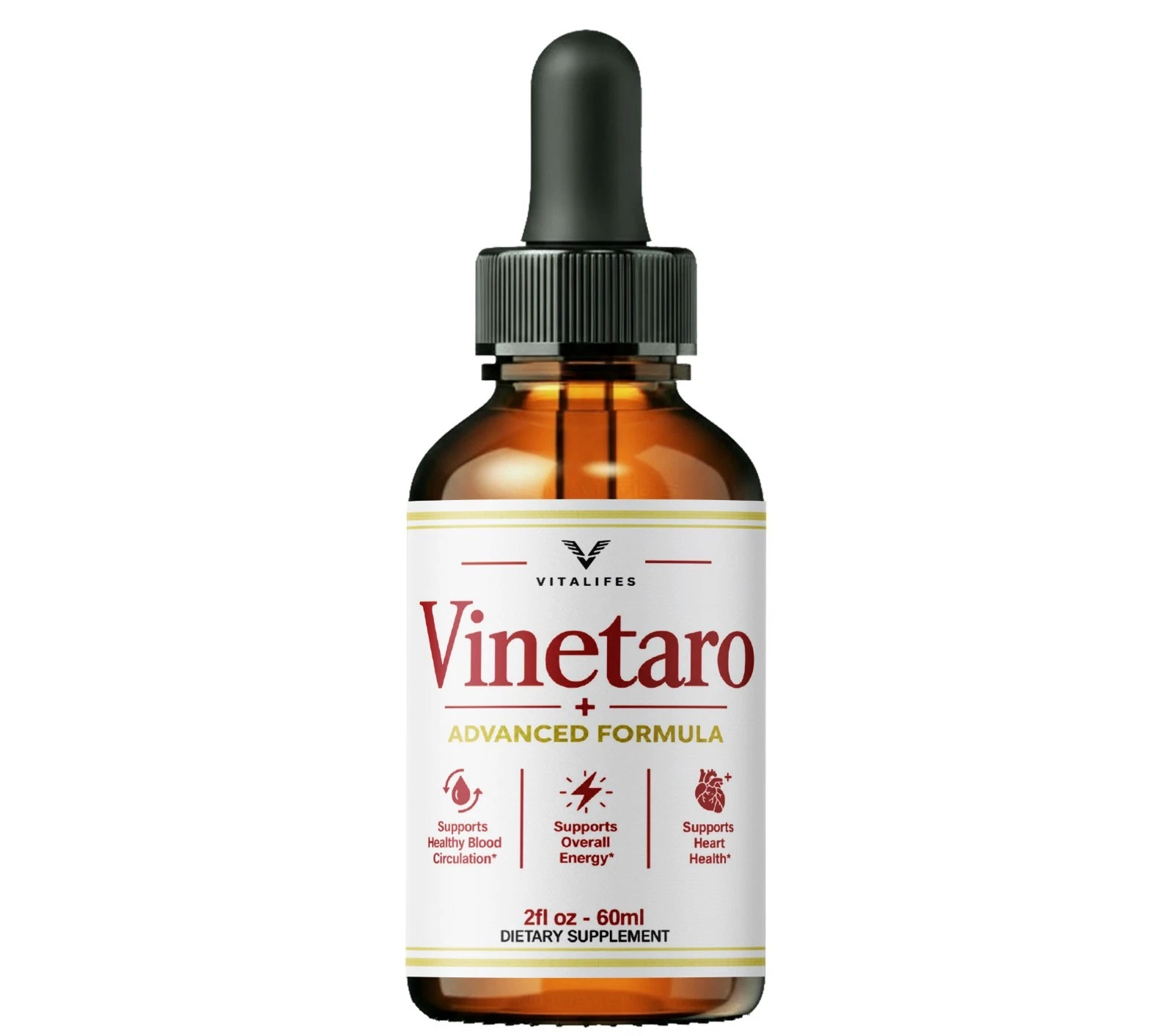
Read what a result cost before deciding about Vinetaro Drops
Every research figure on this site carries the amount its trial used, so the distance between a published result and any bottle is visible rather than implied.
Price shown at the seller’s checkout · money-back satisfaction seal on the pack
Order Vinetaro Drops On The Official WebsiteTwo drops daily after a meal · 2 fl oz / 60 ml · lot VIN-26/TH-7868
The population is part of the dose
This is the field most often dropped, and dropping it changes what a result means more than dropping the milligrams would.
The hawthorn trials ran in people with diagnosed heart failure. Their hearts were pumping measurably below normal, which means there was measurable room for improvement, which means an effect had somewhere to show up. The same intervention in people whose hearts are working normally has far less to move, and a trial in that population would be asking a different question.
This cuts both ways and the second direction is the one sellers prefer to skip. A supplement supported by trials in a clinical population is borrowing credibility from people who were ill, and offering it to people who are not.
- Ask who was in the trial before asking what happened to them.
- A result in a clinical population does not automatically appear in a healthy one.
- A result in a healthy population is often smaller and harder to detect, which is why there are fewer of them.
- Supervision is part of the trial condition: compliance, monitoring and dose accuracy are all better than they will be in your kitchen.
- None of this makes the result untrue. It makes it specific, which is what a good result is.
What transfers to a shelf product, and what does not
Here is the whole argument in one table, and it applies to every plant in this category rather than only to hawthorn.
| The field | What the hawthorn work supplies | What a shelf product usually supplies |
|---|---|---|
| The plant | Crataegus, named | Usually named |
| The preparation | WS 1442, a specific standardised extract with a code | Often just a plant name, sometimes a plant part |
| The amount | 900 mg a day, or 450 mg twice daily | Frequently absent or inside a blend |
| The duration | Six months in HERB CHF | Rarely stated at all |
| The population | Diagnosed heart failure, under supervision | Anyone who buys the bottle |
Five fields. The published work supplies all five. A retail label commonly supplies one and a half, and the gap is where most of this category's disappointment lives.
Read down the middle column and you have a checkable claim. Read down the right-hand column and you have a plant name on a package. The distance between the two is not a scandal and it is not nothing either: it is the difference between a product you can evaluate and a product you have to trust.
The analysis of FDA supplement warnings is the reason the second option is riskier than it feels. Where a label describes its contents loosely, nothing about it can be checked by anybody, including the people whose job it is to check.
The general lesson, in five fields
The critical appraisal of herbal remedy evidence makes this point at greater length and with more authority, and it reduces to five questions worth asking of any claim in this field.
- Which plant, named to the species rather than by common name?
- Which preparation: plant part, extract ratio, marker percentage, or a code?
- How much per day, in a real unit?
- For how long, and was that long enough for the outcome being claimed?
- In whom, and did they resemble the person being sold the product?
A claim that answers all five is rare and worth paying attention to. A claim that answers none of them is not necessarily false, and it is unevaluable, which for a buyer amounts to much the same thing.
Hawthorn is in this blog because it answers four of the five clearly and the fifth in the review abstracts. That is what good reporting looks like, and it is the standard every other plant in this category should be held to.
References
- Holubarsch CJ, Colucci WS, Meinertz T, et al. The efficacy and safety of Crataegus extract WS 1442 in patients with heart failure: the SPICE trial. Eur J Heart Fail. 2008;10(12):1255-63. PMID 19019730. https://pubmed.ncbi.nlm.nih.gov/19019730/
- Zick SM, Vautaw BM, Gillespie B, et al. Hawthorn Extract Randomized Blinded Chronic Heart Failure (HERB CHF) trial. Eur J Heart Fail. 2009;11(10):990-9. PMID 19789403. https://pubmed.ncbi.nlm.nih.gov/19789403/
- Pittler MH, Guo R, Ernst E. Hawthorn extract for treating chronic heart failure. Cochrane Database Syst Rev. 2008;2008(1):CD005312. PMID 18254076. https://pubmed.ncbi.nlm.nih.gov/18254076/
- Holubarsch CJF, Colucci WS, Eha J. Benefit-Risk Assessment of Crataegus Extract WS 1442: An Evidence-Based Review. Am J Cardiovasc Drugs. 2018;18(1):25-36. PMID 29080984. https://pubmed.ncbi.nlm.nih.gov/29080984/
- Izzo AA, Hoon-Kim S, Radhakrishnan R, et al. A Critical Approach to Evaluating Clinical Efficacy, Adverse Events and Drug Interactions of Herbal Remedies. Phytother Res. 2016;30(5):691-700. PMID 26887532. https://pubmed.ncbi.nlm.nih.gov/26887532/
- Tucker J, Fischer T, Upjohn L, et al. Unapproved Pharmaceutical Ingredients Included in Dietary Supplements Associated With US Food and Drug Administration Warnings. JAMA Netw Open. 2018;1(6):e183337. PMID 30646238. https://pubmed.ncbi.nlm.nih.gov/30646238/