Vinetaro Drops Official Website › Blog › Two Drops Out Of Sixty Millilitres
Two Drops Out Of Sixty Millilitres
A drop is not a unit of measurement, and a volume is not a dose. This is what the arithmetic on a dropper bottle actually comes to, why two credible statements about the same bottle can contradict each other, and what a liquid format genuinely does well.
- A drop is a consequence of pipette bore, liquid viscosity and the angle of your hand. It is not a unit.
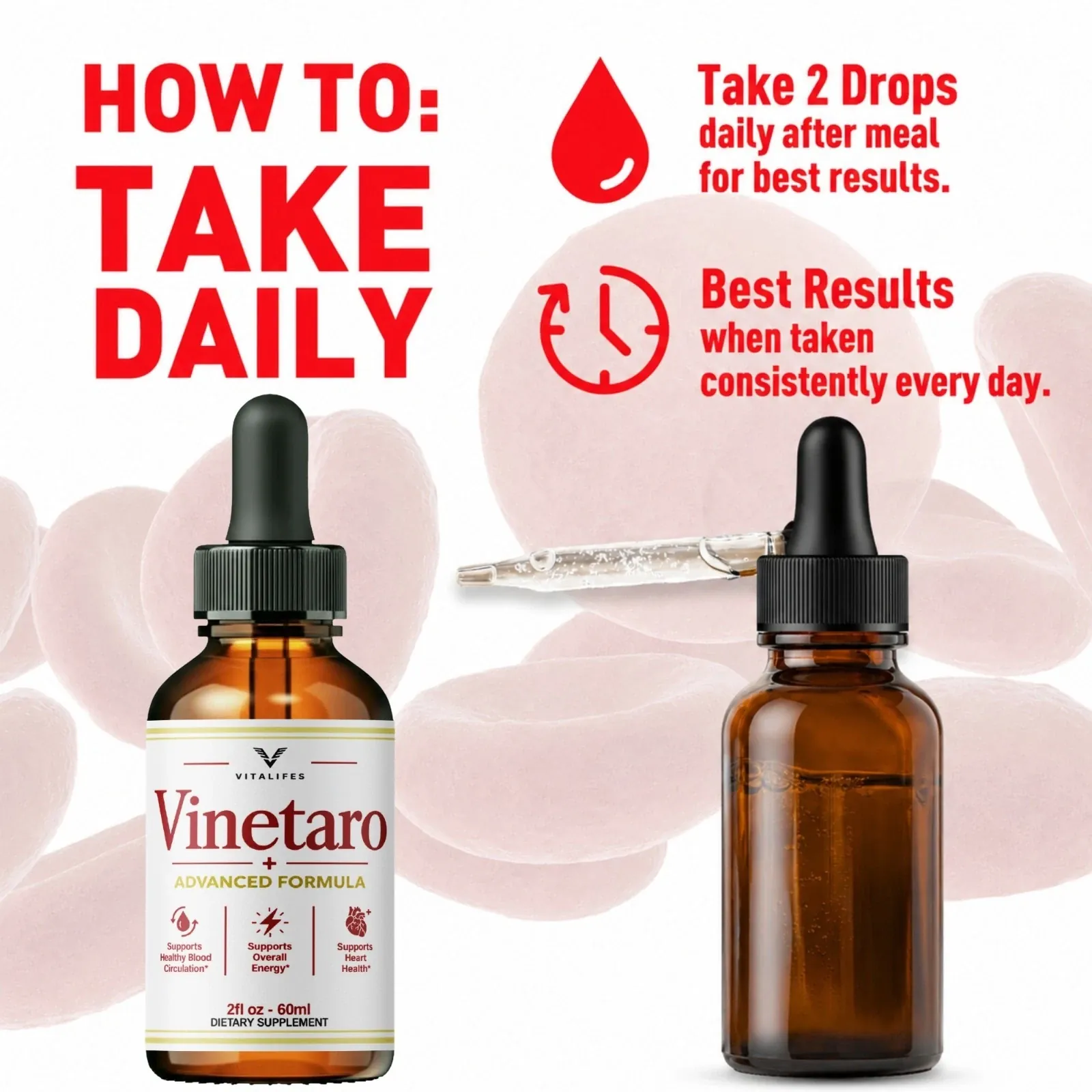
- Around 0.05 ml is the conventional working figure, which makes a two-drop dose about a tenth of a millilitre.
- Sixty millilitres at that rate is roughly six hundred days, and plausible drop sizes spread that answer across a factor of four.
- A volume only becomes a dose once you know the concentration, and concentration is a printing decision.
- What liquids genuinely do well is flexibility of amount and speed of absorption, and only one of those two is as important as it sounds.
A drop is not a unit of measurement
Everyone knows this and almost nobody acts on it. A drop is what happens when surface tension loses an argument with gravity at the end of a tube, and the size of the resulting droplet depends on three things that vary from bottle to bottle and from hand to hand.
The bore of the pipette sets the circumference the liquid has to cling to. The viscosity and surface tension of the liquid decide how much can cling before it falls. And the angle at which you hold the dropper changes both, which is why the same bottle delivers differently at forty-five degrees and at ninety.
The conventional figure, and what it is worth
Around 0.05 ml, or twenty drops to the millilitre, is the working convention. It is a convention rather than a specification: it is close enough for an estimate and it should never be treated as a measurement of any particular dropper.
If you want the real figure for the bottle in front of you, count fifty drops into a small container on a kitchen scale and divide the weight. That gives a number good for that liquid in that pipette, which is the only place such a number is ever valid.
The arithmetic, done four times
Here is why the drop size question is not pedantry. The same instruction and the same bottle produce wildly different answers depending on which convention you use.
| If a drop is | Two drops come to | 60 ml lasts | Which is |
|---|---|---|---|
| 0.03 ml, a fine pipette | 0.06 ml | about 1,000 days | nearly three years |
| 0.05 ml, the usual working figure | 0.10 ml | about 600 days | about twenty months |
| 0.08 ml, a wide pipette or a viscous liquid | 0.16 ml | about 375 days | about a year |
| 0.10 ml, a very large drop | 0.20 ml | about 300 days | about ten months |
Four plausible drop sizes, the same bottle, and a four-fold spread in how long it lasts. None of these is a measurement from any particular dropper.
Four plausible assumptions, and a bottle that lasts anywhere from ten months to nearly three years. That spread is not caused by anything the seller did wrong. It is a property of describing a dose as a count of drops rather than as a volume, and it is why pharmacy preparations state millilitres.
The practical consequence for a buyer is that a dropper bottle sold as a month's supply should be read as a bottle with an instruction on it, and the instruction decides how long it lasts rather than the pack description.
When the bottle and the listing disagree
Two statements about the same product can both come from the seller and still not agree, and this is a common enough situation to be worth a section of its own.
A bottle prints a volume. A marketplace title describes a supply period. A marketing graphic prints a daily instruction. Those three are usually written by different people at different times for different purposes, and nobody sits down afterwards to check that they multiply out.
- The volume on the bottle is the hardest of the three, because it is a physical property.
- The daily instruction is the second hardest, because somebody made a decision about it.
- The supply period in a title is the softest, because it is a marketing convention borrowed from capsule products.
- Where the three conflict, the volume and the instruction are the pair to trust.
- A contradiction between a seller's own statements belongs to the seller, and it is worth noticing once rather than treating as a scandal.
Take the volume, take the instruction, pick a drop size, divide. Whatever comes out is how long your bottle lasts, regardless of what any listing calls it.
Volume is not dose without a concentration
This is the part that matters more than any of the arithmetic above, and it is the part most often skipped.
A tenth of a millilitre of one preparation and a tenth of a millilitre of another can differ by a hundredfold in how much active material they contain. What decides it is concentration: how much plant material went into how much solvent, and how much of the resulting liquid is anything other than solvent.
| To turn a volume into a dose you need | Whether a buyer can find it |
|---|---|
| What is dissolved in the liquid | Only if the label lists it |
| How much of each thing is dissolved per millilitre | Only if the label states a concentration |
| What the solvent is | Only from an other-ingredients line |
| What one drop from this pipette measures | Only by weighing, and only for this bottle and this liquid |
| How the amount compares with a published trial | Only once the first four are known |
Five fields. The first three are printing decisions, the fourth is a kitchen scale, and the fifth is arithmetic that depends on all of them.
A tincture is conventionally described by a ratio, one to five or one to ten, meaning one part plant material to that many parts solvent by weight. A standardised extract goes further and states a marker compound as a percentage. Either of those, printed on a bottle, turns a volume into something you can reason about.
Without one, two drops is an instruction rather than a dose, and no amount of care in following it produces a quantity anybody can name.
What a real trial dose looks like beside a drop
The comparison is worth making concretely, because the scale surprises people. A wild blueberry trial in older adults used 26 g freeze-dried wild blueberry powder supplying 302 mg anthocyanins per day. A meta-analysis of green tea catechins and energy expenditure reports effects at effects on fat oxidation reported at a 300 mg dose.
Twenty-six grams of powder a day. Three hundred milligrams of a single named compound. Those are the amounts behind published results in areas supplement labels routinely reference, and a tenth of a millilitre of an unspecified liquid is not in the same conversation unless the liquid is extraordinarily concentrated and says so.
The critical appraisal of herbal evidence makes the general version of this point: a plant's reputation transfers to a product far more easily than a plant's dose does, and the second is the one that produced the result.
What liquid formats are genuinely good at
None of the above means a liquid is a worse format than a capsule. It is a different format with different advantages, and two of them are real.
The first is flexibility. A liquid can be taken at half a dose or a double dose without splitting anything, which matters for anyone starting cautiously or for anyone dosing by body weight. A capsule is an all-or-nothing unit.
The second is onset, and it is the one most often oversold. Liquids do not have to disintegrate before anything can dissolve, so absorption starts sooner. Whether that changes the eventual amount absorbed is a separate question and usually the answer is no. A review of sublingual against oral vitamin B12 found no dose-response effect was observed for cobalamin levels, which is a useful corrective to the idea that a different route automatically means a better one.
- Flexibility of amount, without splitting or crushing anything.
- Easier for anyone who dislikes swallowing capsules.
- No capsule shell, which matters to some diets.
- Faster onset, which is real and less important than it sounds.
- Worse for precision, worse for travel, and dependent on storage.
Six habits that make a dropper more consistent
- Hold the dropper vertically. Consistency of angle is most of consistency of dose.
- Take it at the same point in the same meal, so the conditions around it stop varying too.
- Squeeze the bulb fully and let it refill completely, rather than half-pumping.
- Keep the bottle upright between uses, so the pipette is not sitting in residue.
- Store it cool and dark with the cap firm. Amber glass handles light and nothing else.
- Weigh fifty drops once, at the start of a bottle, if you want to know what you are actually taking.
Write down the date you started and what you are trying to notice. Every argument about whether a supplement did anything is really an argument about what the starting point was, and nobody remembers it accurately six weeks later.
Order Vinetaro Drops and do the arithmetic on your own bottle
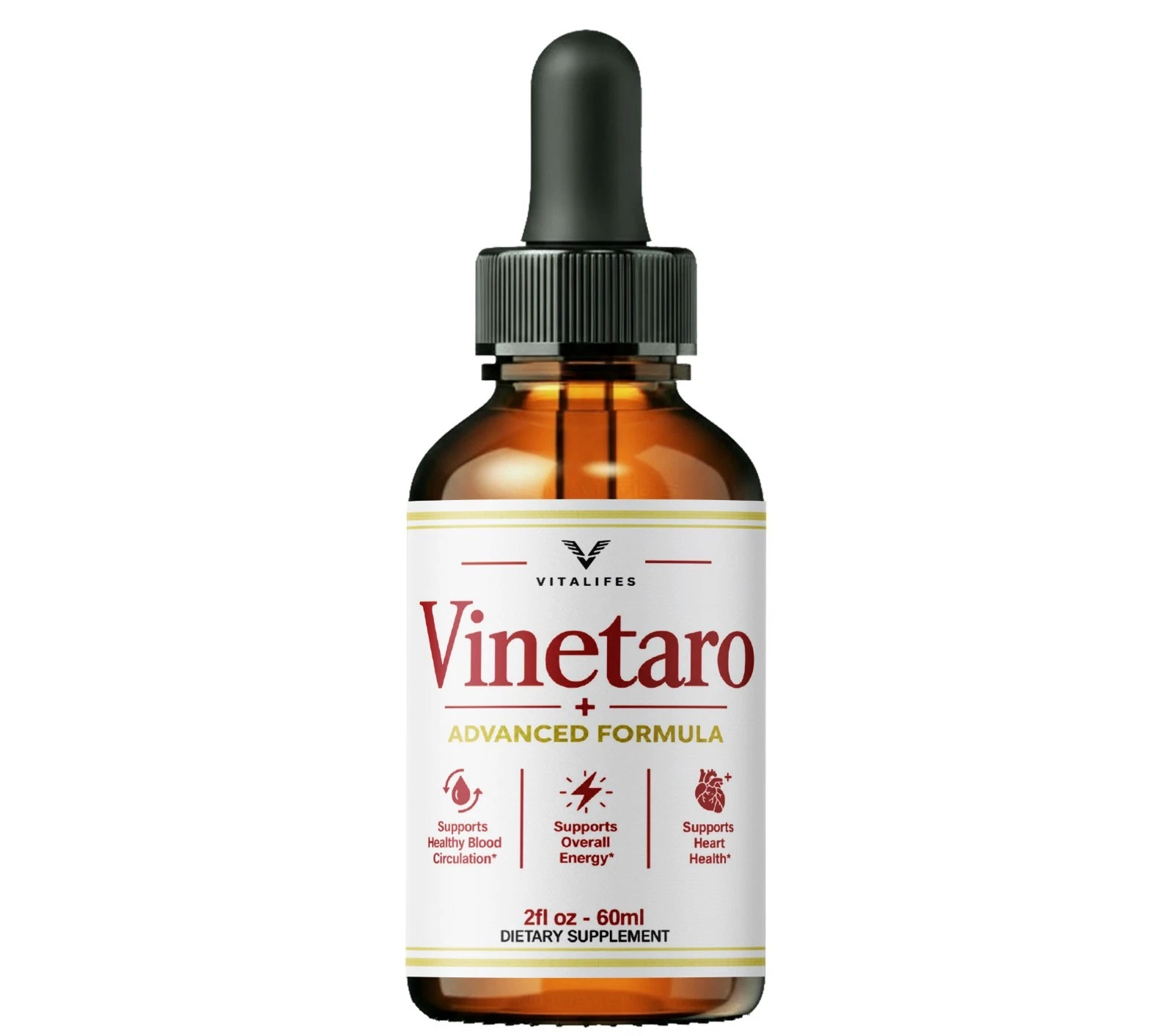
2 fl oz / 60 ml in an amber dropper bottle, two drops daily after a meal, and a kitchen scale if you want to know what a drop from your pipette really weighs.
Price shown at the seller’s checkout · money-back satisfaction seal on the pack
Order Vinetaro Drops On The Official WebsiteTwo drops daily after a meal · 2 fl oz / 60 ml · lot VIN-26/TH-7868
The short conclusion is that dropper arithmetic is worth doing and will not tell you what you most want to know. It will tell you how long a bottle lasts, which is genuinely useful when deciding how many to buy. It cannot tell you how much of anything you are taking, because that requires a concentration, and a concentration has to be printed by whoever made it. The analysis of FDA supplement warnings is the reason that gap is worth naming out loud rather than shrugging at.
References
- Mazur M, Ndokaj A, Salerno C, et al. Efficacy of sublingual and oral vitamin B12 versus intramuscular administration: insights from a systematic review and meta-analysis. Front Pharmacol. 2025;16:1602976. PMID 41487531. https://pubmed.ncbi.nlm.nih.gov/41487531/
- Wood E, Hein S, Mesnage R, et al. Wild blueberry (poly)phenols can improve vascular function and cognitive performance in healthy older individuals: a double-blind randomized controlled trial. Am J Clin Nutr. 2023;117(6):1306-1319. PMID 36972800. https://pubmed.ncbi.nlm.nih.gov/36972800/
- Kapoor MP, Sugita M, Fukuzawa Y, et al. Physiological effects of epigallocatechin-3-gallate (EGCG) on energy expenditure for prospective fat oxidation in humans: A systematic review and meta-analysis. J Nutr Biochem. 2017;43:1-10. PMID 27883924. https://pubmed.ncbi.nlm.nih.gov/27883924/
- Izzo AA, Hoon-Kim S, Radhakrishnan R, et al. A Critical Approach to Evaluating Clinical Efficacy, Adverse Events and Drug Interactions of Herbal Remedies. Phytother Res. 2016;30(5):691-700. PMID 26887532. https://pubmed.ncbi.nlm.nih.gov/26887532/
- Tucker J, Fischer T, Upjohn L, et al. Unapproved Pharmaceutical Ingredients Included in Dietary Supplements Associated With US Food and Drug Administration Warnings. JAMA Netw Open. 2018;1(6):e183337. PMID 30646238. https://pubmed.ncbi.nlm.nih.gov/30646238/