Vinetaro Drops Official Website › Blog › What Sixteen Grape Seed Trials Moved
What Sixteen Grape Seed Trials Actually Moved On Blood Pressure
Grape seed extract is named inside the 200 mg proprietary blend on the fuller of the two Vinetaro vendor ingredient lists, with no weight given to it on its own. Unlike some of the names on that list, grape seed has a reasonably well-worked pooled evidence base behind it. This is what that evidence actually says, field by field, and what changed when a newer analysis went looking for a dose-response curve.

- Grape seed extract is named inside a 200 mg proprietary blend on one of the two Vinetaro vendor lists, with no milligram figure of its own.
- A 2016 meta-analysis of 16 randomised controlled trials, 810 participants, found systolic blood pressure fell by a weighted mean of 6.08 mmHg and diastolic by 2.80 mmHg after grape seed extract treatment.
- The effect was strongest in people with metabolic syndrome (systolic fell 8.49 mmHg) and in obese or younger subjects, and weaker as age and baseline blood pressure rose.
- A newer 2022 analysis of 19 trials found a significant drop in diastolic pressure and heart rate but did not reach significance on systolic pressure, and found the diastolic effect varied non-linearly with dose and duration.
- Neither analysis states a single dose all trials used, which is exactly the gap that keeps this evidence from transferring cleanly onto an unweighed blend.
Where grape seed sits on the Vinetaro lists
The ingredients page on this website reproduces, in full, what four sources say is inside a bottle sold under the Vinetaro name, all read on the same afternoon so the dates line up. Grape seed appears once, inside the third-party label analysis’s 200 mg blend of twenty-two named components — the fullest and most detailed of the four lists, and also the one where the arithmetic is hardest on every member, as a companion article on the sister site works through in detail.
It does not appear on vinetaros.com’s five-plant blend, nor on the vinetaro.us / vinetaro-us.com list. That leaves grape seed in a similar position to several other names on the fullest list: mentioned, unweighed, and folded into a blend whose total is smaller than most single-ingredient trial doses in this category.
| Where it was read | Names grape seed? | Amount given |
|---|---|---|
| The bottle in this pack | No ingredient at all | Not applicable |
| vinetaros.com | No | Not applicable |
| vinetaro.us and vinetaro-us.com | No | Not applicable |
| Third-party label analysis | Yes, inside a 200 mg blend of twenty-two names | No amount against any single one |
Read 19 September 2026. Grape seed appears on only the fullest of the four lists, and even there carries no dose of its own.
Grape seed extract, and what it is not
Grape seed extract is made from the seeds of Vitis vinifera, the common wine and table grape, usually a by-product of winemaking. Its principal active compounds are oligomeric proanthocyanidins (often abbreviated OPCs), a class of flavonoid polymers also found in pine bark and several other plant sources, which is worth knowing because “grape seed extract” and “pine bark extract” are sometimes marketed on overlapping claims despite being different raw materials.
Extracts are standardised to a percentage of proanthocyanidins in commercial practice, most commonly in the 90–95% range, though neither meta-analysis below reduces its pooled trials to a single standardisation, because the underlying trials themselves used a mix of manufacturers’ preparations. That heterogeneity is disclosed honestly in both papers and is one reason their confidence intervals are as wide as they are.
The 2016 meta-analysis: 16 trials, 810 people
The 2016 meta-analysis published in Medicine pooled twelve articles covering sixteen randomised controlled trials and 810 participants, using weighted mean difference (WMD) with 95% confidence intervals as the effect measure.
The overall result: systolic blood pressure fell by a weighted mean of 6.08 mmHg (95% CI −10.74 to −1.42, P = 0.011) and diastolic blood pressure fell by 2.80 mmHg (95% CI −4.42 to −1.19, P = 0.001) after grape seed extract treatment, compared with control. Both are statistically significant, and the paper reports no evidence of publication bias across the included trials — a check meta-analyses run specifically because positive results are more likely to get published than null ones, which can inflate a pooled effect if ignored.
| Measure | Trials pooled | Result (WMD) | Significance |
|---|---|---|---|
| Systolic blood pressure, all subjects | 16 | −6.08 mmHg (95% CI −10.74 to −1.42) | P = 0.011 |
| Diastolic blood pressure, all subjects | 16 | −2.80 mmHg (95% CI −4.42 to −1.19) | P = 0.001 |
Weighted mean difference against control, 810 participants across 16 randomised controlled trials, from the 2016 meta-analysis in Medicine (Baltimore).
Who the effect was strongest in
The same paper ran subgroup analyses by age, body mass index and baseline metabolic status, and the pattern is worth reading closely because it is not uniform. Younger subjects (mean age under 50) showed both systolic (−6.05 mmHg) and diastolic (−3.12 mmHg) reductions. Obese subjects (mean BMI 25 or above) showed a systolic reduction of 4.47 mmHg. The largest single subgroup effect was in patients with metabolic syndrome, where systolic pressure fell 8.49 mmHg (95% CI −11.87 to −5.11).
Meta-regression in the same paper found age, body mass index and baseline blood pressure were all negatively associated with the size of the reduction — in plain terms, older participants and those starting with lower blood pressure tended to see smaller changes. That is a common and biologically plausible pattern in blood-pressure research generally: there is more room for a number to fall when it starts higher, and less when it starts closer to normal.
- Metabolic syndrome subgroup: systolic −8.49 mmHg, the largest effect reported in the paper.
- Younger subjects (under 50): systolic −6.05 mmHg, diastolic −3.12 mmHg.
- Obese subjects (BMI ≥25): systolic −4.47 mmHg.
- Older subjects and those with lower starting blood pressure: smaller reductions, per the meta-regression.
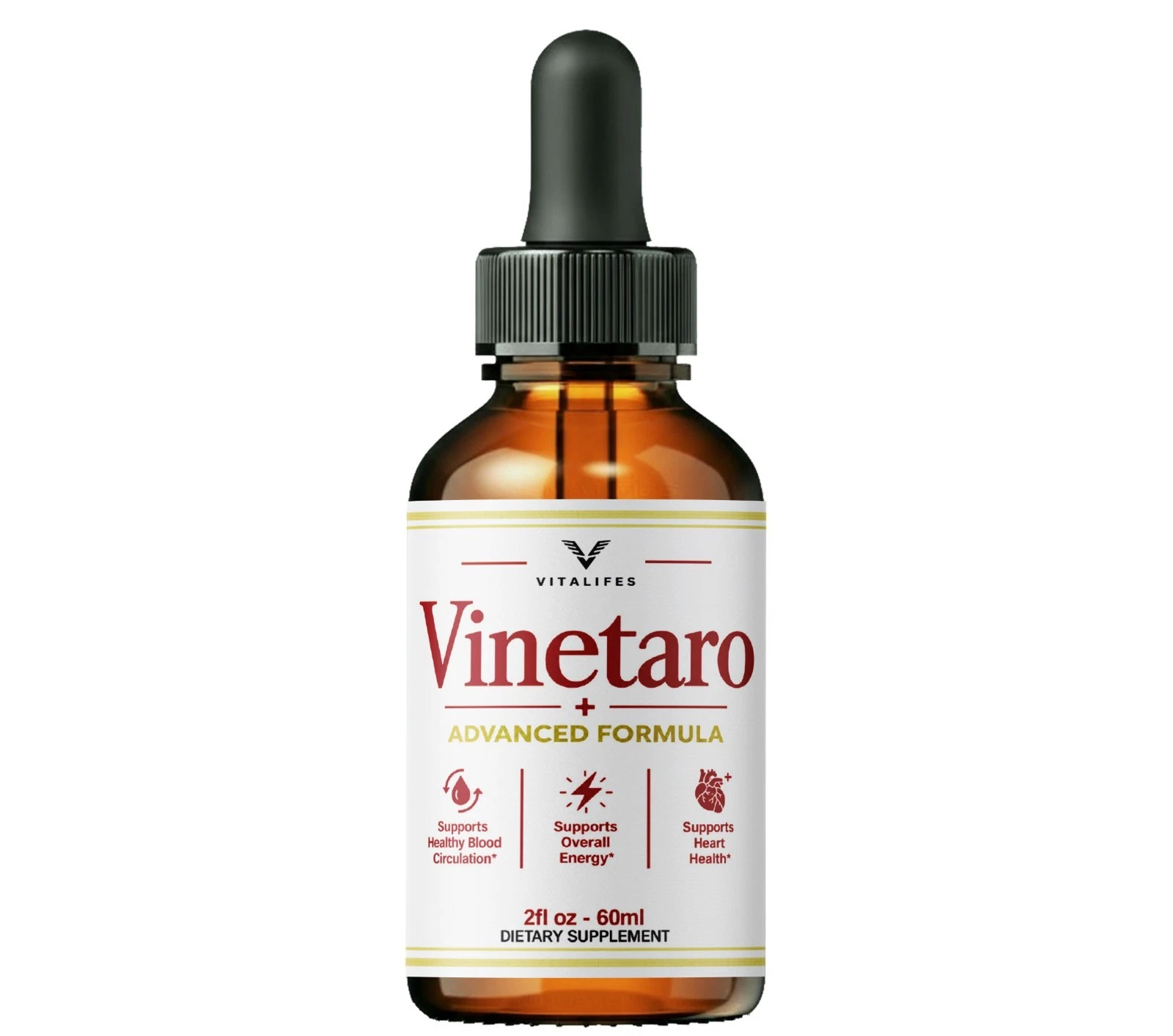
Read what a result cost before deciding about Vinetaro Drops
Every research figure on this site carries the amount its trial used, so the distance between a published result and any bottle is visible rather than implied.
Price shown at the seller’s checkout · money-back satisfaction seal on the pack
Order Vinetaro Drops On The Official WebsiteTwo drops daily after a meal · 2 fl oz / 60 ml · lot VIN-26/TH-7868
The 2022 update, and why it landed differently
A 2022 systematic review and meta-analysis in Pharmacological Research revisited the question with a wider search, through May 2021, and included nineteen trials rather than sixteen — a partially overlapping but not identical set to the 2016 paper. It added flow-mediated dilation and heart rate as outcomes alongside blood pressure, and it explicitly modelled dose-response and duration-response relationships rather than treating every trial as equivalent regardless of how much was given or for how long.
Its headline results differ from 2016’s in a way worth being honest about rather than smoothing over. This analysis found a significant reduction in diastolic blood pressure (−2.20 mmHg, 95% CI −3.79 to −0.60) and heart rate (−1.25 bpm, 95% CI −2.32 to −0.19), but did not find a statistically significant pooled effect on systolic blood pressure (−3.55 mmHg, 95% CI −7.59 to 0.49) or on flow-mediated dilation. The confidence interval on systolic crosses zero, meaning the true effect could plausibly be no change at all, even though the point estimate still points the same direction as 2016’s.
What it added that 2016 did not have: a significant non-linear relationship between diastolic pressure and both the duration and the dose of grape seed extract supplementation. In plain terms, more was not simply better in a straight line — the relationship curved, which is a more realistic (and more cautious) description of how a botanical extract's effect usually behaves than a simple more-equals-more story would be.
| Analysis | Trials / participants | Systolic BP | Diastolic BP |
|---|---|---|---|
| 2016, Medicine | 16 trials / 810 | −6.08 mmHg, P = 0.011 | −2.80 mmHg, P = 0.001 |
| 2022, Pharmacological Research | 19 trials | −3.55 mmHg, not significant (CI crosses zero) | −2.20 mmHg, significant |
Two meta-analyses of overlapping but not identical trial sets, six years apart, reaching different conclusions on systolic pressure specifically. Both are real, both are honestly reported, and the difference is itself informative about how sensitive this literature is to which trials get included.
The dose that neither analysis can give you
Here is the gap that matters most for a reader comparing this evidence against a Vinetaro vendor list. Neither meta-analysis reduces its pooled trials to one standard daily dose, because the included studies did not use one — extract strengths, standardisation percentages and daily amounts varied across the primary trials that fed into both pooled analyses. What can be said honestly is only the shape of the finding: multiple randomised trials, pooled two different ways, most consistently support a diastolic blood pressure effect, with the systolic finding weaker and more sensitive to which trial set is included.
Against that, the Vinetaro list that names grape seed gives it no dose at all, inside a blend whose total across twenty-two names comes to 200 mg — an average of 9.1 mg per member if divided evenly, which is an illustrative figure rather than a stated one, since no source says what share of the blend grape seed occupies specifically. There is no published trial in either analysis above testing anything near that amount; the trials that fed both pooled analyses used full-strength standardised extracts as their own product, not as one twenty-second of a blend.
What transfers to an unweighed blend, and what does not
The honest summary sits in the gap between two true statements. Grape seed extract has a real, twice-replicated (though not perfectly consistent) evidence base for a modest blood pressure effect, mostly on the diastolic number, in trials using standardised extracts at doses neither meta-analysis reduces to a single figure. And a Vinetaro-linked page naming grape seed inside an unweighed 200 mg blend gives a reader nothing to compare that evidence against — not the extract standardisation, not the daily amount, and not confirmation the bottle contains it at all.
An earlier 2011 meta-analysis of grape seed extract and cardiovascular risk markers reached similarly mixed conclusions across a smaller set of outcomes, which is worth mentioning only to show this is not a single-paper story either way: three separate research groups, three overlapping but different trial sets, broadly pointing the same direction on diastolic pressure and disagreeing more on systolic.
The JAMA Network Open analysis of FDA supplement warnings is the standard reminder here: an ingredient with genuinely good evidence behind it is not, on its own, a guarantee that a specific bottle contains it at a working amount. Reading the trials is the easy half of this exercise. Reading what a seller actually discloses about their own product is the half that decides whether the trials apply at all.
References
- Zhang H, Liu S, Li L, Liu S, Liu S, Mi J, Tian G. The impact of grape seed extract treatment on blood pressure changes: A meta-analysis of 16 randomized controlled trials. Medicine (Baltimore). 2016;95(33):e4247. PMID 27537554. https://pubmed.ncbi.nlm.nih.gov/27537554/
- Foshati S, Nouripour F, Sadeghi E, Amani R. The effect of grape (Vitis vinifera) seed extract supplementation on flow-mediated dilation, blood pressure, and heart rate: A systematic review and meta-analysis of controlled trials with duration- and dose-response analysis. Pharmacol Res. 2022;175:105905. PMID 34798267. https://pubmed.ncbi.nlm.nih.gov/34798267/
- Feringa HH, Laskey DA, Dickson JE, Coleman CI. The effect of grape seed extract on cardiovascular risk markers: a meta-analysis of randomized controlled trials. J Am Diet Assoc. 2011;111(8):1173-81. PMID 21802563. https://pubmed.ncbi.nlm.nih.gov/21802563/
- Tucker J, Fischer T, Upjohn L, et al. Unapproved Pharmaceutical Ingredients Included in Dietary Supplements Associated With US Food and Drug Administration Warnings. JAMA Netw Open. 2018;1(6):e183337. PMID 30646238. https://pubmed.ncbi.nlm.nih.gov/30646238/