Vinetaro Drops Official Website › Blog › CoQ10 And The Q-SYMBIO Trial
CoQ10 And The Two-Year Heart Failure Trial
Most of the research read on this blog measures a symptom score or a blood-pressure number over weeks or months. Coenzyme Q10 has something rarer behind it: a two-year, multicentre, randomised trial that measured hospitalisation and death in people with diagnosed heart failure. The dose it used, 300 mg a day split into three servings, is far above what a wellness product typically allocates to a single ingredient, and the population it ran in was not healthy volunteers.
- Q-SYMBIO randomised 420 patients with moderate to severe chronic heart failure to CoQ10 100 mg three times daily (300 mg/day) or placebo, on top of standard therapy, for two years.
- The trial's primary long-term endpoint, a composite of major adverse cardiovascular events, was reached by 15% of the CoQ10 group versus 26% of the placebo group (hazard ratio 0.50, p = 0.003).
- Secondary endpoints also favoured CoQ10: cardiovascular mortality (9% vs 16%), all-cause mortality (10% vs 18%), and fewer hospital stays for heart failure.
- A subgroup analysis of the European patients in the same trial reported consistent findings within that region.
- Short-term measures at 16 weeks — functional class, a 6-minute walk test, a heart-failure biomarker — did not change significantly; the benefit was a long-term, outcome-level finding, not a fast one.
Q-SYMBIO: the trial itself
Q-SYMBIO, published in 2014 in JACC: Heart Failure, enrolled 420 patients with moderate to severe chronic heart failure across multiple centres and randomised them to coenzyme Q10 at 100 mg three times daily — 300 mg a day — or placebo, added to standard heart-failure therapy, and followed them for two years. The trial had been designed years earlier; its original design paper, published in 2003, laid out the rationale: myocardial CoQ10 levels are lower in more severe heart failure, and earlier trials testing the idea had been too small to settle the question either way.
The 300 mg daily dose, taken in three separate 100 mg servings rather than one, is itself a meaningful design choice. CoQ10 is fat-soluble and its absorption is limited per dose, so splitting a large daily total across multiple servings is a pharmacokinetic decision, not an arbitrary one.
The design paper is explicit about why the trial needed to be this large and this long: earlier randomised trials of CoQ10 in heart failure existed, but were, in the design paper's own words, underpowered to address major clinical endpoints such as hospitalisation and death. Q-SYMBIO was built specifically to correct that gap — a multinational, 420-patient, two-year design chosen because smaller and shorter studies had not been able to answer the outcome question with any confidence, whatever direction their individual results pointed.
What moved, and what did not, at 16 weeks versus 2 years
Q-SYMBIO measured two different kinds of endpoint on two different timescales, and the result was not uniform across them. At 16 weeks, the trial's short-term endpoints — New York Heart Association functional class, a 6-minute walk test, and a blood level of a heart-failure biomarker (NT-proBNP) — showed no significant difference between CoQ10 and placebo.
At two years, the long-term primary endpoint told a different story: a composite of major adverse cardiovascular events was reached by 15% of the CoQ10 group versus 26% of the placebo group, a hazard ratio of 0.50 (95% CI 0.32 to 0.80, p = 0.003). Secondary endpoints moved the same direction: cardiovascular mortality was 9% versus 16%, all-cause mortality 10% versus 18%, and hospital stays for heart failure were significantly fewer in the CoQ10 group. NYHA functional class had also improved significantly by two years, even though it had not moved at 16 weeks.
A trial that measured only the 16-week endpoints would have reported a null result for CoQ10. The benefit in Q-SYMBIO only became visible over two years of continuous dosing in a population already under medical supervision — not the kind of result a short marketing trial, or a bottle taken inconsistently, is positioned to reproduce.
A European subgroup, checked separately
A 2019 sub-group analysis of the Q-SYMBIO trial looked specifically at the European patients enrolled, rather than the full international cohort, and reported findings consistent with the main trial result. Sub-group analyses like this one are not a replacement for a fresh, independently powered trial, but they add a check against the possibility that the overall result was driven by one region or centre rather than holding broadly.
Why a heart-failure trial chose this compound
CoQ10 is an essential cofactor in the mitochondrial electron transport chain, the cellular machinery that produces most of the body's usable energy, and it also functions as an antioxidant. The heart muscle is unusually energy-demanding tissue, and lower myocardial CoQ10 levels had been observed to track with more severe heart failure before this trial was designed — the biological rationale behind testing supplementation specifically in this population, rather than in healthy volunteers.
That rationale is specific to heart failure as a diagnosis. It does not, on its own, extend to a general claim about circulation or energy in someone without a cardiac diagnosis, and Q-SYMBIO was not designed to test that broader claim.
| Endpoint | CoQ10 group | Placebo group | Timescale |
|---|---|---|---|
| NYHA class, walk test, NT-proBNP | No significant change | No significant change | 16 weeks |
| Composite major adverse cardiovascular events | 15% | 26% (HR 0.50, p=0.003) | 2 years |
| Cardiovascular mortality | 9% | 16% | 2 years |
| All-cause mortality | 10% | 18% | 2 years |
The same trial, the same dose, two different timescales, two different pictures. Both are real, and printing only the two-year numbers without the 16-week null result would flatten a result that is actually more interesting with both included.
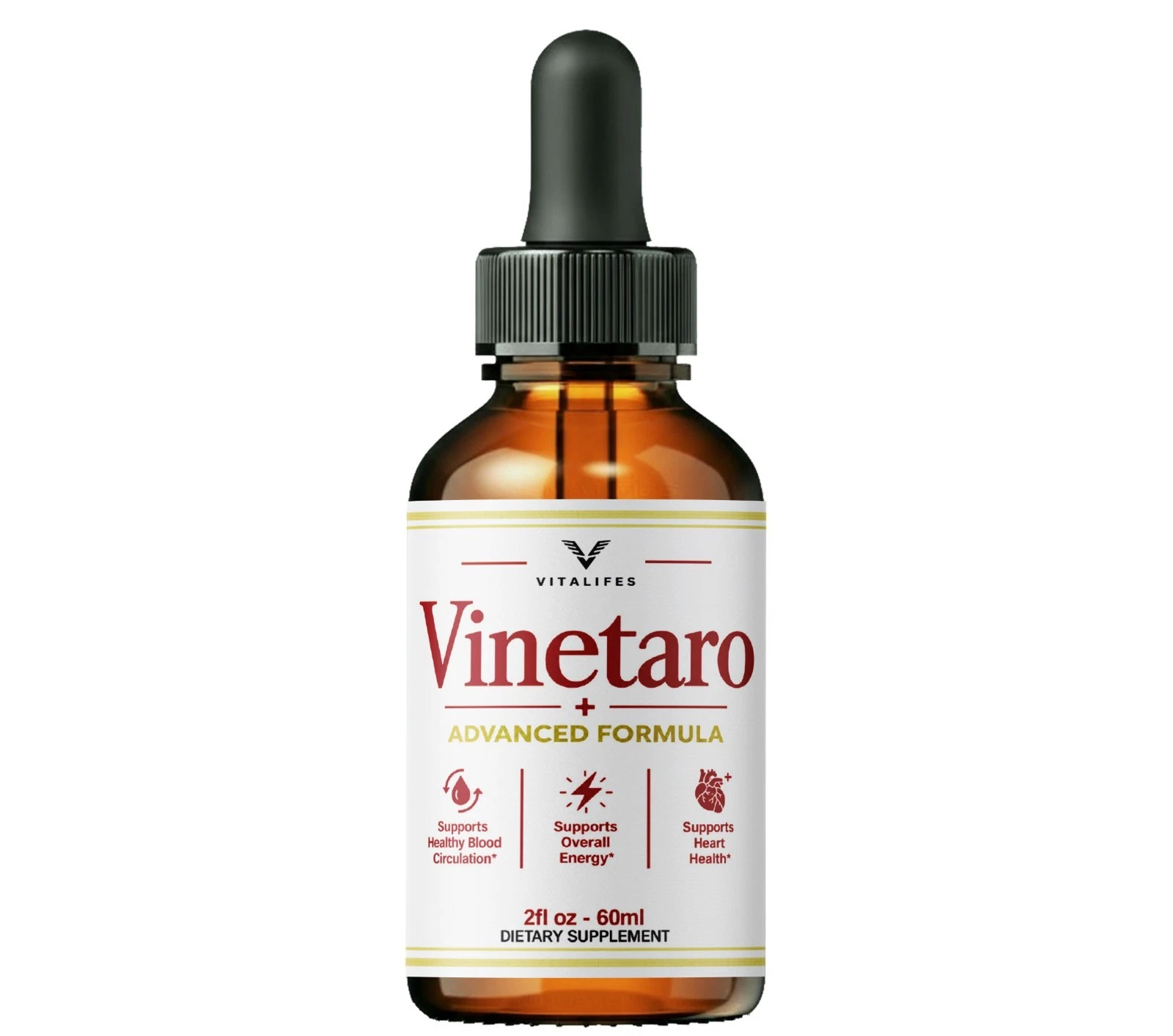
Read what a result cost before deciding about Vinetaro Drops
Every research figure on this site carries the amount its trial used, so the distance between a published result and any bottle is visible rather than implied.
Price shown at the seller’s checkout · money-back satisfaction seal on the pack
Order Vinetaro Drops On The Official WebsiteTwo drops daily after a meal · 2 fl oz / 60 ml · lot VIN-26/TH-7868
What a large effect in a sick population does not prove
A hazard ratio of 0.50 is a substantial effect size for a cardiovascular outcome trial, and it is worth being precise about what it does and does not establish. It was measured in people with an existing diagnosis of moderate to severe heart failure, already on standard medical therapy, followed closely for two years by a clinical trial infrastructure. None of those conditions describes a healthy adult taking a wellness product for general circulation support.
This is the same population-transfer problem this site raises for hawthorn's SPICE and HERB CHF trials: a result in a diagnosed, supervised, clinically severe population is not automatically a result in a healthy one, even when the underlying compound and mechanism are the same.
Three later reviews, and where they land
A 2015 review in Open Heart summarised the CoQ10-in-heart-failure literature and treated Q-SYMBIO as the pivotal trial in the field, while noting the smaller and more mixed evidence base that preceded it. A 2019 review in the Methodist DeBakey Cardiovascular Journal covered CoQ10's broader biology and clinical evidence, situating the heart-failure data within the compound's wider research history rather than as an isolated finding.
A third review asked the more skeptical question directly in its own title. Oleck and Ventura's 2016 paper, “Coenzyme Q10 and Utility in Heart Failure: Just Another Supplement?”, weighed Q-SYMBIO's positive outcome data against the broader pattern of supplement trials in cardiology that have failed to replicate or failed to matter clinically. That a review can ask the question this bluntly in its own headline, in a specialty journal, and still treat CoQ10 and Q-SYMBIO as worth taking seriously is itself informative — the compound is being held to the same skeptical standard other cardiovascular supplements have failed, rather than being waved through on reputation.
None of the three later reviews overturned Q-SYMBIO's central result. All three treat it as the strongest single piece of evidence CoQ10 has produced in cardiovascular research to date, while being explicit that it is one trial, in one population, at one dose, and that the compound's broader reputation in general wellness marketing runs well ahead of what any of this literature actually tested.
What transfers to a shelf bottle, and what does not
It is worth restating the shape of the whole argument once, because CoQ10 makes it unusually clear. A published result this strong, from a trial this large and this carefully designed, still only describes one compound, at one dose, taken three times a day, in one clinical population, over one specific length of time. Change any of those five fields and the result Q-SYMBIO reported no longer automatically applies. That is not a reason to dismiss the finding; it is the reason to read it precisely rather than as a general endorsement of any product that happens to share an ingredient name with it.
| The field | What Q-SYMBIO supplies | What a shelf product usually supplies |
|---|---|---|
| The compound | Coenzyme Q10, named precisely | Usually named, when present |
| The amount | 300 mg/day, split into three 100 mg doses | Frequently a fraction of this, or unstated |
| The duration | 2 years for the primary outcome | Rarely stated at all |
| The population | Diagnosed moderate-to-severe heart failure, on standard therapy | Anyone who buys the bottle |
| The endpoint | Hospitalisation and death, not a symptom score alone | Rarely measured at this level in a supplement trial |
Vinetaro Drops names no ingredient, so this table cannot be checked against this bottle. It exists to show what a complete CoQ10 claim in this category would actually have to specify.
References
- Mortensen SA, Rosenfeldt F, Kumar A, et al.; Q-SYMBIO Study Investigators. The effect of coenzyme Q10 on morbidity and mortality in chronic heart failure: results from Q-SYMBIO: a randomized double-blind trial. JACC Heart Fail. 2014;2(6):641-9. PMID 25282031. https://pubmed.ncbi.nlm.nih.gov/25282031/
- Mortensen AL, Rosenfeldt F, Filipiak KJ. Effect of coenzyme Q10 in Europeans with chronic heart failure: A sub-group analysis of the Q-SYMBIO randomized double-blind trial. Cardiol J. 2019;26(2):147-156. PMID 30835327. https://pubmed.ncbi.nlm.nih.gov/30835327/
- Mortensen SA. Overview on coenzyme Q10 as adjunctive therapy in chronic heart failure. Rationale, design and end-points of “Q-symbio” - a multinational trial. Biofactors. 2003;18(1-4):79-89. PMID 14695923. https://pubmed.ncbi.nlm.nih.gov/14695923/
- DiNicolantonio JJ, Bhutani J, McCarty MF, O'Keefe JH. Coenzyme Q10 for the treatment of heart failure: a review of the literature. Open Heart. 2015;2(1):e000326. PMID 26512330. https://pubmed.ncbi.nlm.nih.gov/26512330/
- Raizner AE. Coenzyme Q10. Methodist Debakey Cardiovasc J. 2019;15(3):185-191. PMID 31687097. https://pubmed.ncbi.nlm.nih.gov/31687097/
- Oleck S, Ventura HO. Coenzyme Q10 and Utility in Heart Failure: Just Another Supplement? Curr Heart Fail Rep. 2016;13(4):190-5. PMID 27333901. https://pubmed.ncbi.nlm.nih.gov/27333901/